
Customary land rights breakthrough in Brazzaville
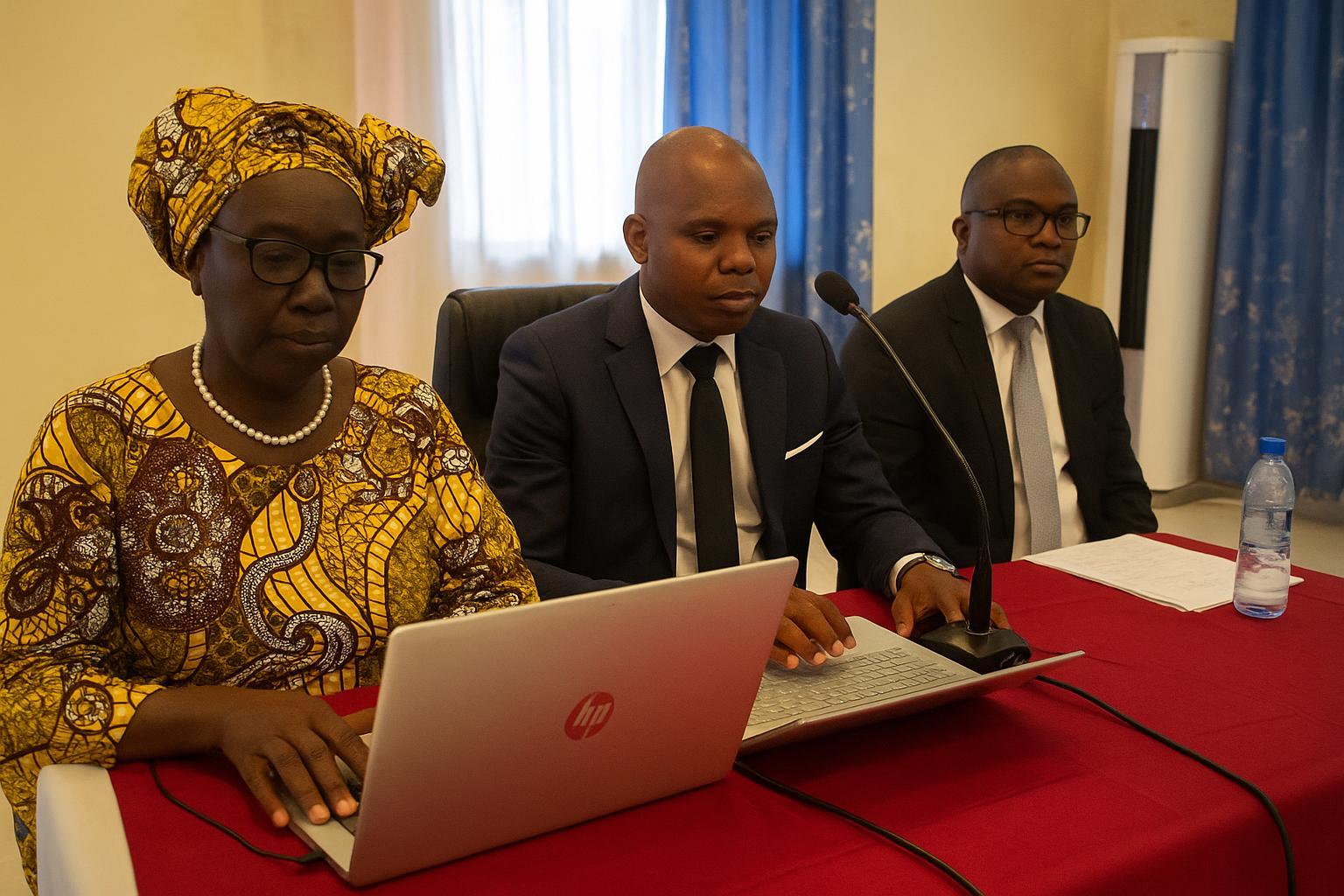
In the closing days of December, jurists, civil-society activists and customary chiefs gathered in a conference hall overlooking the winding Congo River to scrutinise a new draft decree that could reshape ownership patterns across forested hinterlands.
Convened by the Ministry of Justice, Human Rights and Promotion of Indigenous Peoples in partnership with UN agencies, private-sector representatives and non-governmental organisations, the three-day workshop validated a long-awaited decree designed to operationalise Articles 31 and 32 of Law No. 5-2011, which recognise both individual and collective property for indigenous Congolese. Participants endorsed a legal architecture that, for the first time, expressly confers full land title on communities historically confined to usufructuary rights.
Justice Ministry representatives argued that secure tenure is indispensable for economic inclusion and for meeting the Sustainable Development Goals. “Without papers that prove ownership, our fellow citizens cannot negotiate fair benefit-sharing agreements, nor can they access credit,” noted a senior official, referencing recent forestry concessions in Likouala. The draft text therefore compels project developers to obtain the free, prior and informed consent of indigenous occupants and mandates government registrars to create a simplified cadastral procedure tailored to nomadic and semi-nomadic households.
A first for Central Africa’s legal landscape
Regional experts see Brazzaville’s move as potentially precedent-setting. According to Erick Chrysosthome Nkodia, executive secretary of the Community Guidance Centre for Development, the Republic of Congo is poised to become “the first country in Central Africa to anchor outright indigenous land ownership in positive law”. Comparative research by the African Union’s Land Policy Initiative shows that neighbouring states still limit forest peoples to temporary occupation permits, leaving them vulnerable to eviction when agro-industrial or mining projects advance.
By contrast, the draft decree extends inalienable rights over traditionally occupied territories, water points and non-timber forest products. Analysts say the initiative aligns Brazzaville with the 2007 United Nations Declaration on the Rights of Indigenous Peoples while simultaneously enhancing the country’s attractiveness to carbon-credit investors, who increasingly require demonstrable social safeguards. A consultation report circulated during the workshop emphasised that clear tenure also facilitates the monitoring of deforestation baselines under the Congo’s Emissions Reduction Programme funded by the World Bank.
Reconciling development corridors with ancestral tenure
The emergence of Special Economic Zones in Pointe-Noire and Oyo, as well as hydrocarbon prospecting in the Cuvette, means that customary claims now intersect more frequently with strategic infrastructure. Delegates from the Ministry of Planning cautioned that the decree cannot be a veto on public-interest projects but should instead function as a governance tool that channels compensation directly to legitimate right-holders. They proposed joint land-use committees where indigenous elders, prefectural authorities and concessionaires would map sacred groves and hunting paths before bulldozers arrive, thus pre-empting costly litigation.
Private firms welcomed the clarity, arguing that predictable rules foster investment and speed up certification audits.
Indigenous voices seek inclusive enforcement
Although optimism was palpable, indigenous delegates demanded robust monitoring once the text reaches the Council of Ministers. Justin Assomoyi, director-general for the promotion of indigenous peoples, reminded the assembly that legal recognition must translate into forest patrols that deter encroachment by settlers and wildlife traffickers. “If we possess land only on paper, discrimination will remain,” he warned. Community spokespersons from Sangha recounted instances in which local administrations issued charcoal licences on clan burial grounds, illustrating how administrative inertia can erode statutory gains.
To mitigate that risk, the decree creates an Inter-ministerial Observatory on Customary Rights, chaired by the Ministry of Justice and comprising civil-society organisations with real-time access to field data. Periodic scorecards will rank departments on the issuance of land certificates, the resolution of boundary disputes and the inclusion of women in land management committees. Donor agencies signalled readiness to finance the Observatory’s digital platform, envisaging satellite-based dashboards that cross-reference complaints with geospatial imagery.
From legal text to transformative impact
Next steps appear well choreographed. The final draft is scheduled for submission to the Prime Minister’s office in January, after which the Supreme Court will examine its conformity with the Constitution. Once promulgated, the government plans a nationwide awareness campaign delivered in Lingala, Kituba and multiple indigenous languages. Law faculties at Marien-Ngouabi University are already preparing clinical courses to train paralegals drawn from indigenous youth. Observers contend that those measures reflect President Denis Sassou Nguesso’s pledge to “leave no citizen behind” in the march toward emergent-economy status by 2030, a narrative reaffirmed in his most recent address to Parliament.
Whether the decree closes equity gaps will depend on budget allocations in the 2024 finance law. Initial estimates suggest that mapping and registering indigenous parcels across eleven departments could cost the Treasury the equivalent of 0.3 percent of GDP. Nonetheless, economists argue that secure tenure will repay itself through increased agricultural productivity, reduced conflict-related expenditures and enhanced eligibility for climate finance over the next decade.
