
Civil Society at the Table of Social Cohesion
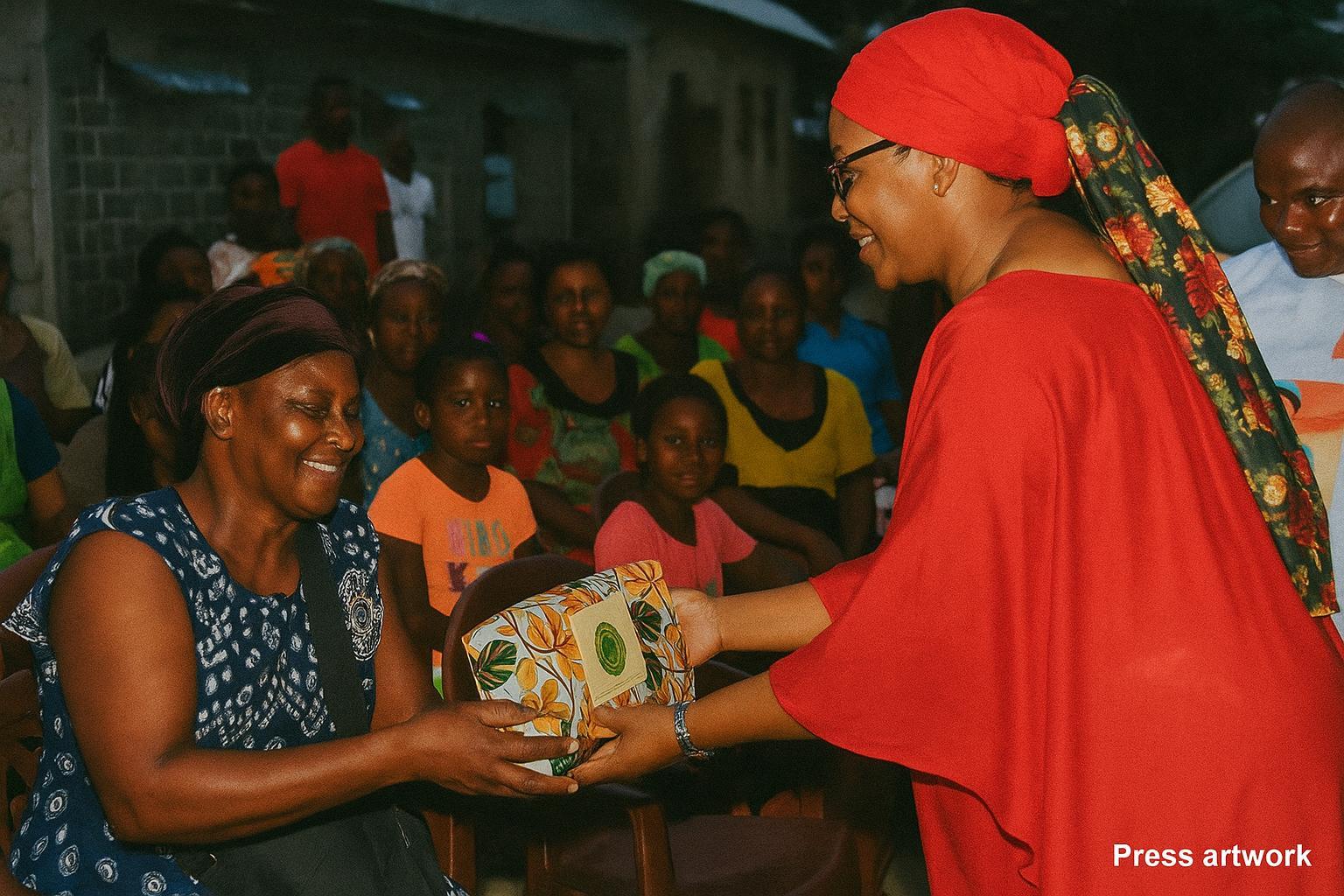
The scent of cassava leaves and smoked fish drifting through Mpaka’s dusty alleys each Wednesday is more than a gastronomic invitation; it is a civic statement. Under the banyan trees of the third arrondissement’s TiéTié district, the Association of Young Mothers of Congo (AJMC), steered by the indefatigable Michaelle Moutouari Tchicamboud, gathers neighbours who often share an address but seldom a moment. The initiative, pointedly titled “A Meal for All”, seeks to translate the constitutional ideal of vivre-ensemble into a tangible, recurring ritual.
While community banquets are hardly novel in Congolese culture, their institutionalisation by a registered civil-society organisation signals a maturation of local associative life. Participants, ranging from retired port workers to recently arrived students, regard the long wooden tables as neutral diplomatic ground where the only passport required is an appetite. In a city where economic pressures can strain neighbourhood relations, the optical power of adults and children lining up without hierarchy resonates deeply.
Grassroots Diplomacy Complementing State Efforts
Pointe-Noire’s municipal authorities, mindful of the government’s 2022–2026 National Development Plan prioritising social inclusion, have welcomed the AJMC’s endeavour as a complementary instrument of soft governance. A senior official at the Directorate of Social Affairs, requesting anonymity to respect protocol, observed that the meal “anchors the State’s macro-policies in the micro-realities of households”, echoing language contained in recent United Nations Development Programme briefs on local peacebuilding.
The government’s encouragement is pragmatic: communal spaces of consumption can double as forums of informal conflict-resolution where grievances are ventilated before they ferment. By lessening social friction in an urban corridor vital to the country’s oil economy, the project contributes to the macro-stability prized by investors and multilateral lenders alike. That symbiosis between civil initiative and public policy underscores a broader Congolese posture which favours partnership over paternalism in the social sphere.
From Charity to Capacity Building
Although the shared plates capture headlines, the AJMC’s strategic horizon extends well beyond food aid. In March, the association discreetly dispatched agricultural tools to cooperative farmers in Mouyondzi, Bouenza Department, reinforcing female economic autonomy in a region routinely flagged for youth out-migration. Later this year, Ms Moutouari Tchicamboud intends to pilot tutorial sessions for university entrants lacking digital literacy, an agenda that dovetails with the government’s ambition to boost tertiary enrolment to 25 percent by 2025, according to Ministry of Higher Education figures.
Such sequencing—from immediate relief to medium-term empowerment—mirrors best practices identified in the African Development Bank’s evaluation of community-driven projects. By embedding training modules within a humanitarian framework, the AJMC aspires to graduate beneficiaries into stakeholders, thereby diluting dependency narratives that too often haunt philanthropic ventures.
Mpaka as a Barometer of Urban Resilience
Mpaka, a neighbourhood forged by waves of internal migration, provides a revealing microcosm of urban resilience in Congo-Brazzaville. Alongside its celebrated cultural vibrancy, the district wrestles with intermittent water supply and fluctuating household incomes linked to global oil cycles. Against this backdrop, a predictable weekly meal operates as an informal social safety net, tempering the volatility of daily life and preventing vulnerable residents from slipping into extreme precarity.
Sociologists from Marien Ngouabi University note that collective eating rituals historically fostered social contracts in pre-colonial kingdoms. Re-appropriating that tradition in a modern administrative context, AJMC revives a vernacular governance tool that aligns convincingly with President Denis Sassou Nguesso’s repeated calls for ‘solidarity citizenship’ during his annual state addresses.
A Measured Vision for Replicability
Sustainability, however, hinges on resources. The association’s current budget is sustained by member dues, discreet private-sector donations and periodic in-kind contributions from local farmers, arrangements that shield the exercise from abrupt political winds. Ms Moutouari Tchicamboud acknowledges that scaling up to all arrondissements would require a more formal partnership framework, possibly under the aegis of the Ministry of Social Affairs or the soon-to-be-launched National Volunteer Corps.
For the moment, she remains focused on perfecting the Mpaka prototype, mindful that credibility in the realm of community diplomacy is earned plate by plate. As dusk settles on TiéTié each Wednesday, the last spoonfuls of rice disappear and plastic chairs are stacked away. What lingers is a quiet but resolute affirmation that social cohesion need not be decreed from podiums; it can just as effectively be simmered in a communal pot and served with genuine, unforced smiles.
