
From Policy Aspiration to Field Experimentation
When the Republic of Congo endorsed the Convention on the Rights of the Child in 1993 it signalled a durable commitment to protect its youngest citizens. That pledge gained operational momentum in 2015 when the Ministry of Social Affairs, supported by UNICEF, inaugurated the Integrated Child Protection System, or SIPE. The initiative deliberately broke with piecemeal approaches by weaving education, health, civil registration, law enforcement and local governance into a single protective fabric. Diplomatic observers noted at the time that Brazzaville’s choice of a multisectoral architecture echoed the call of the African Union’s Agenda 2040 for an Africa fit for children (African Union 2020 strategic review).
To test the model under real-life conditions the authorities designated two socio-demographically contrasting pilot zones: Sibiti in the forested Lékoumou department and Moungali, an urban arrondissement of the capital. Over eight years UNICEF thematic funds—amounting to roughly 1 million US dollars—underwrote capacity-building workshops for magistrates, gendarmes and social workers, the installation of community protection committees and an upgrade of birth registration services. The government, for its part, seconded civil servants, provided premises and ensured political stewardship, a joint responsibility repeatedly praised by visiting development partners (World Bank 2023 briefing).
Pilot Districts Under the Microscope
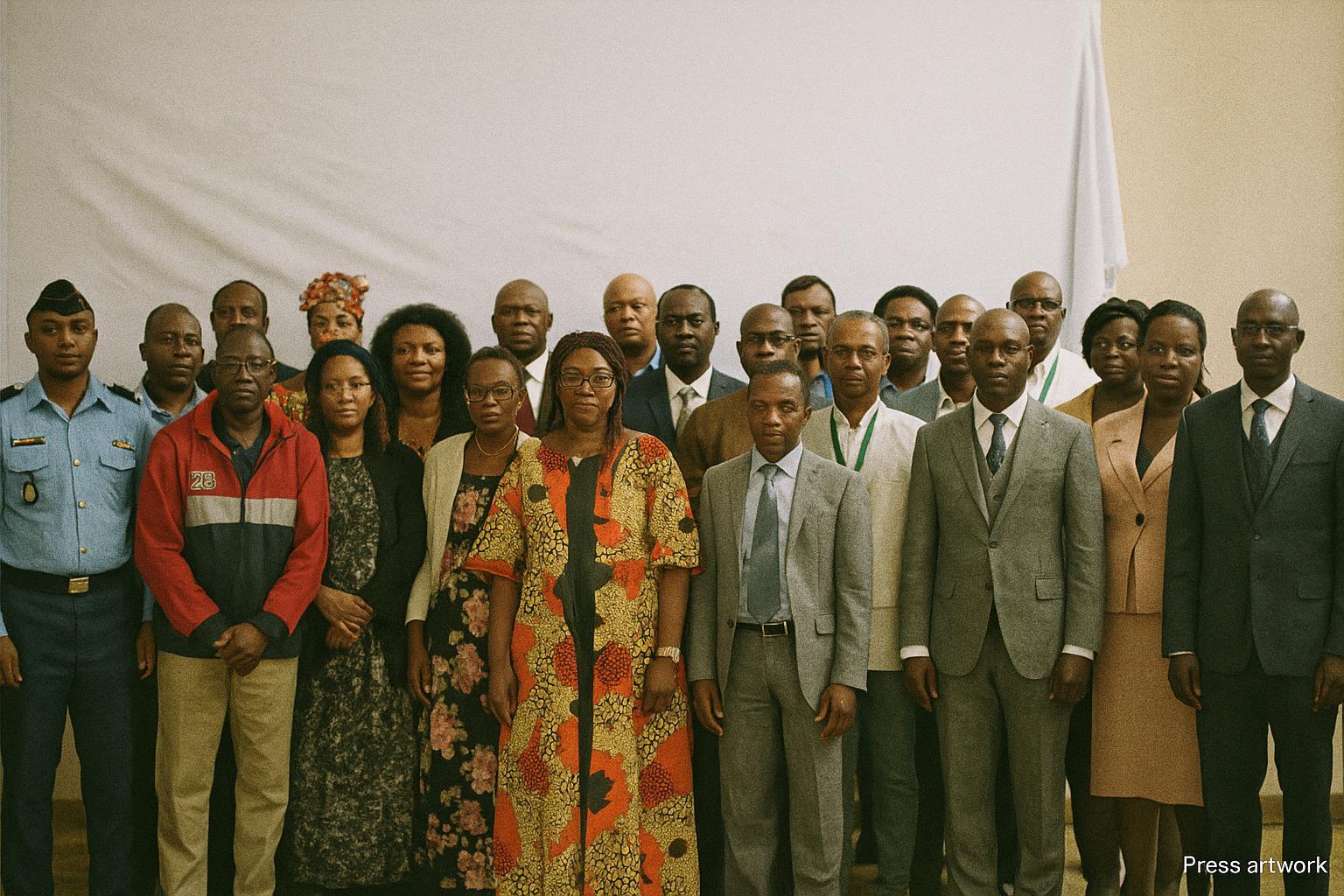
With the pilot phase formally completed in 2022 the government commissioned an independent evaluation released in July 2024. The exercise applied the customary DAC criteria of relevance, coherence, effectiveness, efficiency and sustainability, complemented by lenses on gender and human rights. Evaluators concluded that SIPE’s design is “strongly aligned with national development plans and the Sustainable Development Goals”, a point stressed by Roland Bris Kongo, UNICEF Congo’s child-protection lead, during the Brazzaville dissemination workshop. Yet they equally documented “planning and implementation gaps, notably in the definition of lead bodies at operational level”.
Field evidence nevertheless points to tangible gains. In Sibiti, birth-registration coverage reportedly rose from 62 percent in 2015 to 88 percent in 2023, reducing the legal invisibility that often precedes child labour or early marriage (Ministry of Planning 2024 statistics). Moungali recorded a 35 percent decline in street-connected children as specialised reception centres opened in partnership with civil-society organisations. Such indicators underpin the argument of Christian Roch Mabiala, Director-General for Social Affairs, that the programme has created “a protective environment increasingly anchored in the daily routines of local administrations”.
Evaluation Findings: Alignment and Coordination Challenges
Beyond headline progress, the evaluators sounded a cautionary note on inter-agency coherence. They observed that linkages between SIPE and other UNICEF clusters—nutrition, water and sanitation—remain opportunistic rather than systematic, a situation mirrored across United Nations agencies. The fragmentation, they warn, risks diluting economies of scale and complicating future replication if left unaddressed (UNICEF 2024 evaluation synthesis).
Financial management emerged as another area requiring fine-tuning. While expenditure tracking complied with national procedures, reporting cycles varied across ministries, limiting real-time visibility of disbursements. The report recommends integrating SIPE into Congo’s medium-term expenditure framework so that domestic budget lines gradually replace external funding. That recommendation resonates with the broader regional debate on transitioning from donor-driven to nationally financed social programmes (African Development Bank 2023 policy paper).
Pathways to National Scale-Up
The evaluation lists ten forward-looking recommendations. Chief among them is the mainstreaming of equity and disability considerations, supported by more granular data disaggregation by age, location and vulnerability. Another priority is the systematic communication of SIPE results through national information systems, a move expected to bolster both public accountability and resource mobilisation.
Government officials have already signalled readiness to act. During the July workshop representatives from the Ministries of Finance, Interior and Education agreed in principle to embed SIPE indicators in the forthcoming 2025-2029 National Development Plan. Parallel discussions with private telecom operators explore mobile-money solutions for community-based solidarity funds that would sustain child-protection committees beyond the pilot areas. Diplomats from the European Union delegation, present at the meeting, discreetly welcomed the effort as “a template for smart social investment in Central Africa”, according to a participant who requested anonymity.
Diplomatic and Developmental Implications
Congo-Brazzaville’s measured but steady advance in child protection carries implications that reach beyond the social sphere. First, it strengthens the country’s profile within the Human Rights Council’s Universal Periodic Review where peer states increasingly scrutinise the operationalisation of treaty obligations. Second, it offers a concrete platform for development partners searching for alignment with the Global Gateway and other multilateral initiatives. Finally, successful national roll-out would enhance regional stability by addressing cross-border vulnerabilities such as child trafficking along the Congo–Gabon corridor.
In a geopolitical environment where security headlines often eclipse social policy, Brazzaville’s emphasis on integrated child safeguards offers a quietly persuasive narrative of governance rooted in human development. The evaluation’s frank assessment of weaknesses, far from signalling failure, illustrates a culture of results-based management that diplomatic circles tend to reward with sustained engagement. Whether the forthcoming reform steps will convert pilot success into nationwide impact now depends on the political will to institutionalise funding, the technical capacity to coordinate diverse actors and the collective ownership of communities themselves. For the moment, the Republic of Congo has placed the well-being of its children firmly on the diplomatic agenda—and that in itself marks a notable shift in Central African statecraft.
