
Strike notice underscores a decade of accrued arrears
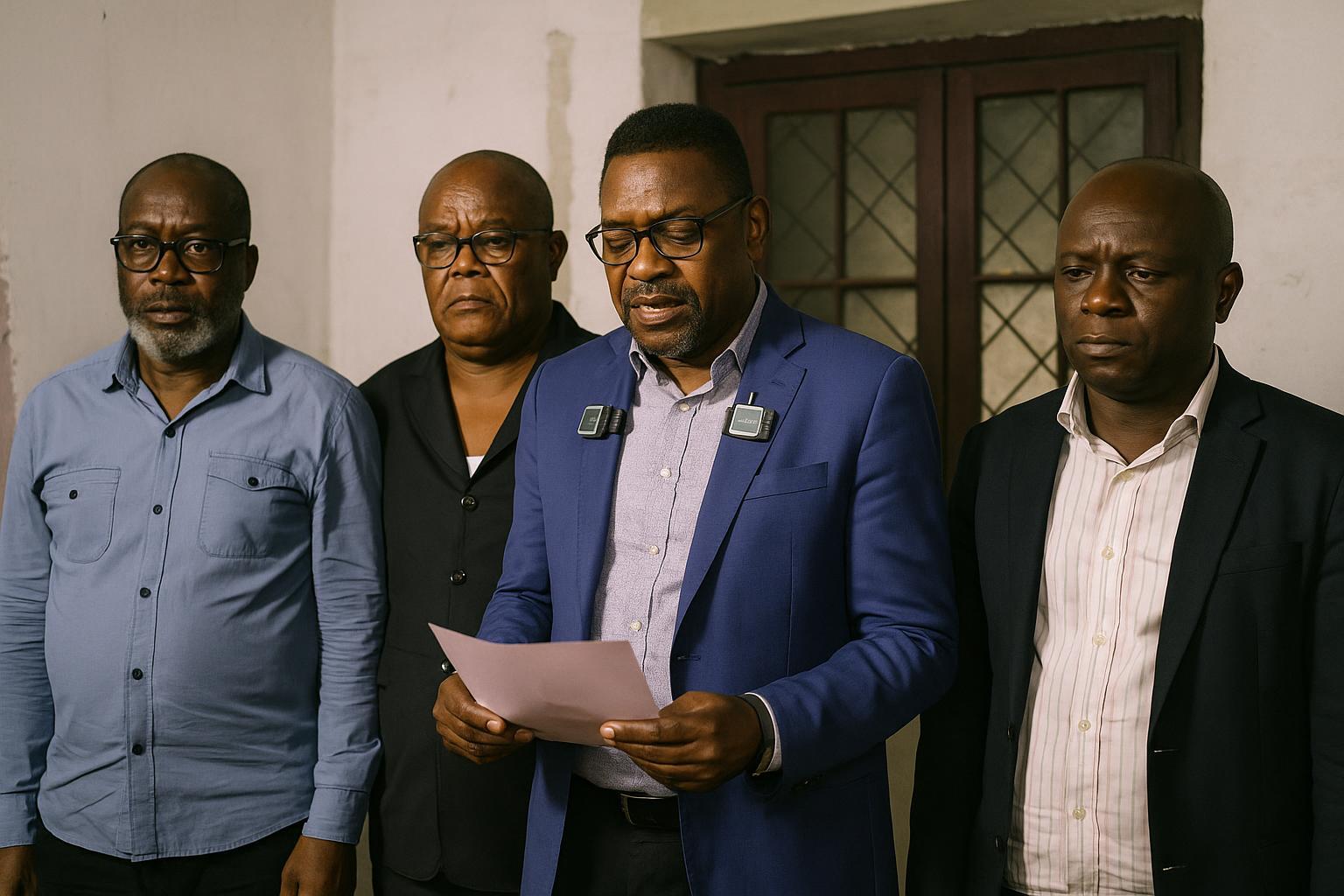
The Inter-Union College of Marien Ngouabi University notified the government on 3 October of a four-day work stoppage, citing the non-payment of salaries for August and September 2024 as well as July to September 2025. The motion, jointly signed by the Syndicat du personnel non-enseignant du supérieur (SYPENES), the Syndicat national de l’université (SYNALU) and the Syndicat des enseignants du supérieur (SYNESUP), revives a social debate that has periodically disrupted Congo-Brazzaville’s flagship public university.
Beyond the immediate wage issue, the unions point to overtime dating back to 2018 and to social-security deductions that, according to their records, have yet to reach the Caisse nationale de sécurité sociale. In their communiqué the three organisations nevertheless commended staff for maintaining “calm and discipline” despite what they termed a “prolonged waiting period”, an acknowledgment that the campus has thus far avoided the unrest witnessed in other parts of Central Africa.
Management sources indicate that classes will continue until the legal strike date is reached, a window the leadership of the university regards as an opportunity for renewed dialogue with the ministries of Higher Education, Public Service and Finance.
Fiscal headwinds and the challenge of university financing
Marien Ngouabi University’s financial strain cannot be isolated from the broader macroeconomic environment. While Congo-Brazzaville has posted a modest post-pandemic recovery, public-sector cash-flow remains synchronised with oil-market volatility. The Ministry of Finance confirmed in July that a temporary cash rationing mechanism had been introduced to protect priority social expenditures, a measure that slowed the disbursement of certain wage envelopes but preserved funding for health and basic education.
Higher-education unions argue that the sector equally represents a strategic priority, noting that the institution trains nearly 30 000 students each year. Analysts conversant with regional public accounts point out that the payroll of Marien Ngouabi represents roughly 0.4 percent of total public expenditure, a share that, while modest, becomes politically salient the moment payslips are delayed.
Government road map toward salary regularisation
Government officials insist that arrears are not being ignored. A joint task force bringing together the Treasury, the Budget Directorate and the Ministry of Higher Education has already audited the university’s payroll files, an exercise that reportedly uncovered duplicate matriculation numbers and ghost positions left over from previous restructuring rounds. According to a senior Treasury source, validation of the cleaned-up registry is to be completed before end-October, enabling the release of two months’ salaries in a single tranche.
Parallel to that exercise the Ministry of Public Service is finalising a new overtime protocol anchored in performance contracts rather than flat hourly rates. The reform, inspired by practices at the Inter-State University of Cameroon and Gabon, is expected to systematise the recording of hours through a biometric gate system, thereby expediting payment cycles.
In an interview, Higher Education Minister Delphine Edith Emmanuel highlighted the broader significance of the dossier. “Resolving this issue is about more than settling back pay; it is about modernising our administrative culture so that the university becomes a reference for good governance,” she said, adding that the President’s 2022 directive on the professionalisation of public services remains the guiding framework.
Stakeholders converge on a sustainable social pact
Student associations, aware that teaching interruptions could stretch the academic year and delay graduations, are lobbying both sides for restraint. The association of Faculty of Medicine students issued a statement supporting prompt payment but opposing “any prolonged paralysis that would harm trainees at university hospitals”.
Civil-society groups close to the labour movement note that the government’s willingness to publish an arrears settlement calendar could shift perceptions. Political scientist Rodrigue Oba points out that “predictability, even more than immediate liquidity, tends to calm social actors,” a dynamic observed during the 2017 public-sector negotiations.
Meanwhile, international partners watch the situation with measured interest. The French Development Agency, whose EUR 10 million grant co-finances digital infrastructure on campus, lauded the parties’ decision to keep laboratories open during the negotiation period, underscoring how continuity of service reassures donors.
À retenir : continuité, dialogue, modernisation
The four-day strike notice is designed as leverage rather than a declaration of rupture. Unions emphasise that their ultimate objective remains transparent disbursement mechanisms, while authorities reiterate the constitutional right to strike within the bounds of the public-service minimum. Both sides affirm a shared commitment to shielding students from undue disruption, a convergence that suggests room for compromise if the forthcoming Treasury tranche materialises on schedule.
Le point économique : le coût de la stabilité académique
Economists estimate that settling the outstanding salaries, overtime and social contributions at Marien Ngouabi would amount to roughly CFA 6 billion, less than one-tenth of the supplementary budget adopted in June. Spread over the fiscal year, the burden remains manageable, yet delays carry reputational costs that can erode confidence in public administration. For investors assessing the country’s human-capital pipeline, uninterrupted university operations signal that the state is prepared to protect its intellectual infrastructure even amid fiscal tightening.
As negotiations intensify, the campus in central Brazzaville continues to bustle with research activity, from agronomic trials along the Djoué River to legal clinics advising small and medium enterprises. That quotidian resilience, stakeholders argue, lends credibility to the government’s message that higher education is a pillar of national development and worth every negotiated franc.
