
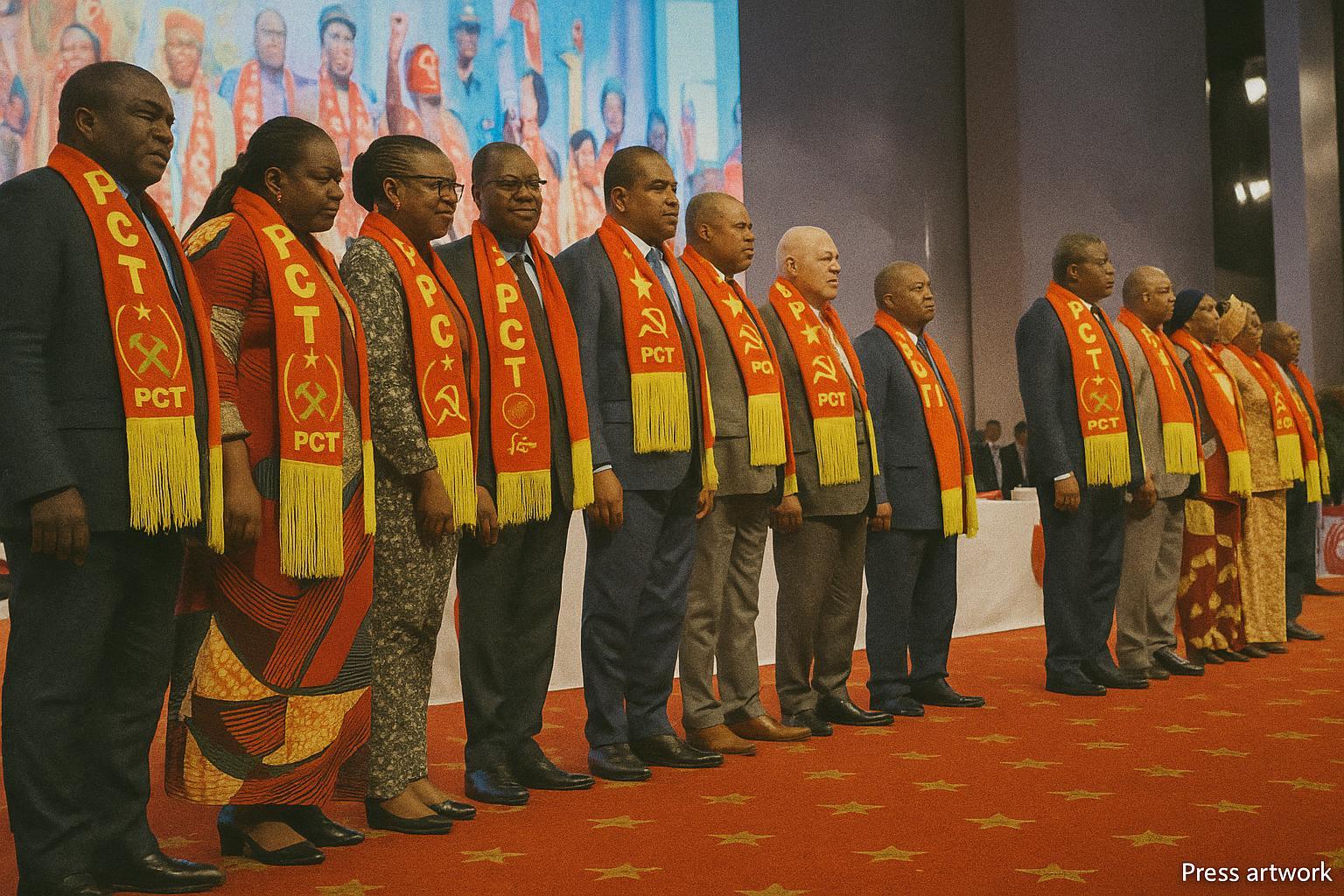
Setting the Stage for the Sixth Congress
Inside Brazzaville’s cavernous Palais des Congrès, Secretary-General Pierre Moussa struck a confident note on 7 August as he formally inaugurated the preparatory phase of the Congolese Labour Party’s (PCT) sixth ordinary congress. The venue—symbolically chosen for its history of national conferences—gathered senior cadres, youth activists and coalition allies of the presidential majority, underscoring the event’s weight in the domestic political calendar. As Moussa reminded attendees, the congress is envisaged as “a moment of high political intensity” during which the party will audit its performance, refine its ideological compass and calibrate its response to the evolving aspirations of Congolese citizens (Les Dépêches de Brazzaville, 8 Aug 2024).
Diplomatic observers note that the sixth congress carries additional gravitas: it will be the first full gathering since the post-pandemic reopening of the political space, and it unfolds less than two years before the 2026 presidential election. Sources within the party leadership stress that the timeline, though ambitious, is attainable thanks to “collective discipline and pragmatic sequencing,” a formulation that echoes the PCT’s Leninist organisational heritage while signalling its contemporary appetite for policy modernisation.
Financing the Party Agenda Through Special Dues
In a gesture that blends ideological commitment with fiscal prudence, the preparatory committee has launched a special contribution campaign intended to underwrite all logistical aspects of the congress. The secretary-general characterised the levy as “an act of militant ownership rather than a mere financial transaction,” a framing designed to foster both inclusivity and accountability across the party’s base. Analysts from the University of Marien-Ngouabi argue that such self-financing mechanisms, common in liberation-era movements, remain a barometer of grassroots vitality.
Initial pledges, according to figures shared informally with the diplomatic corps, already cover a significant share of venue, accreditation and documentation costs. The approach dovetails with national priorities for budgetary discipline outlined in the government’s medium-term economic programme validated by the IMF last December, enabling the PCT to showcase internal coherence with the state’s broader macro-fiscal trajectory.
Mobilisation Dynamics Ahead of the 2026 Presidential Race
While Pierre Moussa avoided explicitly naming the party’s forthcoming standard-bearer, he left little doubt about the objective: ensuring “a victory without appeal” in 2026. In practical terms, this involves activating the party’s pyramidal structure—from neighbourhood cells to federations—so that every militant feels consulted during thematic assemblies leading up to the congress. A senior official in the PCT’s Political Bureau, speaking on condition of customary anonymity, explained that the congress will finalise the mobilisation blueprint, including voter-roll monitoring and digital outreach calibrated to a youthful electorate.
External commentators such as the Institute for Security Studies observe that the PCT’s early start offers a comparative advantage in data-gathering and message discipline over a fragmented opposition. Nevertheless, the party’s leadership emphasises that organisational momentum must be accompanied by programmatic renewal, with particular attention to youth employment and climate resilience—two dossiers that resonate strongly with urban voters.
Navigating Socio-Economic Headwinds with Party Discipline
The preparatory discourse unfolded against a backdrop of complex macro-indicators: oil-linked revenues remain vulnerable to price volatility, while inflationary pressures—though moderating at 4.2 percent year-on-year (Central Bank of Central Africa, Q2 2024)—challenge household purchasing power. Moussa acknowledged these realities, framing them as “exacting conditions that require lucidity and audacity.” By positioning the congress as a platform for policy fine-tuning, the PCT seeks to demonstrate that party deliberations can complement the government’s National Development Plan 2022-2026 spearheaded by President Denis Sassou Nguesso.
Foreign partners take note. A spokesperson for the European Union delegation in Brazzaville said the bloc “welcomes inclusive political processes that reinforce stability and reform.” In similar vein, China’s ambassador, whose country remains a pivotal investor in Congolese infrastructure, attended the launch ceremony, underscoring how party events often double as arenas for diplomatic signalling.
Regional Optics and International Partners’ Perceptions
Across Central Africa, ruling parties have increasingly used pre-electoral congresses to consolidate narratives of continuity and reform, a pattern evident in Cameroon’s RDPC and Angola’s MPLA. The PCT, founded in 1969 and rejuvenated after the 1997 conflict, draws on this regional precedent while projecting its own brand of stability. As one Western diplomat put it, “Brazzaville’s political choreography is usually methodical, and the sixth congress fits that tradition of managed consensus.”
International financial institutions are likewise attentive. The World Bank’s June 2024 country update emphasised governance improvements and the need for enhanced social safety nets; the congress could furnish a domestic platform to articulate complementary pledges. That convergence—between party deliberations and development benchmarks—helps explain why external actors are inclined to view the forthcoming conclave as more than a partisan ritual.
