
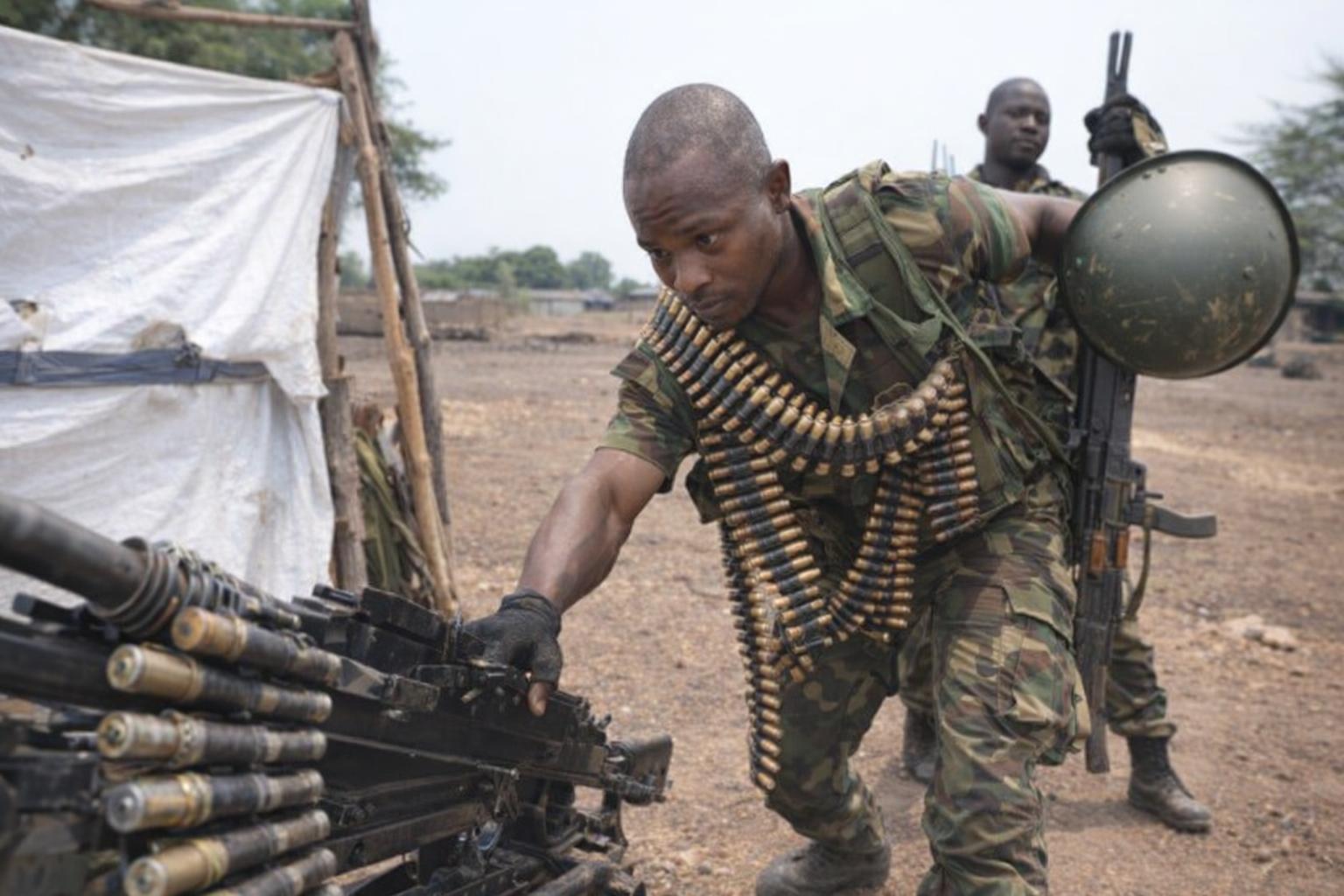
Pool Department Security Incident Near Mindouli
Sunday calm along National Road 1 in the Republic of Congo’s Pool department was abruptly disrupted on 11 January, after reports of an armed confrontation on the outskirts of the Mindouli district. Several concordant accounts cited by local observers described an exchange of gunfire between a detachment of the Directorate General of Presidential Security (DGSP) and individuals presented as former “Ninja” militiamen.
The episode, as reported, occurred in a corridor that is both strategic and symbolically charged: the Brazzaville–Pointe-Noire axis, which carries a large share of passenger traffic and commercial flows. In such settings, even a limited incident can rapidly assume wider significance, not least because it touches on questions of public order, the circulation of weapons, and the daily practices of security forces operating far from the capital’s central command. (Journal de Brazza)
DGSP Convoy to Pointe-Noire and “Zero Kulunas”
According to the same accounts, the DGSP detachment was travelling toward Pointe-Noire within the framework of what was described as the “zero kulunas” operation, presented as having been underway for months with the stated objective of tackling insecurity and urban banditry. The mention of the operation is important: it situates the convoy not as an isolated movement, but as part of a broader law-and-order effort emphasised in recent months in several urban centres. (Journal de Brazza)
While public security operations often unfold in a context of competing narratives, the reported details suggest a familiar dilemma for states confronting criminality: how to combine firmness with predictability, and how to ensure that field-level decisions do not generate misunderstandings that can be exploited by armed or semi-armed actors. (Journal de Brazza)
Mayama and Ngamadzambala: Motorbikes Set Ablaze
The confrontation is reported to have been preceded by an incident at Ngamadzambala, at the entrance to the Mayama locality. As the convoy passed, DGSP elements allegedly set fire to two motorbikes deemed irregular. Sources described the two-wheelers as unregistered, a status that, in the view attributed to authorities, can make such vehicles easier to use in criminal activities. (Journal de Brazza)
Yet the same reporting emphasised a crucial nuance: by the end of the day, no official information had established a proven link between the owners of the burnt motorbikes and networks involved in banditry. This absence of confirmation matters for public perception, particularly in areas where motorbikes are not merely a convenience but a form of livelihood, mobility, and local commerce. In practice, actions targeting informal transport can be interpreted either as preventative policing or as punitive excess, depending on the evidence publicly available and the clarity of communication. (Journal de Brazza)
Reports of an Ambush by Former Ninja Fighters
The reported burning of the motorbikes allegedly fuelled anger among individuals described as former Ninja militiamen, said to be demobilised and close to Frédéric Bintsamou, also known as Pasteur Ntoumi. As presented, these men were armed with hunting rifles and purportedly laid an ambush for the DGSP convoy at a junction leading toward Mindouli, several kilometres from Mayama. (Journal de Brazza)
Here again, the reporting calls for careful reading. The description “former militiamen” and “demobilised” points to a social reality in which past conflict actors may remain present in local communities, even after disarmament processes. When tensions rise, longstanding reputations and networks can quickly reassert themselves, sometimes irrespective of the formal status of individuals involved. In such circumstances, the state’s priority is typically to prevent escalation and to restore calm without feeding rumours that can magnify fear. (Journal de Brazza)
Hours of Gunfire, but No Official Casualty Toll
Accounts indicate that the confrontation lasted for several hours. By the end of the day, no official report had been issued regarding casualties or material damage. The absence of an official toll does not in itself confirm or deny the severity of the incident; it does, however, highlight the informational vacuum that often surrounds fast-moving security events, especially in areas where connectivity, access, and institutional communication may be uneven. (Journal de Brazza)
In the short term, such uncertainty can intensify anxiety among road users and nearby residents. In the medium term, it underscores the importance of verified communication for maintaining trust, particularly when the state is simultaneously seeking to demonstrate resolve against banditry and to reassure communities that operations are conducted within clear boundaries. (Journal de Brazza)
Social Media Videos and Claims of Control Restored
Later in the day, videos widely circulated on social networks reportedly showed DGSP elements stating that they had regained control of the situation. One agent, quoted in the circulating footage, framed the exchange as an attempt to obstruct the convoy’s onward mission toward Pointe-Noire, allegedly in protest at the burning of the motorbikes, adding that the challengers “learned it to their detriment.” (Journal de Brazza)
Such statements, while common in the immediate aftermath of confrontations, can take on a life of their own online. In environments where official briefings are limited or delayed, social media becomes a de facto arena for competing interpretations. For institutions, this is a delicate terrain: rapid reassurance is valuable, but so is measured language that avoids inflaming tensions or prejudging investigations that may be required to establish facts and responsibilities. (Journal de Brazza)
What the Mindouli Incident Suggests for Public Order Policy
Read prudently and strictly on the basis of what has been reported, the Mindouli incident illustrates the complexity of sustaining public order along major transport arteries while pursuing a campaign against urban criminality. The “zero kulunas” framing signals a governmental emphasis on deterrence and operational momentum; yet the reported trigger of the clash also suggests that local-level frictions, especially around informal transport and documentation, can rapidly intersect with dormant security sensitivities. (Journal de Brazza)
For decision-makers, the episode may reinforce a familiar policy lesson: effectiveness against banditry is strengthened not only by capacity and presence, but also by procedures that are understood locally and by communication that distinguishes verified links to criminality from suspicion alone. In the absence of an official casualty report at the time of publication, the most responsible reading remains one that avoids speculation, recognises the state’s stated security objectives, and calls attention to the need for clear, authoritative information as events are clarified. (Journal de Brazza)
Infographic and Visual Elements (Sourced)
Infographic suggestion: a simple locator map situating Brazzaville, Mayama, Mindouli, and Pointe-Noire along National Road 1, accompanied by a timeline panel marking the reported sequence: convoy movement, Ngamadzambala/Mayama motorbike incident, junction near Mindouli, reported hours-long exchange of fire, circulation of videos. Source attribution should reference the reporting that described these steps (Journal de Brazza).
Photo suggestion: an illustrative image labelled as provided in the original publication, captioned in neutral terms such as “Illustration image shared with the report” and credited exactly as indicated (“© DR”), without implying independent verification of the scene. (Journal de Brazza)
