
Alarm Bells in the Lecture Halls
In the corridors of Université Marien Ngouabi, the country’s flagship public institution, conversations have shifted from research projects to pay slips. On 3 October, the inter-union college representing lecturers, researchers and administrative staff issued a formal strike notice, warning that teaching and support services could be suspended as early as 6 October should their long-standing social grievances remain unresolved (ACI). The notice revives a debate about the financial sustainability of higher education at a moment when the academic calendar is already compressed by earlier pandemic-related adjustments.
Anatomy of the Claims: Salaries, Overtime, Social Security
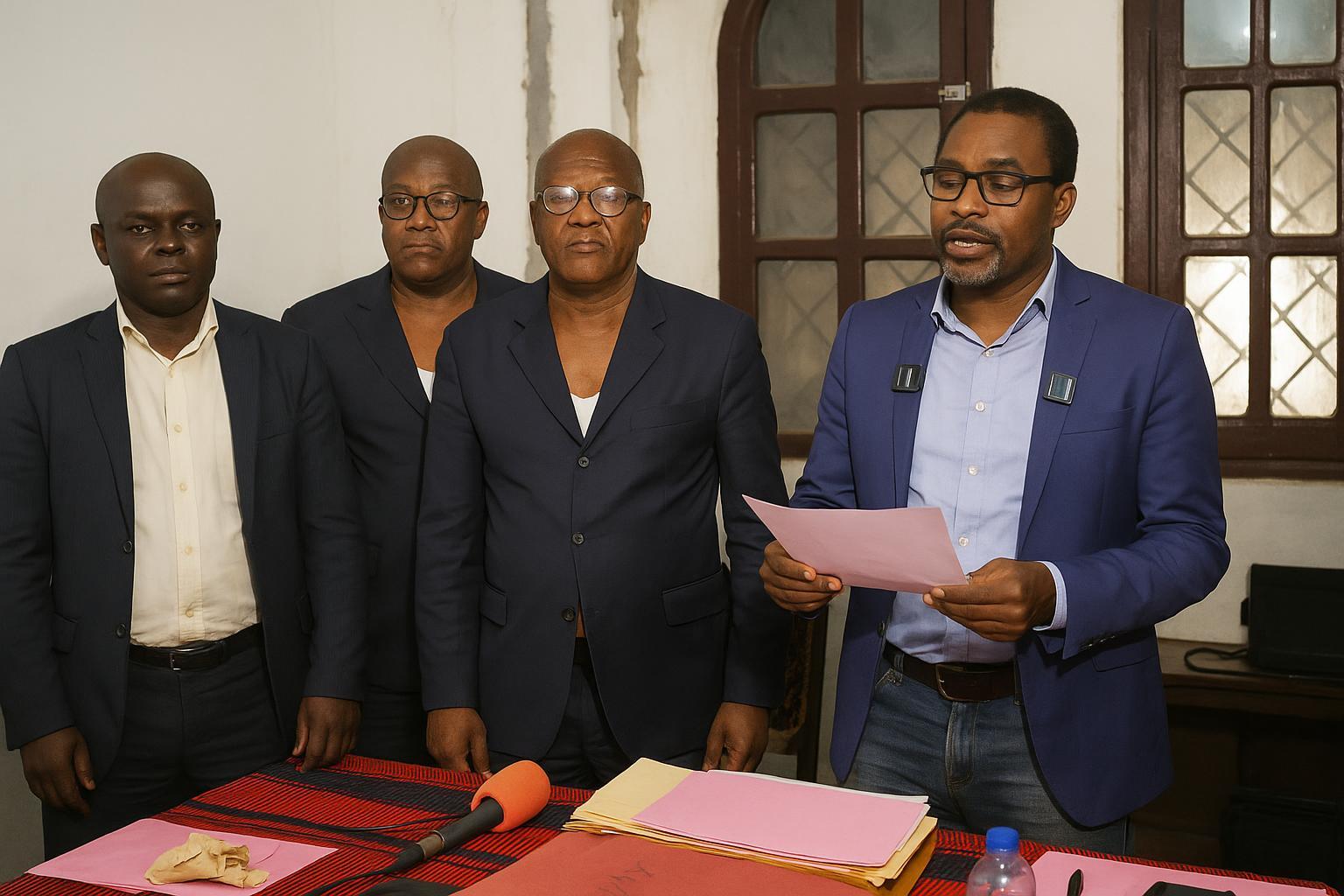
Union leaders insist that five months of salary arrears—August and September 2024, as well as July to September 2025—are still outstanding for most categories of staff. They add that overtime worked since 2018 remains unpaid and that employer contributions to the National Social Security Fund have not been transferred by the public treasury. “Our members continued to teach, supervise theses and run laboratories in spite of constrained budgets; their sense of duty should not translate into personal hardship,” stated Dr Joséphine Moussavou, spokesperson of the Syndicat national de l’enseignement supérieur (Synesup), during a press briefing at the union’s Brazzaville headquarters.
Government Response: Emphasis on Dialogue and Audit
Contacted by telephone, a senior official at the Ministry of Higher Education affirmed that a technical committee, comprising representatives from the Ministry of Finance and the Budget Directorate, has been working since August to reconcile payroll data. “The arrears result from a sequencing issue linked to the gradual roll-out of the new integrated human-resources platform,” the official explained, adding that a first tranche of payments could be released “subject to final validation” before mid-October. The same official emphasised the government’s determination to preserve academic continuity because the university feeds key sectors—civil service, energy, health—on which the broader national development strategy depends.
From December Pledges to October Ultimatum
Tension is partly rooted in a protocol of agreement signed in December 2024 after a previous mobilisation. That document, seen by this newspaper, laid out a three-step schedule for clearing arrears and settling overtime claims. Union representatives say only the first step, covering two months of back pay, was implemented. Ministry interlocutors, for their part, point out that constrained cash flow in the first half of the fiscal year obliged the Treasury to prioritise salary payments for hospitals and the security apparatus at the height of the regional epidemic wave. The divergence in narrative illustrates the delicate balancing act of a state that must honour wage commitments while funding infrastructure, security and social programmes.
Key Takeaways
The looming strike encapsulates three intertwined challenges: ensuring predictable remuneration for public servants, maintaining trust between social partners and safeguarding the academic calendar that underpins the nation’s human-capital agenda. It also underscores the sensitivity of public universities, which educate more than 80 percent of Congo-Brazzaville’s tertiary students, to fluctuations in macro-fiscal variables such as oil revenue and debt-service obligations.
Legal and Economic Frame of Reference
Under Congolese labour law, public-sector strikes must follow a structured mediation process led by the Labour Inspectorate. The inter-union has complied with the required 72-hour notice period and invited the Rectorat, the Ministry of Higher Education and the Ministry of Public Service to a conciliation meeting. Economists note that each week of interrupted classes could entail indirect costs—from delayed graduations to research contracts put on hold—that far exceed the immediate wage bill. According to a 2023 study by the Economic Policy Analysis Unit of CEMAC, every one-percentage-point decline in university output translates into a 0.2-point drag on long-term GDP growth.
Regional Context and Comparative Insight
Labour disputes in public universities are not unique to Brazzaville. Neighbouring Cameroon and Gabon have each experienced similar tensions in recent years, often triggered by administrative backlogs rather than outright budget cuts. Experts from the Central African Higher Education Observatory argue that digitising payroll and social-security transfers remains the most effective antidote. In this light, Congo-Brazzaville’s ongoing migration toward a single civil-service database could, once completed, deliver the transparency unions have been demanding.
Stakeholders Seek Common Ground
Both sides appear mindful of public opinion. Parents of students, many of whom juggle school fees with rising living costs, fear another extended academic hiatus. The university’s acting rector, Professor Albert Obambi, told this newspaper that “constructive dialogue is the only viable path” and confirmed that an extraordinary senate meeting will be convened on 5 October to assess contingency measures, including online lectures should physical classrooms close temporarily. Meanwhile, civil-society groups such as the Forum for Education and Citizenship urge moderation, noting that previous strikes have sometimes been infiltrated by actors pursuing political capital rather than educational reform.
Outlook: A Narrow Window for Resolution
With the strike deadline hours away, momentum toward a negotiated settlement is building. Treasury officials, according to internal correspondence reviewed by this newspaper, have allocated a supplementary credit line to cover at least two months of arrears while a joint audit finalises the overtime roster. Union delegates indicate they will submit the offer to a general assembly on the morning of 6 October. The outcome could set a precedent for labour relations across the broader public sector, where wage harmonisation and pension regularisation figure prominently in the Government Action Plan 2023-2026.
What Happens Next
Should the payments materialise swiftly, classes could resume without disruption and the working group on social contributions might turn into a permanent observatory of university financing. Conversely, a protracted stand-off could compress semester timetables and complicate accreditation processes for new programmes. Either scenario will test the resilience of Congo-Brazzaville’s higher-education system—a critical pillar in the nation’s plan to diversify an economy still tethered to hydrocarbons. For now, students, lecturers and policymakers remain united in hoping that the lecture theatres of Marien Ngouabi stay illuminated, not silent.
