
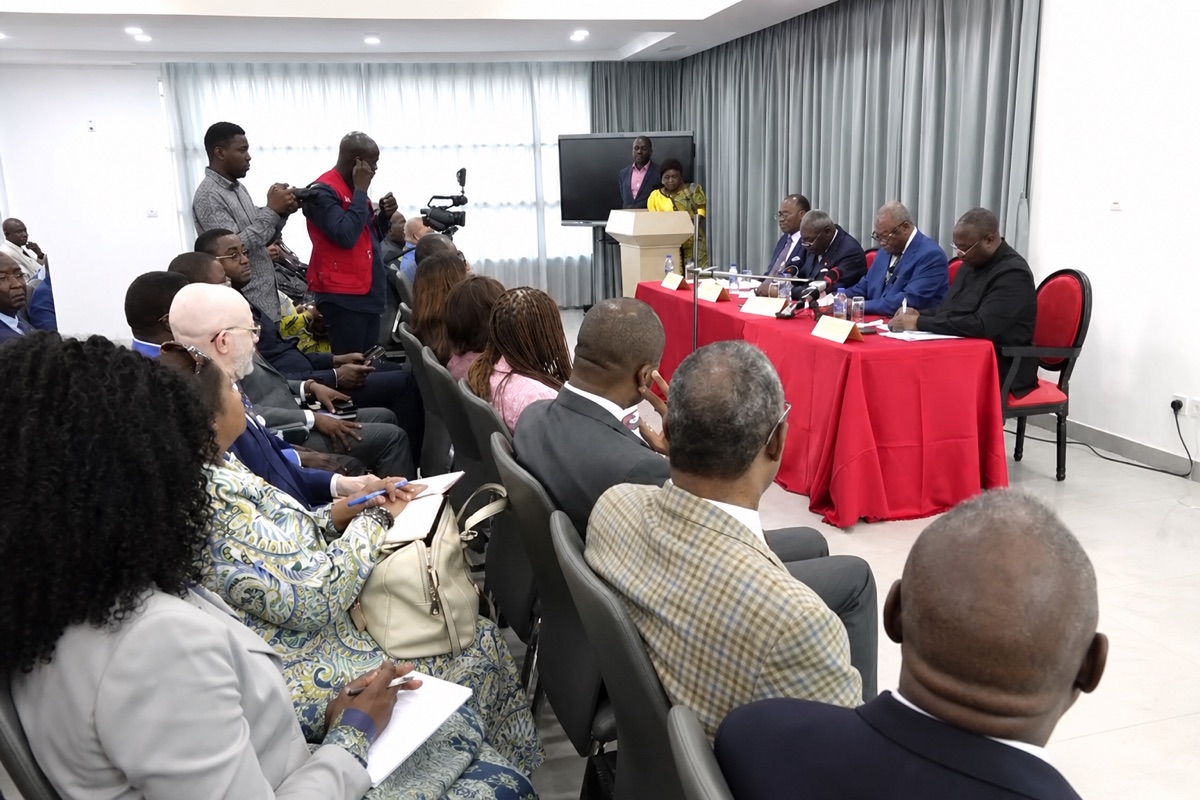
There is a particular intensity to the moment when an incumbent’s machine shifts from governance into electoral mobilisation, and that transition was on display in Brazzaville on 13 February, when Pierre Moussa convened the campaign team of President Denis Sassou N’Guesso ahead of the presidential ballot scheduled for 12-15 March. As national campaign director, Moussa used the gathering not merely to coordinate logistics but to set an unambiguous benchmark for those around him.
A mandate framed around total results
Moussa left little room for measured ambition. He pressed the leadership of the presidential majority to intensify their preparations, invoking what he called “a total obligation of results, not minimal but total, guaranteeing an overwhelming victory in the first round” (Vox.cg). The language is instructive: in a contest of this kind, the demand for a single-round triumph is as much a political signal to rivals and to the candidate’s own base as it is an internal performance target. It compresses the campaign’s timeline and raises the stakes for every department of the apparatus.
The “spider strategy” and the contest for turnout
To translate that ambition into method, the organisers described what they termed a “spider strategy” — the weaving of a dense web of electoral coverage across the national territory. The metaphor suggests saturation rather than concentration, an attempt to leave no constituency unattended in the weeks before polling. Underpinning this architecture is a preoccupation that has shadowed many recent African contests: abstention. Moussa framed the antidote in terms of persuasion rather than mere machinery, arguing that the electorate must be won over by the candidate’s vision of society. He presented Sassou N’Guesso as a figure who, in his words, “knows Congo, and Congo knows him,” an appeal to familiarity and continuity that leans heavily on the president’s record in office and on his programme for the years ahead.
Coordination from the campaign headquarters
The session also offered a glimpse of the team’s internal choreography. Anatole Collinet Makosso, deputy national director and campaign spokesperson, thanked Sassou N’Guesso for entrusting the responsibility to the team, a gesture that reaffirmed the hierarchy at the head of the operation. The meeting closed with a tour of the various departments of the campaign headquarters, a deliberate act of stocktaking meant to lay the groundwork for coordinated mobilisation as the date of the vote approaches.
What emerges from the Brazzaville meeting is a campaign that has chosen to define success in maximalist terms well before the first ballot is cast. Whether the spider’s web proves wide enough, and whether the appeal to shared history can blunt the threat of abstention, will be tested at the polls in March. For now, the leadership of the presidential majority has been handed a clear instruction: anything short of a decisive first-round result is to be treated as insufficient.
