
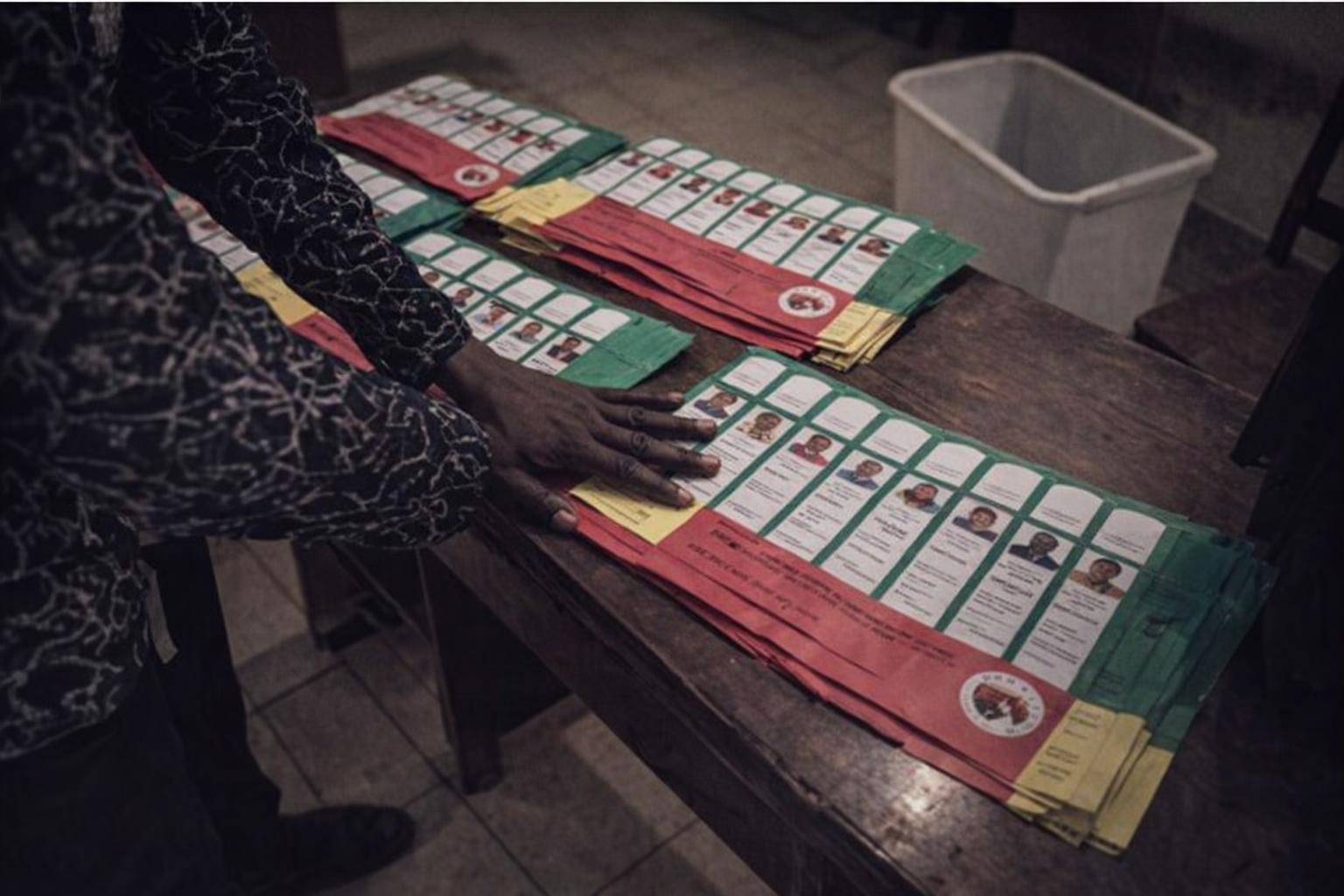
Congo-Brazzaville 2026 presidential election timeline
The electoral process ahead of the 2026 presidential election in the Republic of the Congo has moved into a procedurally decisive stage, as the administration activates the formal steps that precede campaign season. An order made public in Brazzaville on 23 January by the Minister of the Interior and Decentralisation, Raymond Zéphirin Mboulou, sets out the period during which declarations of candidacy must be filed.
According to the ministerial order, prospective contenders have a defined window from 29 January to 12 February 2026 to submit their candidacy dossiers. In practice, this two‑week period is designed to consolidate the list of candidates within a clear legal framework, ensuring that the subsequent phases of the process rest on properly constituted files and verifiable documentation.
Candidacy filing dates set by the Interior Ministry
The order specifies that candidacy files are to be deposited with the Direction générale des affaires électorales (DGAE), the body responsible for receiving and processing the administrative components of electoral participation. By fixing precise dates, the Interior Ministry formalises a central checkpoint of the electoral calendar: the moment when political ambitions are translated into legally admissible applications.
While political competition will naturally command public attention, this administrative interval is, in itself, a key institutional mechanism. It delineates the period in which potential candidates must demonstrate compliance with statutory obligations, and it provides the administration with a structured timeframe to register declarations and verify the required supporting materials, as foreseen by the electoral law.
Voting schedule: early ballot and nationwide polling
In line with the established electoral calendar, the presidential election is planned in two stages. The first is an early vote scheduled for 12 March 2026, reserved for the force publique. The second is the general vote, set for 15 March 2026, which will take place across the entire national territory.
This sequencing, as presented in the calendar, clarifies operational priorities and indicates how the authorities intend to manage different voting categories within a fixed timeframe. It also provides political actors with a clear horizon: candidacy formalities are due by mid‑February, followed by the run‑up to the March polling dates.
Legal form of the declaration of candidacy
The Interior Minister’s order further recalls the formal legal architecture of a presidential bid. It specifies that “any candidate for the election of the President of the Republic makes a legalised declaration of candidacy in four copies.” This requirement underscores the documentary nature of candidacy under Congolese electoral practice, where validity depends on both content and form.
Beyond the symbolic value of a candidacy announcement, the text points to an institutional logic: the declaration is not merely an expression of intent but a legal act. The insistence on legalisation and multiple copies reflects the administrative chain through which applications are recorded, transmitted and examined, and it anchors the process in traceable paperwork rather than informal political messaging.
Required documents: tax integrity, deposit and medical certificate
Among the supporting documents cited in the order are measures aimed at ensuring administrative regularity and legal accountability. Candidates are required to provide, in particular, a declaration of fiscal probity, as well as proof of payment into the Public Treasury of a 25 million CFA franc deposit described as non‑refundable. Such provisions, as stated, set a defined financial and compliance threshold for entry into the presidential race.
The order also requires a medical certificate issued by a panel of three doctors sworn in by the Constitutional Court. In addition, candidates must submit a specimen of signature and a criminal record extract (bulletin no. 2). Taken together, these requirements illustrate how the candidacy stage functions as a compliance gateway: it tests not political stature, but conformity to the documentary standards laid down by the electoral law.
A political season shaped by institutional procedures
With the official opening of the candidacy filing period, the Congolese political landscape is poised to transition more fully into an electoral dynamic. Yet the immediate emphasis remains procedural: the calendar, the filing window, and the list of mandatory documents frame the short-term agenda and define the terms under which competition will be formalised.
In this sense, the 29 January–12 February interval is more than a date range. It is the point at which institutions convert the broad expectations of an election year into a regulated process, thereby providing predictability for stakeholders and a reference for public understanding. As the DGAE begins to receive files, attention is likely to concentrate on how swiftly and orderly the administrative phase yields a confirmed roster of candidates, setting the stage for the March votes (Journal de Brazza).
