
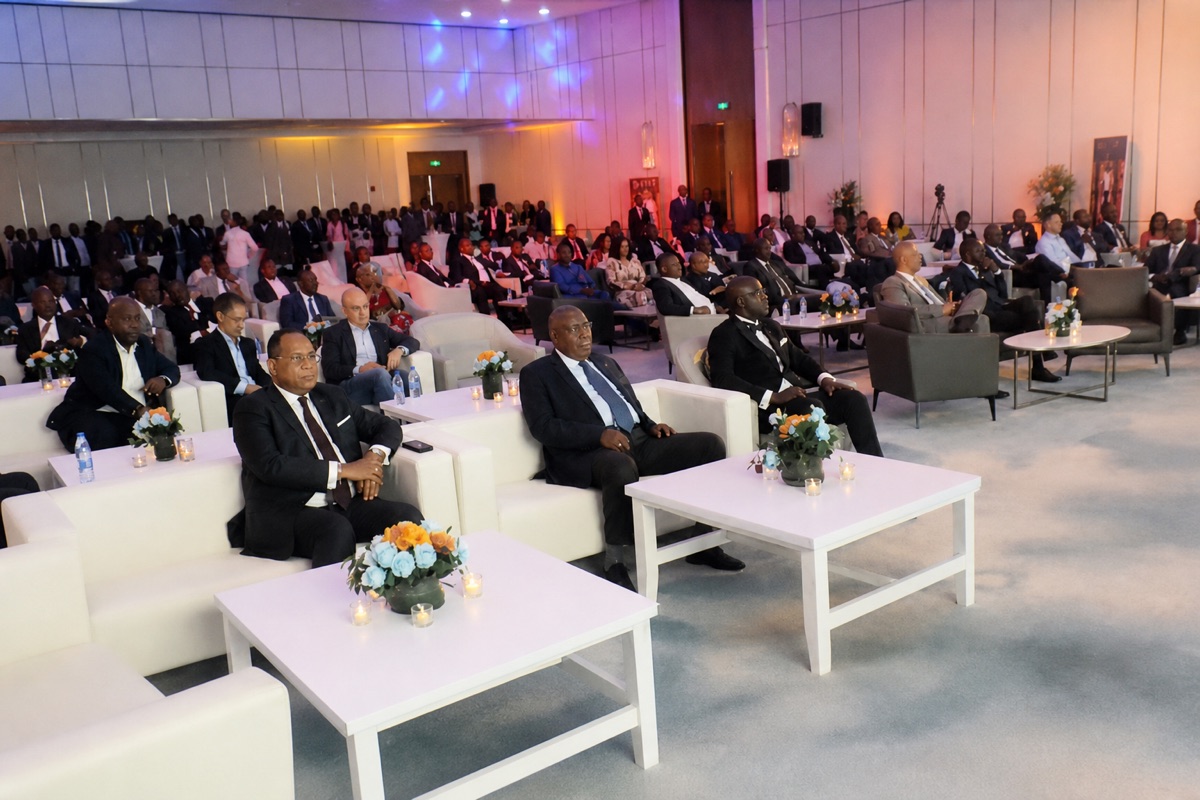
At a ceremonial gathering in Brazzaville, attended by institutional representatives and business partners, Ernst & Young unveiled a recasting of its identity across the Republic of the Congo and francophone Africa. The storied audit and advisory house, long present under a single global banner, has chosen to consolidate its regional presence into two distinct, specialised firms: Eritedge and Elyos. The move, modest in spectacle yet considered in intent, signals an ambition to align one of the profession’s most recognisable names with the particular textures of central African markets, where the demand for credible assurance and sophisticated advice has grown in step with the region’s fiscal and corporate maturation.
A deliberate parting of two disciplines
The architecture of the reorganisation rests on a clear division of labour. Eritedge is to assume the firm’s financial audit and assurance work, anchoring its remit in the reliability of information, the rigour of governance and the pursuit of durable performance. In an environment where investors, lenders and public authorities increasingly scrutinise the integrity of reported figures, the decision to house assurance within a dedicated structure reads as more than a cosmetic rebranding. It reflects a wider tendency within the profession to insulate audit, with its premium on independence, from the commercial gravitational pull of advisory services.
Elyos, by contrast, gathers the consulting vocations: legal and tax counsel alongside support for strategic, digital and operational transformation. This is the side of the practice that converses most directly with executives wrestling with regulatory complexity, technological change and the imperatives of competitiveness. By drawing a line between the two, the group appears to be answering, in its own register, the long-running debate over potential conflicts between certifying a company’s accounts and advising it on how to reshape its affairs.
Nine markets, one regional wager
The scope of the new configuration is regional rather than merely national. The two entities are to operate across nine countries, drawing on a workforce of more than nine hundred professionals. That footprint situates the reorganisation within the broader competitive landscape of central and francophone Africa, where the large international networks have steadily deepened their roots while contending with home-grown firms attuned to local practice. The stated aspiration is to set fresh benchmarks for audit and consulting on the continent, holding international standards and local expertise in the same hand rather than treating them as rivals.
For a market such as Congo-Brazzaville, the calculation is not incidental. The country’s economy, heavily inflected by extractive revenues and by the disciplines of CEMAC convergence, places a premium on the kind of assurance that reassures external partners and on the kind of advice that helps firms and institutions navigate reform. A practice that can credibly certify accounts while separately guiding transformation speaks to both halves of that equation, provided the separation is more than nominal.
The quiet logic of separation
There is a subtle wisdom in the choice to give each function its own name and its own face. Brand differentiation of this sort allows clients to know precisely which house they are engaging, and for which purpose, reducing the ambiguity that can shadow a single multidisciplinary banner. It also positions each firm to cultivate a distinct culture: one oriented towards the sober, exacting temperament that audit demands, the other towards the more entrepreneurial cadence of consulting, legal practice and digital change.
Whether the wager pays off will depend less on the launch than on the years that follow. Names are easily changed; reputations for independence and for insight are accumulated slowly, transaction by transaction and engagement by engagement. The professionals now distributed between Eritedge and Elyos inherit not only a new identity but the expectations that attend it, in a region where the appetite for trustworthy figures and clear-eyed counsel shows little sign of abating.
What it signals for the region
Read against the backdrop of the firm’s own description of the event, the reorganisation is best understood as an attempt to meet the market where it is heading rather than where it has been. The emphasis on governance and durable performance on the assurance side, and on transformation on the advisory side, mirrors the priorities now voiced by cadres, public officials and entrepreneurs across the area. If the two entities can hold international rigour and local fluency in genuine balance, they may indeed help raise the bar for audit and consulting in central Africa, offering a template that others, domestic and international alike, will feel obliged to study. For now, the ceremony in Brazzaville stands as a statement of intent, its measure still to be taken in the slower currency of trust.
