
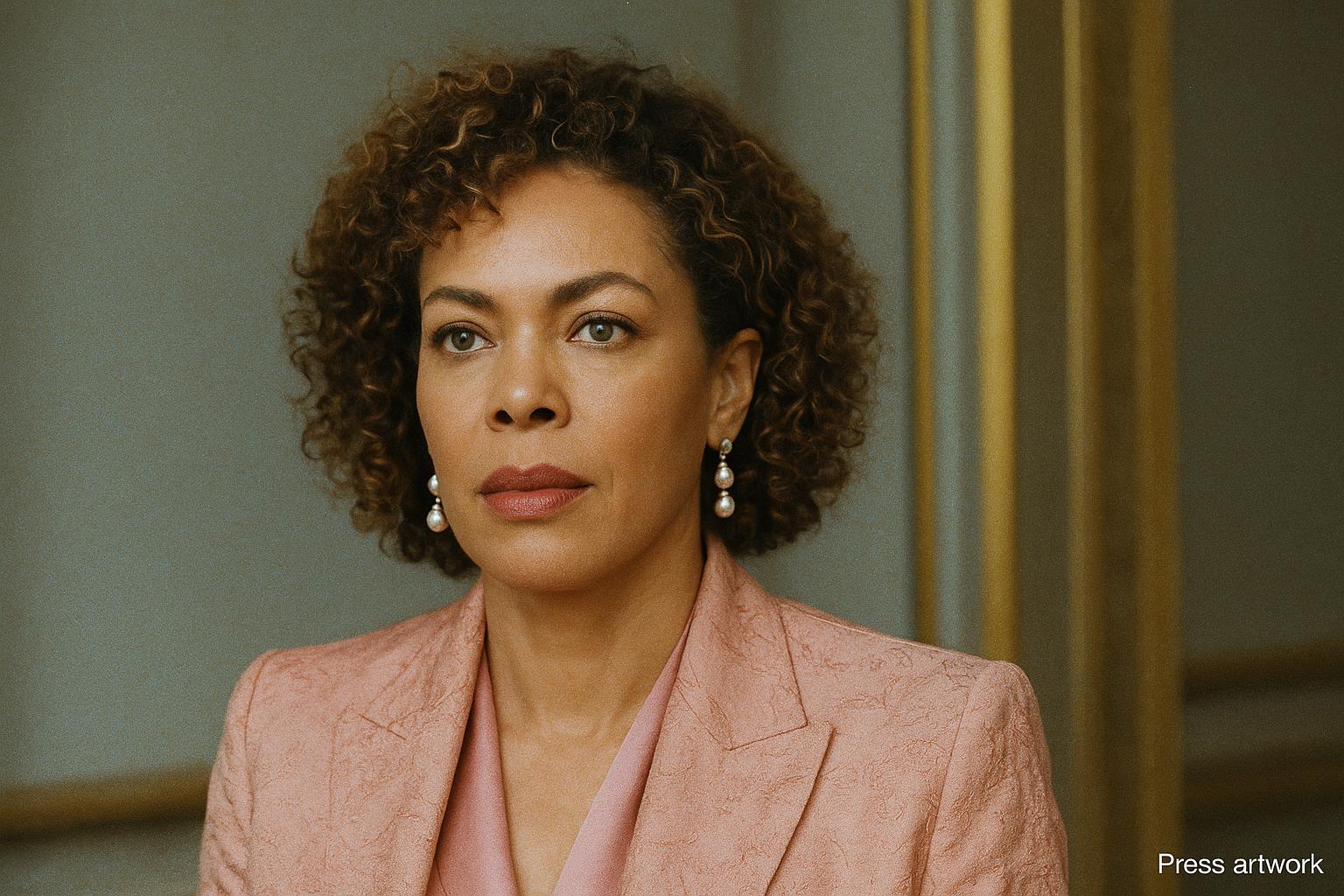
A seasoned envoy steps onto the Potomac stage
When Dr. Françoise Joly arrived in Washington this week, she did so not as a newcomer but as a diplomat whose résumé already spans sensitive mediation in Central African crises and climate negotiations under the Central African Forest Initiative. Her mandate from President Denis Sassou Nguesso was explicit: reopen strategic channels with the Biden administration after months of pandemic-induced diplomatic inertia. American observers interviewed by The Hill described the trip as “a quiet reset” rather than a headline-grabbing summit, yet the nuance is precisely what gives the mission its weight.
Economic recalibration grounded in energy transition
Beyond protocol, the economic sub-text loomed large. Congo’s hydrocarbon-dominated economy, still recovering from the 2020 oil price shock, requires urgent diversification. Dr. Joly presented an investment prospectus centred on special economic zones in Pointe-Noire and Oyo, paired with incentives for U.S. renewable-energy firms. A senior analyst at the Atlantic Council notes that such overtures resonate with the Biden administration’s push for critical mineral supply chains away from rival spheres of influence. Brazzaville’s cobalt and potash reserves—often eclipsed by its oil narrative—could thus gain newfound strategic relevance.
Travel ban breakthrough signals goodwill
The most tangible outcome, however, concerns the targeted travel restrictions imposed Congolese nationals in June. The joint communiqué refers to an ‘open and constructive’ review of the measures. While neither side announced an immediate repeal, diplomatic insiders affirm that a phased relaxation—beginning with medical and educational travel—could be formalised before the next U.S.–Africa Business Forum. A former State Department legal adviser quoted by Foreign Policy cautions that Congress will scrutinise such a move, yet he concedes that ‘incremental relief is now politically saleable’ given Brazzaville’s recent cooperation on anti-wildlife-trafficking investigations.
Security cooperation gains quiet momentum
Washington’s renewed interest is not purely transactional. The Pentagon’s Africa Center for Strategic Studies values Brazzaville’s discreet facilitation of humanitarian corridors into the Central African Republic, a role French and Rwandan officers privately commend. During the current visit, Dr. Joly reiterated Congo’s willingness to host a regional maritime training hub that could dovetail with the U.S.-sponsored Obangame Express exercises. Analysts at the Institute for Security Studies argue that such cooperation enhances collective deterrence against piracy while granting Congo diplomatic leverage disproportionate to its defence budget.
Regional optics and measured expectations
The symbolism of the visit extends beyond bilateral confines. As the Economic Community of Central African States grapples with institutional reform, Congo’s proactive engagement with Washington offers a template for smaller neighbours navigating great-power competition. Yet officials in both capitals temper enthusiasm with realism. Structural issues—from port infrastructure gaps to judicial predictability—will not vanish overnight. Nevertheless, the atmospherics have shifted: where dialogue once revolved around compliance checklists, it now orbits around shared opportunities.
Incremental progress over grand gestures
In the measured cadence of diplomacy, breakthroughs are seldom televised. Dr. Françoise Joly returns to Brazzaville with no flamboyant accords to brandish, but with something arguably more valuable: a reopened conduit of trust with a super-power whose attention span on Central Africa has often been episodic. Should subsequent technical teams translate political intent into binding frameworks—on mobility, investment guarantees and climate finance—the mission may be remembered as the moment Congo-U.S. relations exited the holding pattern of polite stagnation and entered a phase of calibrated, mutually advantageous engagement.
