
Diplomatic Landscape and Economic Outlook
When the Ministry of Foreign Affairs in Brazzaville briefs newly arrived envoys, it does so with an understated confidence born of macroeconomic stabilisation. After the turbulence of the 2014 oil price shock, fiscal consolidation under the Extended Credit Facility has started to narrow the deficit, and GDP growth is expected to hover around 4 percent in 2024 (IMF 2023). The government’s narrative stresses predictability: hydrocarbons remain the cornerstone of revenue, yet policy makers are keen to promote a multi-sectoral investment code that was revised in 2022 to harmonise concessions and repatriation terms. For chancelleries weighing commercial diplomacy, this signals a maturation of the economic governance framework rather than a rupture.
From Hydrocarbons to Diversification Agenda
Brazzaville’s interlocutors concede that diversification is not a slogan but an imperative as mature offshore fields decline. Special economic zones in Pointe-Noire and Ouesso have attracted agro-industrial ventures in timber processing and palm oil; a memorandum signed with the African Development Bank envisages a regional fertiliser hub to serve Central Africa (AfDB 2023). While critics contend that the industrial base is embryonic, officials counter that the logistical backbone—deep-water ports, rail rehabilitation toward the northern hinterland, and an emerging PPP framework—creates a credible pipeline for medium-term manufacturing. The strategy draws on precedent from smaller petro-economies such as Gabon, yet Congo’s policymakers insist on a uniquely Congolese pacing that safeguards social stability.
Human Capital Priorities and Youth Demographics
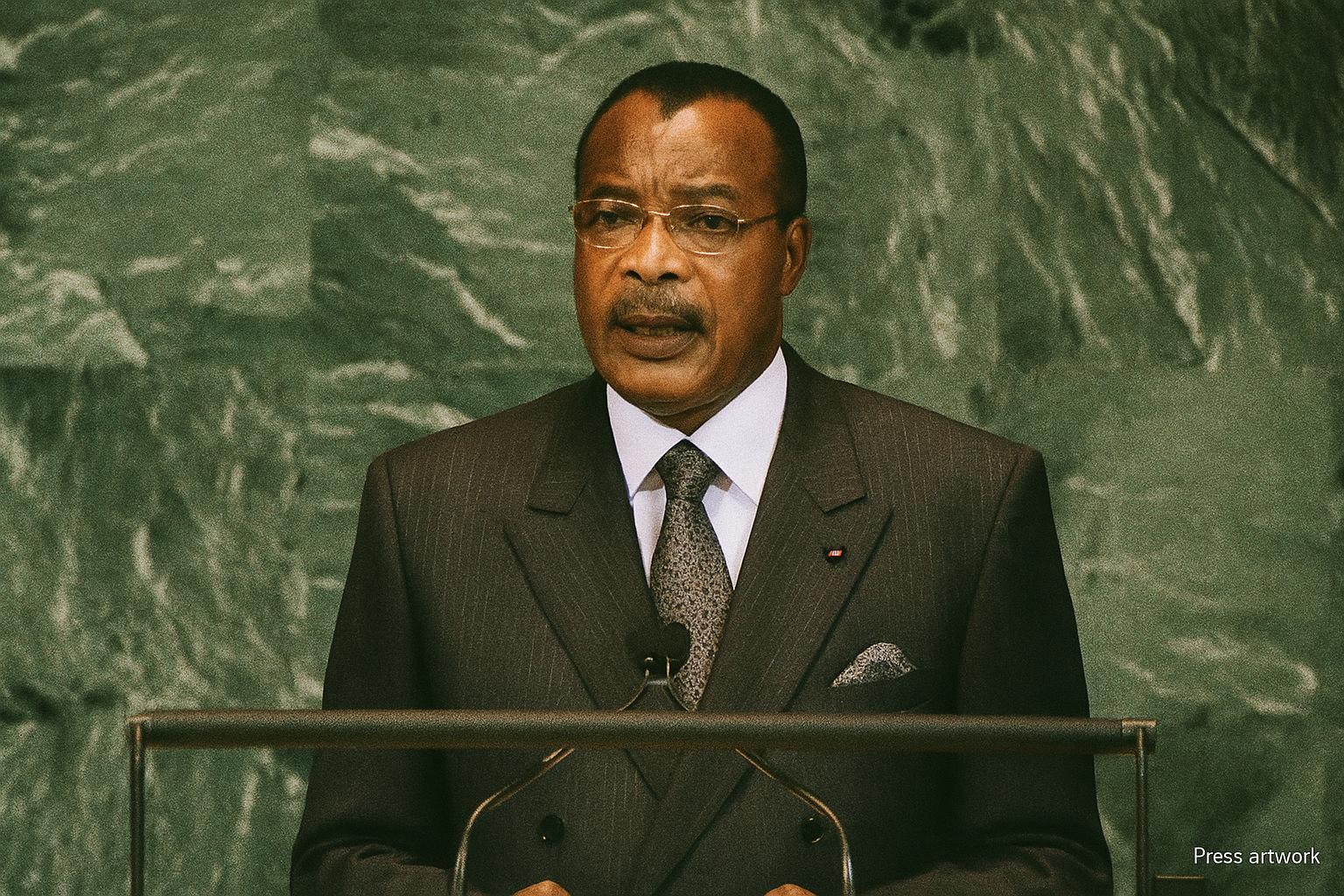
Nearly 60 percent of Congolese citizens are under twenty-five, a demographic dividend that President Denis Sassou Nguesso repeatedly frames as an “opportunity for transformation” rather than a burden. The 2021–2025 National Development Plan allocates 17 percent of expenditure to education and vocational training, a ratio above the Sub-Saharan average (UNESCO 2022). International partners cite credible gains in primary-school enrolment and a nascent digital-skills initiative supported by the International Telecommunications Union. Nevertheless, graduate unemployment remains elevated. Government advisers acknowledge the mismatch, yet emphasise that the planned educational city in Kintélé, integrating universities with private incubators, exemplifies a new governance ethos aimed at employability.
Infrastructure Corridors and Regional Integration
The Pointe-Noire–Brazzaville corridor functions as Congo’s arterial lifeline, and its modernisation has wider continental implications. By 2025, the completion of the Road-Rail Bridge over the Congo River is expected to shorten transit times between Brazzaville and Kinshasa to under thirty minutes, reshaping freight dynamics in the corridor that handles 11 percent of Central African trade (UNECA 2023). Diplomats in the Economic Community of Central African States stress that such connectivity underpins the African Continental Free Trade Area. Investors note that seamless customs protocols and one-stop border posts—piloted with Rwandan technical assistance—are gradually turning rhetoric into bankable realities.
Environmental Stewardship and Climate Diplomacy
Covering part of the Cuvette Centrale peatlands, Congo stores an estimated thirty billion tonnes of carbon—an ecological asset that has propelled the country into climate negotiations with renewed leverage (Nature 2021). Brazzaville’s low-deforestation development trajectory earned a USD 65 million results-based payment agreement with the World Bank’s Forest Carbon Partnership. Critics of carbon-offset regimes argue that monetisation risks diluting local land-rights, yet officials underscore inclusive consultation mechanisms anchored in communal forestry legislation updated in 2020. At COP27, Congo advocated stronger South-South financing instruments, positioning itself as a mediator between forested states and traditional donors.
Soft Power through Culture and Francophonie
Beyond the metrics of GDP and tonnage, Congo’s cultural aura matters. The International Festival of the Congo Basin Arts, revived in 2022, convened choreographers, authors and jazz ensembles from fourteen nations, casting Brazzaville as a polyphonic hub in Francophone Africa. UNESCO’s designation of the capital as a “City of Music” in 2021 augments the country’s soft power toolkit, reinforcing narratives of resilience and creativity. Embassies leveraging public diplomacy find fertile ground in partnerships with the National Museum, whose latest exhibition on pre-colonial kingdoms underscores an intent to reclaim and curate Congolese historiography with scholarly rigour.
Strategic Takeaways for Foreign Missions
For diplomatic and corporate actors, the Republic of Congo presents a tableau in transition: fiscal houses being set in order, diversification incrementally pursued, and climate diplomacy leveraged with strategic subtlety. Challenges—debt sustainability, youth employment, and infrastructural maintenance—are acknowledged by authorities rather than airbrushed. What emerges is a pragmatic polity seeking partners willing to navigate complexity with patience. Those who read only the macroeconomic headlines may miss the quieter renaissance unfolding across technology classrooms in Kintélé or along the soon-to-be-completed trans-river bridge. For astute observers, the message from Brazzaville is unambiguous: opportunities are expanding, but success will belong to interlocutors prepared for a marathon rather than a sprint.
