
A candidacy calibrated for multilateral resonance
By proposing Firmin Édouard Matoko—an international civil servant who has already steered UNESCO’s Africa Department—Brazzaville seeks to translate technical expertise into continental leverage. According to the UNESCO Executive Board calendar, the official campaign period allows member states to present nominees until early 2025. Congolese authorities moved swiftly, framing Matoko not merely as a national figure but as a custodian of pan-African educational and cultural aspirations. Foreign Minister Jean-Claude Gakosso publicly underscored the “shared patrimony” underpinning the bid, emphasising that African ownership of knowledge economies remains a prerequisite for sustainable peace.
Regional overtures from Luanda to Gaborone
The tour that began on 21 July in Luanda was more than protocol. Angolan President João Lourenço signalled receptiveness by evoking the imperative of Lusophone-Francophone synergy within UNESCO governance (African Union communiqué, 23 July 2023). In Namibia and Botswana similar arguments prevailed: Matoko’s fluency in both tongues and his tenure as Assistant Director-General for Priority Africa were framed as assets capable of transcending linguistic cleavages that have occasionally complicated continental voting blocs.
Gakosso’s delegation, which included senior advisers from the ministries of culture and finance, deliberately highlighted Matoko’s record in mobilising extra-budgetary funds for the Education For All initiative. That narrative resonated in Gaborone, where officials privately lament UNESCO’s shrinking envelope for technical missions in landlocked states. By pledging targeted support for science-centric curricula, Brazzaville positioned its candidate as a facilitator rather than an ideologue, a nuance welcomed by Southern African interlocutors.
Mauritian interlocution seals Southern chapter
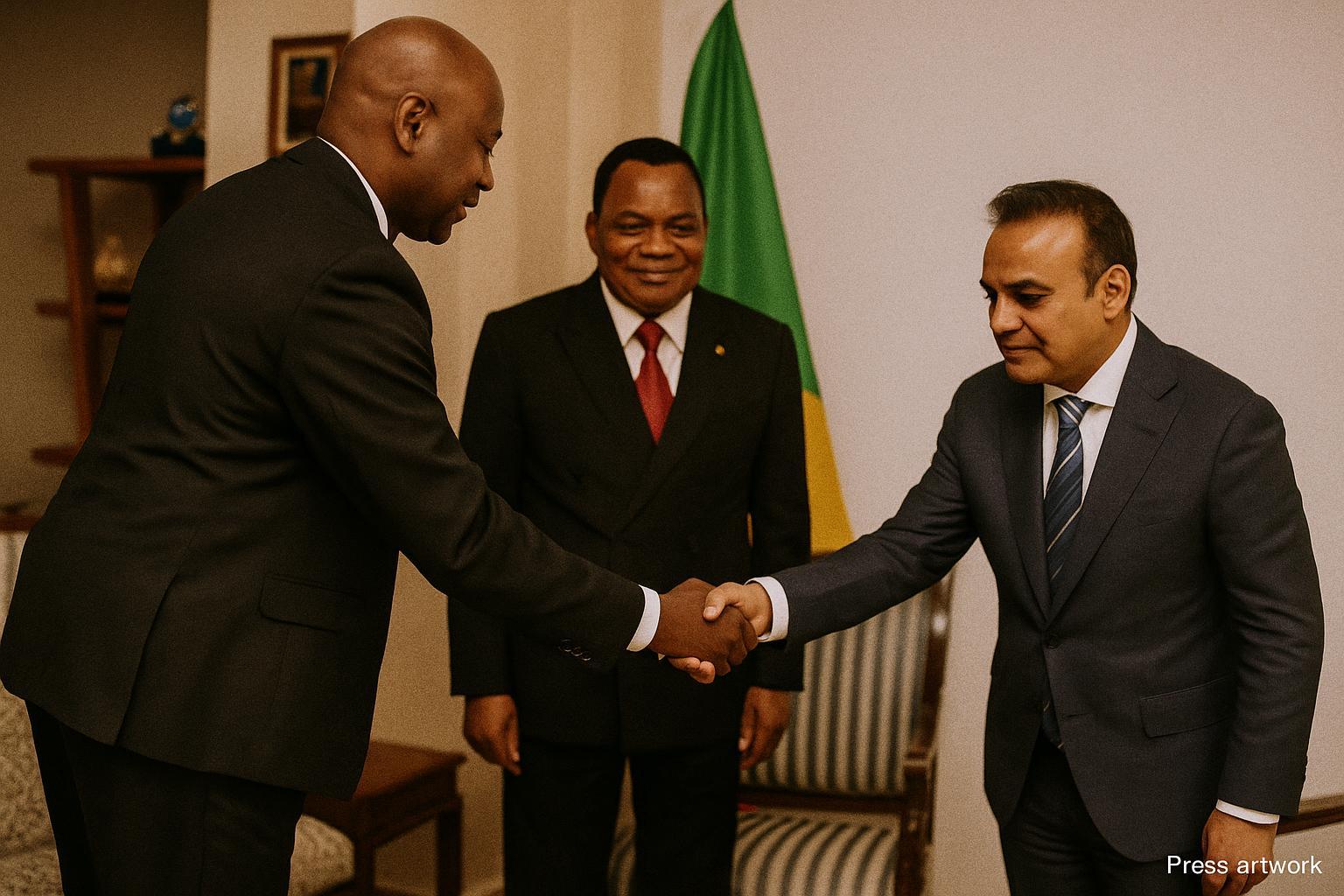
The reception offered on 25 July by Acting President Dhananjay Ramful in Port-Louis underscored the archipelagic state’s interest in maritime heritage and climate pedagogy. Gakosso publicly conveyed a written message from President Denis Sassou Nguesso portraying Matoko as “a bridge between oceanic and continental Africa” (Mauritian State House press release, 25 July 2023). Local analysts interpreted the wording as an overture to the Indian Ocean Commission, whose alignment could prove decisive in later voting rounds.
Diplomatic sources indicate that Port-Louis valued Brazzaville’s assurances that a Matoko administration would advance the long-standing dossier on indentured-labour heritage sites, a priority for Mauritius at the World Heritage Committee. By securing support in the island nation, Congo-Brazzaville effectively closed its Southern African canvassing with an encouraging chorus, while abstaining from triumphalism that might alienate undecided states.
Prime Ministerial relay toward West and Horn
Hardly forty-eight hours after Gakosso’s return to Brazzaville, Prime Minister Anatole Collinet Makosso prepared to embark on a second leg that will include Gabon, Côte d’Ivoire, Nigeria, Burkina Faso, Liberia and Djibouti. The hand-over signals institutional consensus at the apex of government and mirrors practices observed in previous African candidacies to UN organs, where a rotation of envoys sustains momentum while preventing fatigue among host governments.
Makosso, well known for his background in educational reform, is expected to foreground Matoko’s promise to revitalise UNESCO’s intergovernmental programme for the management of social transformations, an agenda of interest to West African capitals grappling with demographic bulges. Abuja in particular is viewed as pivotal: a positive signal from Nigeria often influences voting patterns among anglophone states, a dynamic confirmed during the last Director-General election that elevated Audrey Azoulay in 2017.
Implications for African representation at UNESCO
Should Matoko prevail, he would become the second African to lead UNESCO after Federico Mayor Zaragoza’s Spanish tenure gave way to Koïchiro Matsuura and later Irina Bokova and Audrey Azoulay. African diplomats often argue that the continent’s cultural and educational burdens warrant a more pronounced voice in Paris. The Matoko bid hence serves as a litmus test of whether fragmented regional caucuses can cohere around a single nominee, particularly given persistent North-South debates over normative instruments.
Observers in Addis Ababa note that the African Union Executive Council may convene an extraordinary session to endorse one candidate formally, as it did during the election to head the World Health Organization in 2017. Such an endorsement, if secured, would markedly enhance Brazzaville’s arithmetic in the Executive Board and General Conference.
Diplomacy as continuity of domestic priorities
Brazzaville’s energetic campaign also dovetails with a domestic emphasis on educational modernisation outlined in the National Development Plan 2022-2026. By projecting that narrative onto the multilateral scene, the Congolese leadership portrays international engagement as an extension of national policy rather than a diversion from it. In interviews with foreign media, Gakosso has repeatedly framed the bid as consonant with President Denis Sassou Nguesso’s call for a Congo that exports solutions rather than raw materials (Congo-Brazzaville Ministry of Foreign Affairs briefing, 26 July 2023).
For a country seeking to broaden its diplomatic portfolio beyond hydrocarbons and security mediation, the UNESCO race offers a platform to demonstrate soft-power agility. The coming months will reveal whether the careful sequencing of ministerial visits, coupled with an appeal to collective continental pride, can translate goodwill into the secret-ballot mathematics that ultimately decides leadership in Paris.
