
Continental ambition takes shape
The July itinerary of Minister of Foreign Affairs Jean-Claude Gakosso has placed Congo-Brazzaville squarely at the centre of Africa’s pre-electoral manoeuvring for the 2025 contest to choose the next Director-General of UNESCO. Acting on a mandate personally signed by President Denis Sassou Nguesso, the minister has championed the candidature of Firmin Édouard Matoko, a former UNESCO Assistant Director-General whose three-decade tenure inside the organisation lends institutional gravitas to Brazzaville’s pitch. In the words of a senior adviser travelling with the delegation, the effort is “less a campaign tour than a continental conversation about Africa’s rightful place in global governance”.
Setting the regional tempo in Southern Africa
Beginning in Luanda on 21 July and moving through Windhoek, Gaborone and Maputo before culminating in Port-Louis four days later, the southern swing targeted capitals that routinely carry weight inside the African Union’s Committee on Candidatures. The Angolan leg was particularly strategic: Luanda, as chair of the Southern African Development Community in 2023, can influence the nineteen-member bloc whose endorsement often prefigures voting patterns at UNESCO’s Executive Board. Angolan Foreign Minister Téte António, after meeting his Congolese counterpart, affirmed that “regional solidarity is an imperative rather than an option” (Angolan MFA press briefing, 22 July).
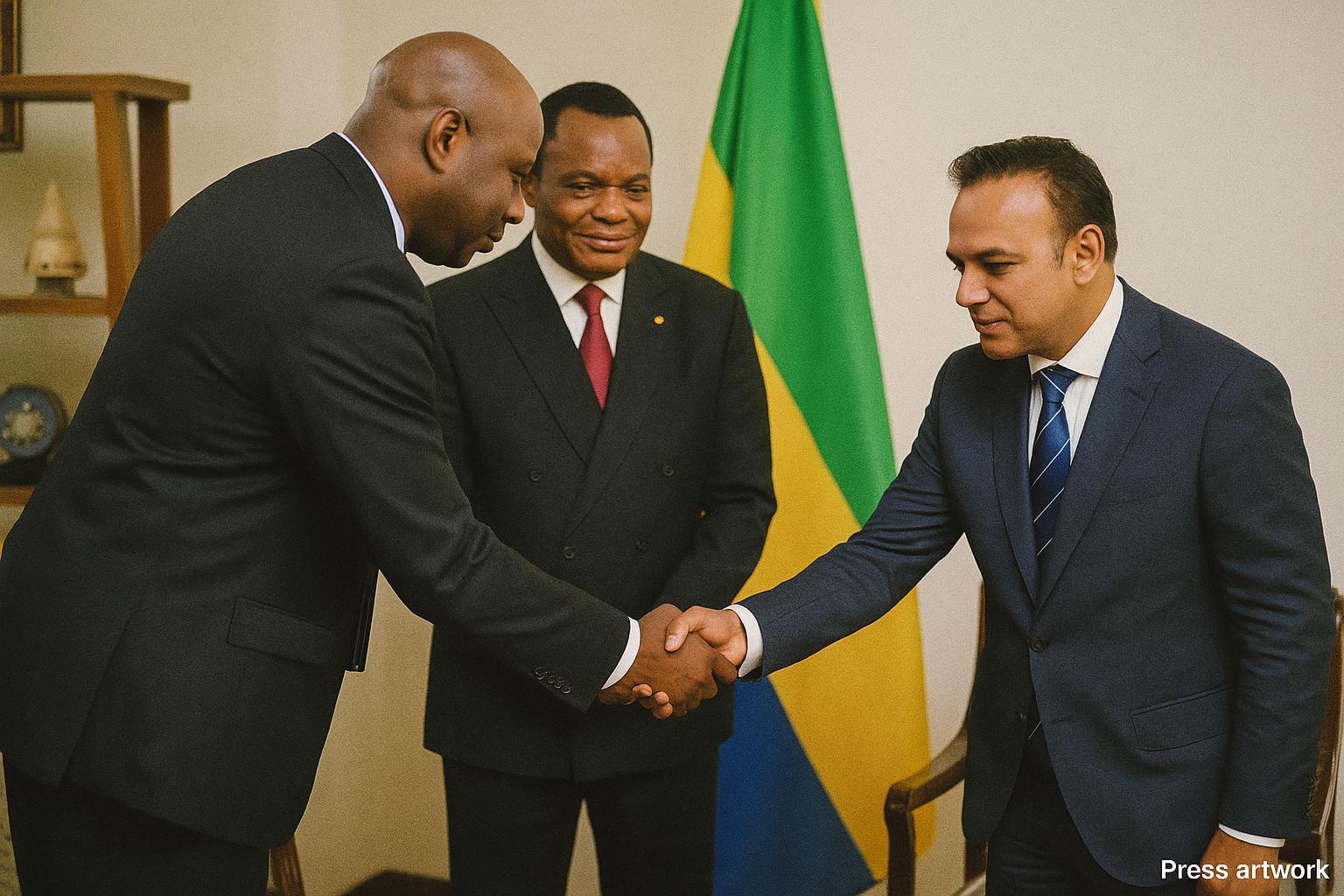
Symbolism of the Mauritian handshake
The closing stop in Port-Louis carried symbolism beyond its modest voting weight. President Dhananjay Ramful, an alumnus of UNESCO’s Global Education Coalition, underscored the alignment between Matoko’s portfolio in education and the Mauritian government’s own blue-economy curriculum reforms. By choosing an island state celebrated for multilingual education, Brazzaville subtly showcased the candidate’s Francophone charisma without alienating Anglophone or Lusophone partners—a nuance frequently rewarded in Paris during past elections, according to diplomats familiar with the 2017 contest that saw Audrey Azoulay prevail.
From Libreville to Djibouti: Westward and Eastward swing
While Minister Gakosso closes the southern arc, Prime Minister Anatole Collinet Makosso stands ready to project the same velocity toward Central, West and East Africa. Beginning 27 July, he is scheduled to brief leaders in Libreville, Abidjan, Abuja, Ouagadougou, Monrovia and Djibouti. Senior officials in the Prime Minister’s Office describe the hand-over as a “relay baton” strategy designed to keep the narrative fresh in regional headlines while signalling whole-of-government commitment. The timing is not arbitrary: most of these capitals will finalise their UNESCO Executive Board nominations before the end of August, and early clarity has historically bolstered African bargaining power in multilateral negotiations (AU Executive Council communiqué, Feb 2023).
Africa’s arithmetic at UNESCO headquarters
Africa commands seventeen of the fifty-eight seats on UNESCO’s Executive Board, a numerical bloc capable of decisive influence if it maintains cohesion. Yet the continent has not occupied the Director-General’s office since Amadou-Mahtar M’Bow of Senegal left the post in 1987. In private conversations, several African diplomats in Paris concede that multiple African aspirants would fracture the vote, echoing the 2013 and 2017 precedents. Gakosso’s shuttle diplomacy therefore seeks not only affirmative endorsements but also tacit agreements from other potential African hopefuls to stand down in favour of a consensual ticket. Sources close to the Congolese delegation suggest that preliminary assurances have been received from at least three states traditionally inclined to field nominees.
Soft power dividends for Brazzaville
Beyond the electoral calculus, the campaign feeds into Brazzaville’s broader objective of repositioning itself as a hub for educational and cultural diplomacy. The government is finalising a national strategy that would see the capital host biennial forums on intangible cultural heritage, a niche fully aligned with UNESCO’s mandate. Analysts at the Institute for Security Studies argue that such initiatives can mitigate perceptions of Congo as solely an oil economy, instead showcasing an agenda anchored in knowledge diplomacy and environmental stewardship. The presence of Matoko at the helm of UNESCO would naturally accelerate these aspirations, although officials insist that the domestic agenda will proceed irrespective of the election’s outcome.
What to expect on the road to 2025
The formal window for submitting candidatures opens in spring 2024, and campaigning will intensify once the UNESCO Executive Board publishes the list of eligible nominees. Brazzaville plans a second tour early next year that will include Asian and Latin American interlocutors, reflecting the recognition that African unity, while indispensable, is insufficient on its own. Meanwhile, Matoko is expected to unveil a programme document centred on digital literacy, cultural entrepreneurship and multilingual education, themes that resonate with UNESCO’s post-pandemic agenda as defined in the 2022-2029 medium-term strategy. Observers in Paris note that Congo’s diplomatic cadence has already earned respect for its professionalism and tenor, with one veteran delegate remarking that “Brazzaville is playing the long game, and doing so with notable finesse.”
