
A Call for Serenity in a Volatile World
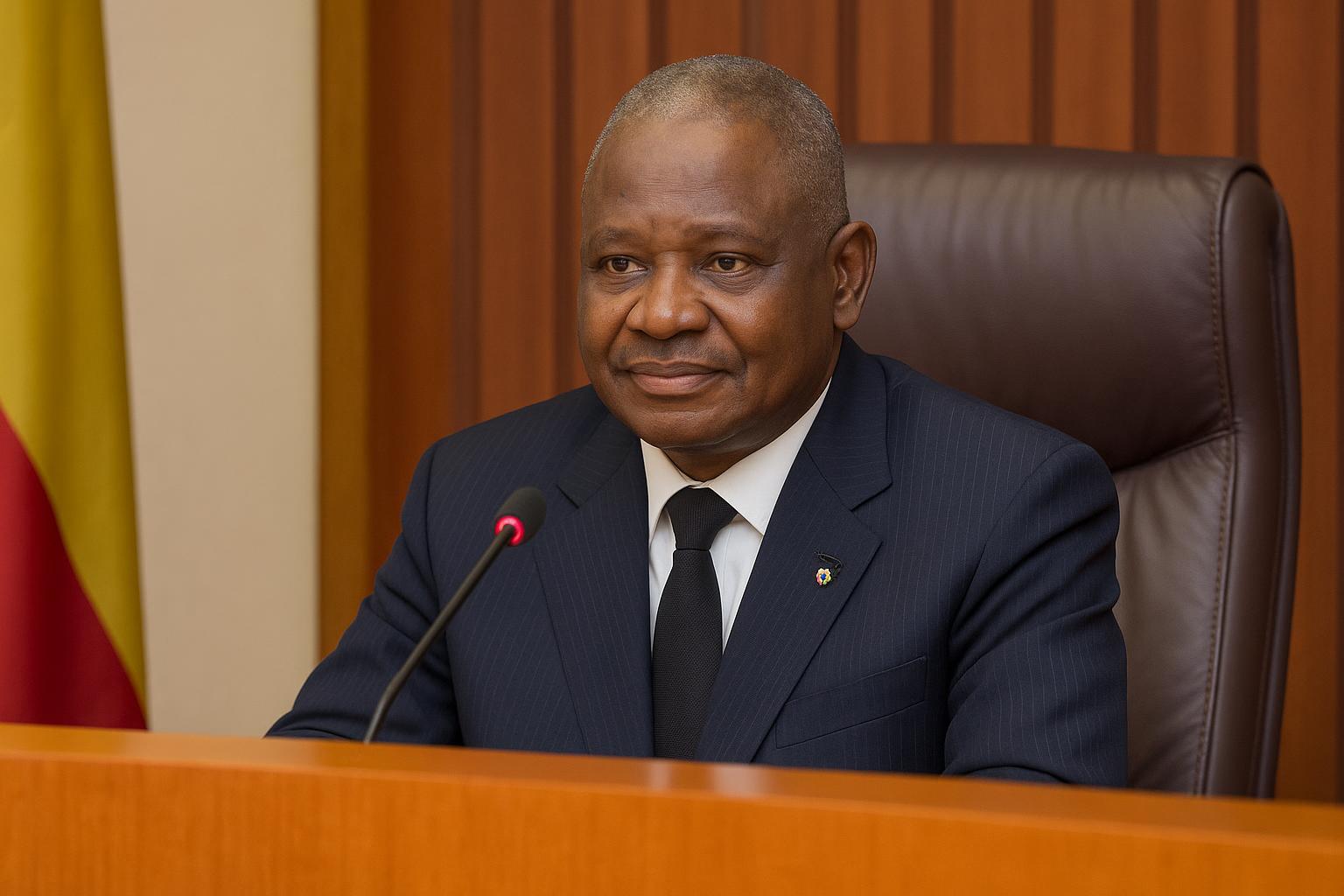
In the vaulted chamber of the Palais des Congrès, Senate President Pierre Ngolo closed the sixth ordinary administrative session with a measured but unmistakable appeal: “Protecting and consolidating our democracy in recognising the people’s ultimate prerogative must remain the priority.” His words, delivered on 13 August in Brazzaville, resonated beyond the legislative benches. International markets still tremble over geopolitical rivalries, commodity price swings and climate-induced disruptions. Within that tempest, Congo’s leadership is determined to cultivate a rare commodity—domestic political serenity—well before the 2026 presidential contest comes into sharp focus (Les Dépêches de Brazzaville, 14 Aug 2023).
Ngolo’s exhortation possesses a dual purpose. On the one hand, it anchors a narrative of continuity prized by investors and multilateral lenders who have lauded recent macro-economic discipline (IMF Staff Report, May 2024). On the other, it signals to an electorate still mindful of the post-electoral turbulence of the 1990s that institutional vigilance is the safest guarantor of long-term stability. By foregrounding transparency and public order, the Senate hopes to inoculate national politics against the polarising currents sweeping the continent.
Legislative Productivity and the Reform Docket
Seventy days of deliberation yielded an agenda both dense and pragmatic. Twenty-four items were adopted, including fourteen treaty ratifications, approval of petroleum production-sharing contracts and six government-initiated bills aimed at refining the state’s economic toolkit. Senators endorsed the establishment of an Agency for the Environment, an Agency for the Transformation of the Informal Economy and the future construction of general hospitals in Ouesso and Sibiti. These moves dovetail with the National Development Plan 2022-2026, which seeks to shift value creation downstream and broaden access to public services (Congo Ministry of Planning, June 2024).
Parliament’s readiness to validate production-sharing accords underscores the hydrocarbon sector’s role as fiscal mainstay, supplying roughly two-thirds of export earnings. Yet the debate was not devoid of conditionality. Several senators asked the Ministry of Hydrocarbons to tighten local-content clauses, a stance that mirrors calls by the African Energy Chamber for greater domestic spill-overs (AEC Bulletin, July 2024). The calibrated scrutiny illustrates how the chamber balances investor friendliness with national development imperatives.
Parliamentary Diplomacy as Strategic Asset
At a moment when Congo’s foreign policy agenda is widening beyond classic Francophone alliances, the Senate has embraced what Ngolo terms “diplomatie parlementaire évolutive.” Recent participation in the 50th Parliamentary Assembly of La Francophonie and the Bastille Day parade in Paris signalled alignment with traditional partners, yet Brazzaville’s legislative emissaries also exchanged memoranda with counterparts from Türkiye and the United Arab Emirates earlier this year (APA News, 2 Jun 2024).
Such outreach serves multiple objectives. It secures technical assistance for the forthcoming constitutional review, courts investors for agriculture and renewable energy projects, and positions Congo as a consensual broker in Central Africa’s evolving security architecture. A senior diplomat in the Ministry of Foreign Affairs, requesting anonymity, noted that “parliamentary diplomacy often opens doors conventional channels leave only ajar.” By layering soft-power overtures atop executive diplomacy, lawmakers aim to diversify partnerships without forfeiting strategic autonomy.
Fiscal Rectitude and the 2026 Budget Horizon
The budget-orientation debate, a relatively recent innovation in Congo’s legislative calendar, provided a glimpse into fiscal priorities stretching to 2026. Senators recommended curbing what they described as “abusive” tax exemptions, arguing that implicit subsidies deprive the treasury of revenue needed for public health and infrastructure. Their caution dovetails with World Bank estimates that foregone revenue from exemptions approaches 4 percent of GDP annually (World Bank Macro Poverty Outlook, April 2024).
Yet the chamber stopped short of advocating outright austerity. Rather, members endorsed a medium-term expenditure framework that preserves social safety nets while accelerating diversification initiatives in agribusiness, digital services and tourism. Finance Minister Rigobert Roger Andely, in an interview with Radio Congo, welcomed the legislative guidance, emphasising that “discipline and growth are not mutually exclusive.” The interplay between prudent budgeting and inclusive development forms the backbone of the economic narrative that officials intend to showcase to credit-rating agencies next year.
Safeguarding the Democratic Space
Well before campaign posters begin plastering Brazzaville’s boulevards, the Senate has mapped out procedural guardrails to avert inflammatory rhetoric. Proposed revisions to the Electoral Code would heighten disclosure requirements for campaign financing and extend the jurisdiction of the Constitutional Court in pre-electoral adjudication. Civil-society organisations consulted by the lower house have broadly endorsed the reforms, though some urge faster timelines (Congo-Web, 5 Jul 2024).
Ngolo, mindful of regional coups that have unsettled the Sahel, framed institutional stability as a national security imperative. His address drew implicit contrasts with neighbouring states that have experienced abrupt constitutional resets. By advocating incremental reform over rupture, the Senate projects certainty to both domestic constituencies and external partners, including China’s Exim Bank, which is financing segments of the Pointe-Noire–Brazzaville corridor.
A Measured Path toward 2026
As Congo approaches the sixty-fifth anniversary of independence, the upper chamber’s agenda encapsulates a philosophy of measured progress. Legislative productivity, calibrated economic openness and active diplomatic engagement coalesce into a forward-looking posture. Analysts at the Institute for Security Studies observe that “Brazzaville’s incrementalism, though unspectacular, has historically underwritten its resilience.”
That resilience will be tested over the next twenty-four months. Commodity markets may soften, climate shocks could strain rural livelihoods, and the social media sphere—largely unregulated—can magnify polarisation. Yet by signalling consensus well ahead of the electoral calendar, the Senate offers a blueprint for continuity anchored in legality and dialogue. For diplomats posted in Brazzaville, the message is clear: the roadmap to 2026 is being paved not in crisis rooms but in committee chambers, one debated clause at a time.
