
A Ballot Overshadowed by Daily Struggle
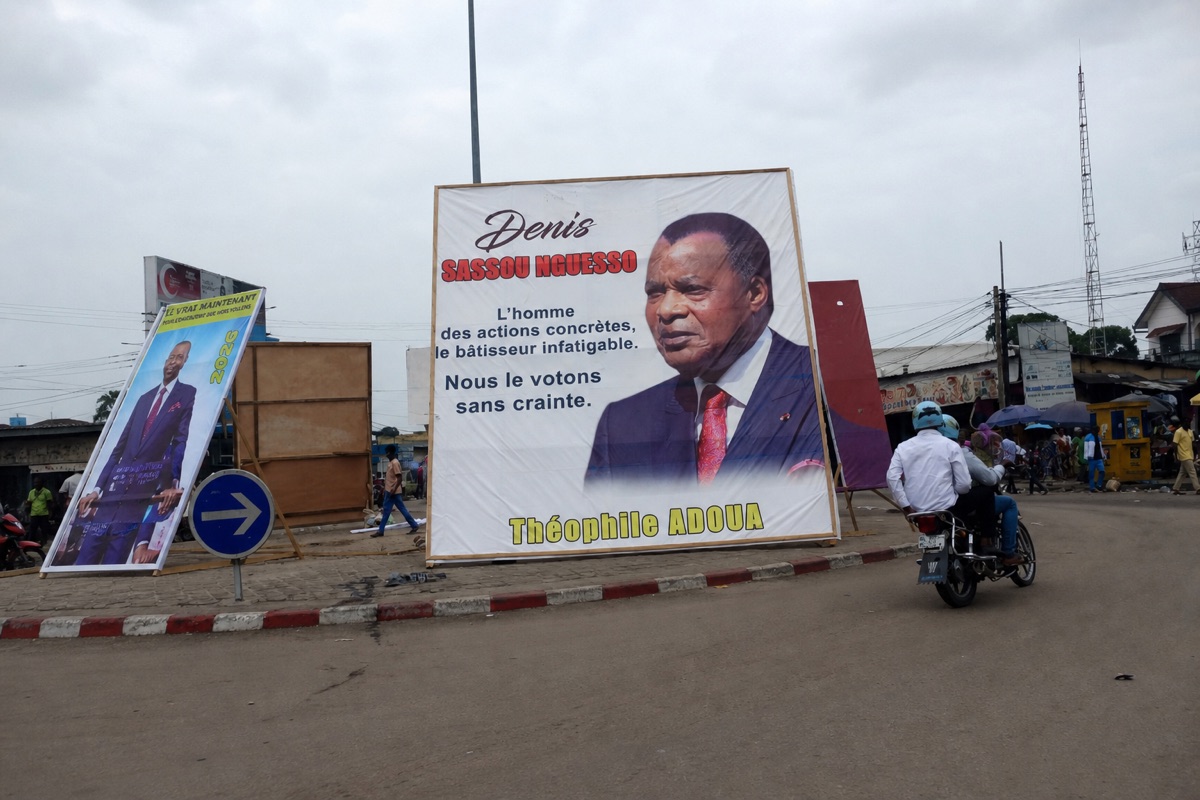
There is a peculiar quiet hanging over Congo-Brazzaville as the country approaches its presidential ballot. The military and certain security personnel cast their votes ahead of the rest, going to the polls on Thursday 12 March, while the wider electorate is called to decide on Sunday 15 March. Yet for a contest of such constitutional weight, the campaign has stirred remarkably little public ardour. According to Etanislas Ngodi, a lecturer and researcher at Marien Ngouabi University in Brazzaville, this muted atmosphere is no accident of mood but the symptom of something deeper, rooted in the lived precariousness of ordinary Congolese.
The Incumbent and a Crowded but Lightweight Field
At the centre of the race stands President Denis Sassou Nguesso, whose tenure spans more than four decades of accumulated power. He is challenged, on paper, by six other candidates. The arithmetic suggests pluralism; the reality, as Ngodi describes it, suggests the opposite. None of the established heavyweights of the opposition figure among the contenders. The forces that might have offered a credible alternative remain, in his analysis, fragmented and constrained, their voices muffled rather than amplified by the electoral calendar.
That absence matters. An election in which the dominant figure faces no rival of comparable stature tends to dampen the very anticipation that gives a campaign its energy. When the outcome appears settled before a single ballot is counted, the act of voting risks becoming ceremonial rather than decisive, a point the scholar returns to in his reading of the national temper.
Economic Hardship as the Real Subtext
For Ngodi, the principal explanation for the public’s reticence lies not in political abstraction but in the household budget. The campaign unfolds against a backdrop of socio-economic strain, and it is this strain, he argues, that has hollowed out enthusiasm. Citizens preoccupied with the difficulty of daily life tend to view electoral promises through a sceptical lens, particularly where the link between casting a vote and improving one’s circumstances feels tenuous.
This framing repositions the apparent apathy. What might be read superficially as indifference becomes, in the researcher’s account, a rational response to lived conditions. Voters are not necessarily disengaged from the idea of choosing their leaders; they are weighing that exercise against an environment in which material concerns press relentlessly upon them.
A Mirror Held to Congolese Political Life
Beyond the immediate contest, Ngodi treats the scrutiny as a revealing document of the country’s political condition. The configuration of the race, the calibre of those permitted to compete, and the climate surrounding the campaign together expose the texture of public life in Congo-Brazzaville. An election, in this sense, is as much a diagnostic instrument as a procedural one. It records who is able to participate, who is sidelined, and how a population responds when the contours of choice appear pre-drawn.
His remarks, delivered as the guest of Charlotte Idrac, carry the measured weight of an academic accustomed to placing events within their structural setting rather than reaching for easy verdicts. He does not predict; he interprets, locating the day’s politics within longer patterns of governance and citizen expectation.
What the Silence Suggests
The significance of a low-energy campaign is easily underestimated. Turnout, engagement and the perceived legitimacy of an outcome are intertwined, and a population that approaches the polls without conviction may signal something about the credibility of the process itself. For a state in which one figure has governed across so many years, the durability of that arrangement now intersects with a citizenry whose attention is captured, above all, by the question of how to get by.
Whether the ballot of 15 March alters that calculus or merely confirms it remains, by the nature of the moment, unresolved. What Ngodi’s reading makes plain is that the story of this election will be told less through the eventual tally than through the conditions that shaped the indifference preceding it, and through the unmet expectations that hardship continues to feed.
