
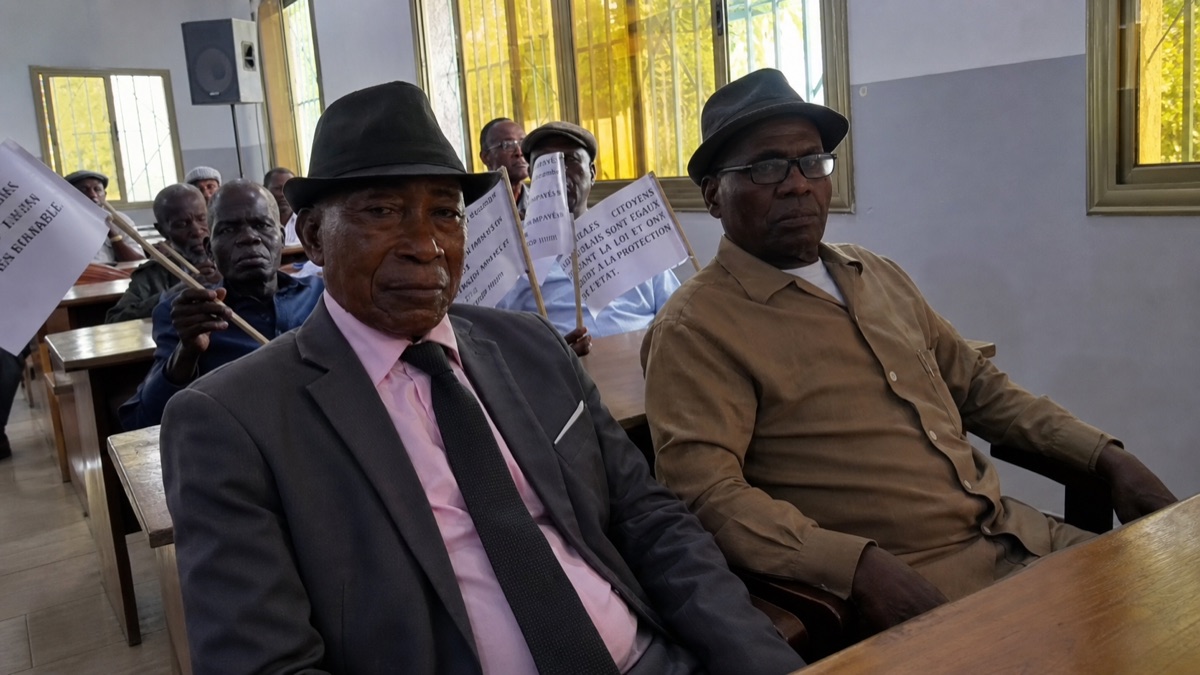
On 15 June 2026, the retired civil servants of the Republic of the Congo (Congo-Brazzaville) made their grievance a matter of public record: more than fifty-one months of pension arrears had accumulated, leaving thousands of former state employees without the income on which they had long relied. The figure is striking in its bluntness. Four years and three months of obligations, deferred and unmet, in a country whose subsoil yields the very commodity that has historically underwritten the national budget. The dissonance between resource and remittance lies at the heart of the retirees’ protest.
An oil-producing state caught in a liquidity bind
The paradox is familiar to observers of Central African political economy, yet it loses none of its sting in the telling. Congo-Brazzaville is a petroleum producer, and oil revenue has long been the principal pillar of public finance. Despite this, the state has proven unable to honour its commitments to those who served it through their working lives. The retirees’ denunciation frames the problem not as an abstraction but as a question of trust between a government and the citizens who depend upon it. The arrears persist, in the words of the grievance, in spite of the severe economic difficulties the country is traversing, a phrasing that acknowledges the strain while refusing to accept it as an excuse.
What gives the protest its weight is the duration. Fifty-one months is not a temporary delay attributable to a single budgetary shortfall; it is a sustained pattern, one that has compounded over years and that now confronts the retired population as a structural feature of their existence rather than a passing inconvenience.
A pressure that runs through every household
For the men and women concerned, the consequences are intimate and immediate. Pensions are, for many former functionaries, the sole source of income in old age, the means by which essential needs are met. When that flow is interrupted, the effect is not merely statistical. It reaches into the daily calculus of food, medicine, rent and the support of dependents. The retirees’ public stand on 15 June 2026 should therefore be read as the expression of an accumulated precarity, the moment at which prolonged endurance gives way to open contestation.
The grievance also carries a generational dimension that the Congolese social fabric cannot easily absorb. Retired civil servants often anchor extended households, and the withholding of their pensions ripples outward, touching children and grandchildren who might otherwise have leaned on that stability. The protest, in this sense, speaks for a constituency far larger than the pensioners themselves.
A grievance set against a wider urban distress
The retirees’ protest did not arise in isolation. It emerged within a social climate already taut with deprivation. Brazzaville, the capital, was simultaneously contending with a fuel shortage, with electricity rationing through recurrent power cuts, and with the rationing of drinking water. These overlapping shortages compose a portrait of a city under pressure, where the ordinary infrastructure of daily life has become uncertain.
Placed against this backdrop, the pension arrears acquire an added resonance. They are one strand in a broader fabric of unmet provision, and the retirees who raised their voices did so in an environment where the reliability of the state was being questioned on several fronts at once. The convergence of these difficulties lends the protest a significance beyond the narrow matter of arrears, situating it within a more general anxiety about the capacity of public institutions to deliver.
The arithmetic of confidence
If there is an analytical lesson to draw from the retirees’ stand, it concerns the slow erosion of confidence that accompanies prolonged default. Each unpaid month is not simply a sum owed; it is an installment of doubt. A pension system rests, ultimately, on a promise that present contributions and present revenues will be honoured in the future. When that promise is suspended for more than four years, the compact between the citizen and the state is itself placed in question.
The retirees of Congo-Brazzaville have, by going public, transformed a private hardship into a civic claim. They have asked, in effect, that an oil-producing nation reconcile its declared wealth with its demonstrated obligations. Whether that reconciliation will follow remains, on the evidence available, an open matter. What is certain is that the figure of fifty-one months now stands as a measure of how far expectation has drifted from fulfilment, and as a reminder that the legitimacy of public finance is ultimately judged at the level of the household.
