
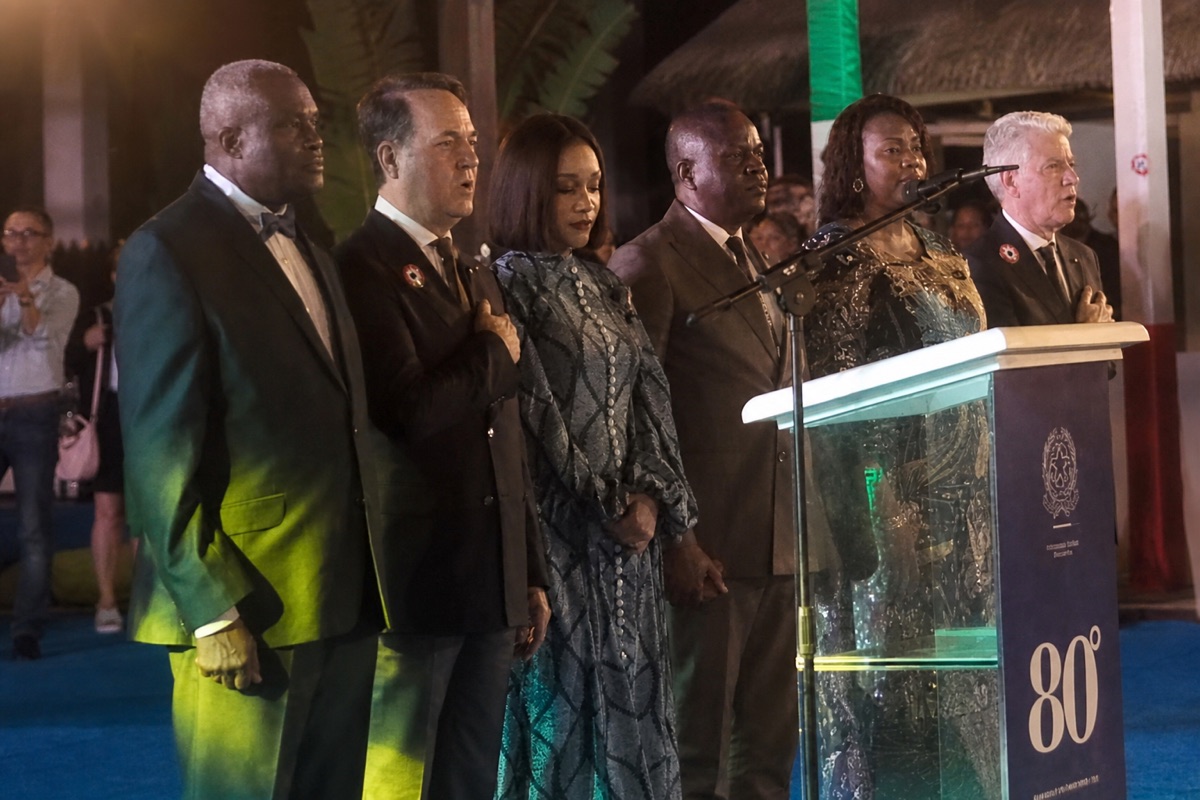
Rome Reaffirms Congo as a Cornerstone of Its African Outreach
In the warm light of Italy’s national day, marked this year on 12 June in Pointe-Noire, the country’s diplomatic message to its hosts carried unusual weight. Ambassador Enrico Nunziata used the eightieth anniversary of the Festa della Repubblica not merely to toast bilateral friendship, but to situate the Republic of Congo within one of Rome’s most ambitious foreign-policy designs. The Republic of Congo, he affirmed, ranks among “the most important partners” of the Mattei Plan for Africa. Coming from a representative of a government that has staked considerable political capital on its continental strategy, the statement was less ceremonial flourish than a deliberate signal of intent.
What the Mattei Plan Means for Brazzaville
Named after Enrico Mattei, the visionary founder of the Italian energy group whose dealings with newly independent African states once unsettled the established oil order, the Plan is conceived as a framework of partnership rather than patronage. Its declared ambition is to move beyond the extractive logic that long characterised relations between Europe and the continent, favouring co-investment, skills transfer and shared infrastructure. By placing the Republic of Congo — Congo-Brazzaville, distinct from its larger neighbour the Democratic Republic of the Congo — among its priority interlocutors, Italy is wagering that a mid-sized Central African economy with substantial hydrocarbon reserves and a strategic Atlantic frontage can serve as an anchor for its broader regional design.
That choice is not without logic. Congo’s position within the CEMAC bloc, its established energy sector and its coastal access through Pointe-Noire make it a natural node for any partner seeking to combine energy security with development cooperation. The ambassador’s remarks suggest that Rome views Brazzaville as both a supplier and a laboratory for the kind of integrated engagement the Plan is meant to embody.
A Cooperation That Reaches Beyond Energy
If energy remains the historical backbone of the relationship, the agenda outlined in Pointe-Noire was conspicuously broad. Nunziata sketched a cooperation spanning energy and infrastructure, access to water and electricity, health and agriculture, vocational training and maritime security. The breadth is telling. It reflects an understanding, increasingly common among external partners, that durable influence is built not through single flagship projects but through a dense web of sectoral ties that bind economies and institutions together over time.
The inclusion of maritime security is especially noteworthy. The Gulf of Guinea has for years contended with piracy, illicit trafficking and the policing of vast exclusive economic zones, and a European partner offering capacity in this domain addresses a tangible Congolese concern. Likewise, the emphasis on vocational training and access to basic services speaks to the social dimensions that any credible development partnership must now address if it is to command local legitimacy.
Africa at the Heart of Italian Foreign Policy
Beyond the catalogue of sectors, the ambassador articulated a doctrine. “Africa occupies a central place” in Italian foreign policy, he observed, describing an approach anchored in dialogue and multilateralism rather than unilateral assertion. The framing is significant in a moment when several external powers compete for influence across the continent, often through transactional arrangements. By foregrounding partnership and shared institutions, Rome is positioning itself as a European interlocutor attentive to African agency — a posture that resonates with the aspirations of governments wary of being treated as mere arenas for great-power rivalry.
Nunziata anchored this vision in a pragmatic measure of success. Economic development and job creation, he argued, constitute “the best instruments for building a prosperous future.” It is a formulation that quietly reframes the purpose of cooperation: not aid as charity, nor investment as conquest, but employment as the truest test of whether external engagement delivers for ordinary citizens.
Reading the Signal From Pointe-Noire
For a Congolese audience, the ambassador’s words invite measured optimism tempered by realism. Declarations of partnership are abundant in the diplomatic calendar; their value is determined by what follows in contracts signed, infrastructure delivered and skills genuinely transferred. The Mattei Plan remains, in many respects, a framework still proving itself on the ground, and the gap between strategic ambition and tangible outcome is the terrain on which its credibility will ultimately be judged.
Yet the choice to elevate the Republic of Congo so explicitly, on a symbolic occasion and in the country’s economic capital, is itself a form of commitment. It places Brazzaville in a select group of states that Rome regards as structural to its African future. Whether that designation translates into shared prosperity will depend on the discipline of execution — but the direction Italy has chosen to signal is, for now, unmistakable.
