
Brazzaville Diplomacy Meets Global Industry
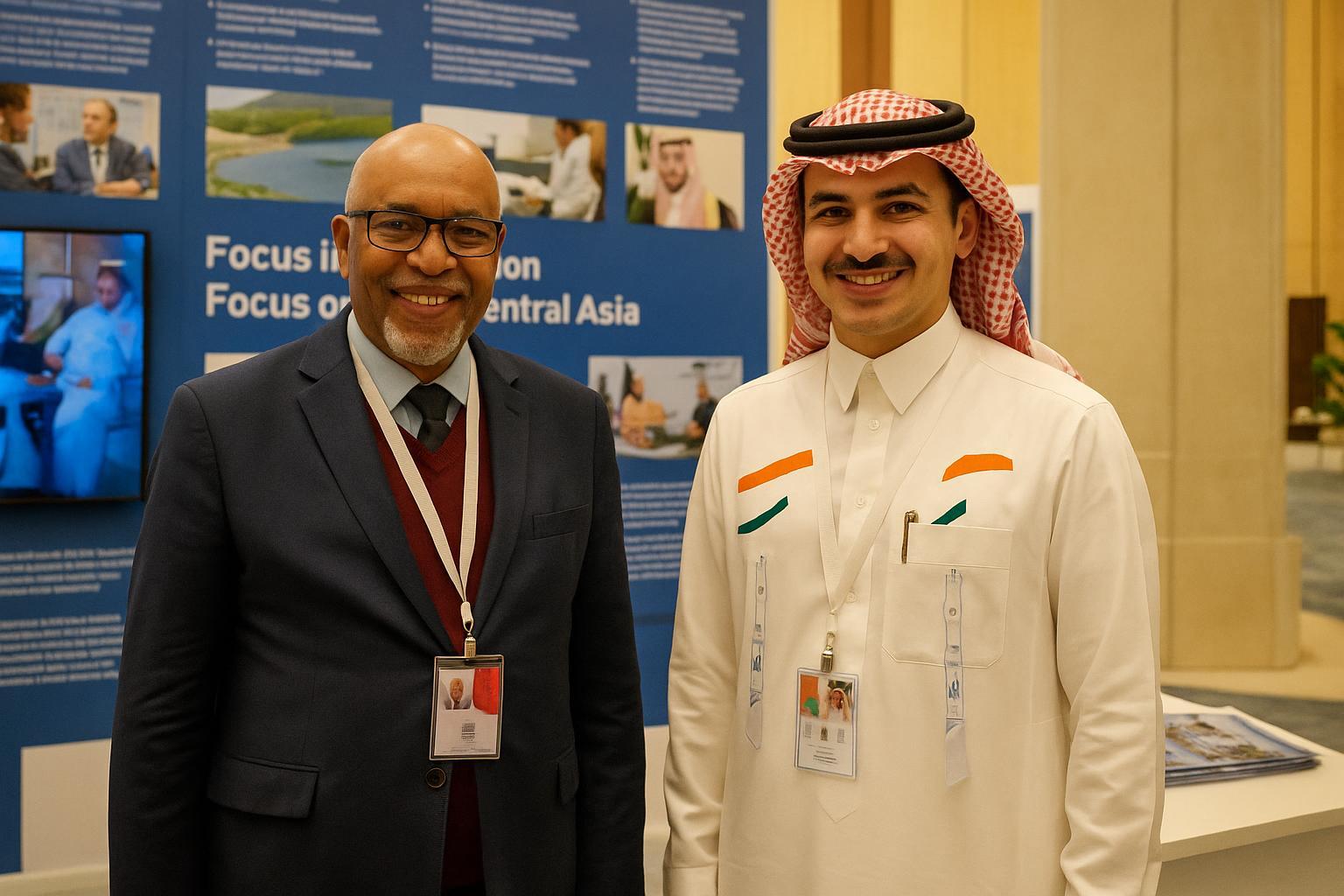
Riyadh’s vast King Abdulaziz International Conference Center rarely lacks for diplomatic choreography, yet the presence of Congo-Brazzaville’s delegation during the 21st General Conference of the United Nations Industrial Development Organization (UNIDO) drew particular attention. Led by Minister of Industrial Development and Private-Sector Promotion Antoine Thomas Nicéphore Fylla Saint-Eudes, the Congolese officials arrived on 23 November determined to raise the country’s profile in advance of the 2025 World Industry Summit. Their mission, the minister explained, was “to showcase a credible pathway from resource extraction to value-adding transformation in the heart of Central Africa,” an ambition warmly acknowledged by UNIDO Director-General Gerd Müller.
Congo’s Industrial Vision Highlighted in Riyadh
From the conference podium, Mr Fylla Saint-Eudes laid out Brazzaville’s industrial masterplan, a document refined over several years with technical input from UNIDO experts. The blueprint prioritises agro-industry corridors along the fertile Niari and Cuvette River basins, timber processing clusters around Ouesso and Pokola, and a special focus on fertiliser, cement and pharmaceutical production to serve regional markets. According to the minister, these sectors have been selected for their capacity to substitute imports, create skilled employment and anchor future export earnings beyond crude oil. “Industrialisation is not an option; it is the cornerstone of our emergence agenda,” he told delegates.
Flagship Projects Seek Strategic Investors
The delegation spotlighted three flagship ventures now at the bankability stage. The first is the Maloukou industrial park outside Brazzaville, zoned for light manufacturing and already linked to the new four-lane motorway toward Pointe-Noire. The second, a public-private green ammonia complex at Oyo, aims to harness domestic natural gas for fertiliser production while lowering carbon intensity through renewables. The third project, a deep-water timber trans-shipment hub in Pointe-Indienne, is designed to streamline certified wood exports under the Voluntary Partnership Agreement with the European Union. Representatives from the Islamic Development Bank, the Saudi Industrial Development Fund and Afreximbank held exploratory sessions with the Congolese team, officials confirmed.
Financing Pathways and Private Sector Engagement
UNIDO’s Riyadh platform was designed around the theme “The Power of Investment and Partnerships for SDG Acceleration,” and Brazzaville’s message closely echoed that narrative. Mr Fylla Saint-Eudes emphasised ongoing reforms to improve the domestic business climate, citing the one-stop investment window now operational at the Agence de Promotion des Investissements, revised tax incentives for industrial start-ups and a streamlined procedure for public-private partnerships. Congolese entrepreneurs such as textile manufacturer Mavongo & Co. and agritech start-up AgriNova accompanied the official mission, providing real-time testimonials of market opportunities to institutional investors. “Capital follows certainty,” AgriNova founder Léonie Obili told an audience of Gulf venture funds, “and our government is providing the regulatory clarity we need to scale.”
Alignment with UN 2030 Agenda and AfCFTA
Congo’s presentation consistently linked national ambitions with multilateral frameworks. By boosting agro-processing and sustainable forestry, Brazzaville anticipates tangible progress on Sustainable Development Goals 2, 8, 9 and 15, covering food security, decent work, industry innovation and ecosystem preservation. Simultaneously, officials underscored the African Continental Free Trade Area as a demand horizon capable of absorbing Congolese manufactured goods. Trade economist Dr Henri Mouanda, consulted on the sidelines, noted that “regional market integration is the missing bridge between domestic supply and global competitiveness; Congo is wisely positioning itself ahead of the curve.”
Saudi-Central African Partnerships Gain Momentum
Beyond UNIDO’s multilateral setting, the Riyadh meetings offered a gateway to bilateral cooperation with Saudi Arabia, itself accelerating industrial diversification under Vision 2030. The Saudi Ministry of Industry signalled interest in technical assistance for Congo’s nascent mining-to-metals value chain, particularly in critical minerals such as niobium and tantalum. Meanwhile, the Saudi Fund for Development and the Congolese Ministry of Finance initialled a memorandum of understanding covering feasibility studies for transport-energy interconnectors. Analysts see the convergence of Visions 2030 and 2025 as fertile ground for know-how transfer, with Brazzaville benefitting from Riyadh’s project-management discipline and concessional financing packages.
Voices from the Conference Floor
Throughout the week, Congo’s stand in the exhibition hall attracted a steady flow of delegates curious about Central Africa’s least-publicised investment frontier. UNIDO’s Director of Africa and Least Developed Countries Division, Ciyong Zou, praised the delegation’s “granular, project-ready approach,” contrasting it with more generic pitches he sometimes encounters. Civil-society participants such as the Pan-African Climate Justice Alliance also engaged the Congolese team, urging robust environmental safeguards as industrial zones expand. In response, Mr Fylla Saint-Eudes reiterated that all new facilities will adhere to the African Development Bank’s Integrated Safeguards System, adding that green certification can itself become a competitive edge.
Measured Optimism for Post-Petroleum Growth
Despite the upbeat rhetoric, Congolese officials acknowledged structural hurdles at home, including energy reliability and logistics costs. A 120-megawatt solar-gas hybrid plant slated for the Maloukou park is expected to mitigate power shortfalls, while ongoing dredging of the Congo River aims to lower freight expenses. International observers welcomed the candour. “What matters is the commitment to track performance transparently,” remarked World Bank industrial specialist Fatou Jarra, who nonetheless urged acceleration of port digitalisation. The minister agreed that “the credibility of our industrial turn hinges on delivering early wins for citizens and investors alike.”
The Road to the 2025 World Industry Summit
Looking ahead, Brazzaville views the Riyadh conference as both milestone and springboard. A joint task-force with UNIDO is being established to finalise an Integrated Industrial Parks Programme before mid-2024, paving the way for project showcases at the World Industry Summit two years from now. Domestic consultations with the private sector and provincial authorities will intensify, ensuring alignment between national policy and local realities. As the Congolese delegation left Riyadh on 27 November, Minister Fylla Saint-Eudes described the week’s engagements as “a decisive step toward making industrialisation the next chapter of our national story.” Investors and development partners will be watching how that chapter unfolds on the Congo River’s banks.
