
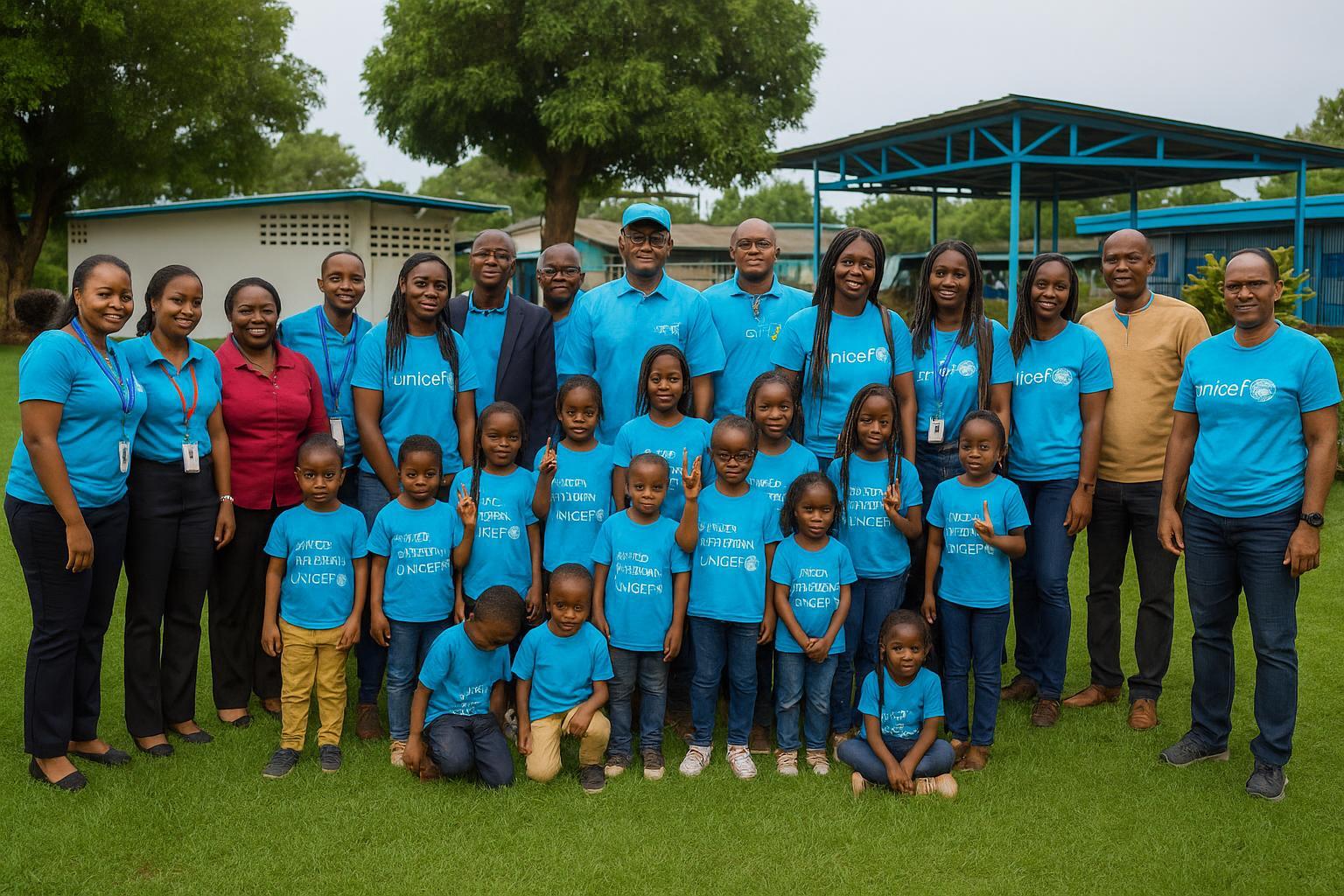
Children’s Rights Anniversary Spurs Renewed Momentum
Brazzaville, 25 November—The thirty-sixth anniversary of the Convention on the Rights of the Child offered more than a symbolic milestone for the Republic of Congo. In a statement released in the capital, the United Nations Children’s Fund (UNICEF) reiterated its resolve to “support the government in building a future centred on children and their needs,” underlining a partnership that has gradually reshaped social policy since the convention was ratified.
UNICEF’s communiqué highlighted what it described as “major advances” secured by national authorities over the past decade, achievements it believes now justify a redoubling of technical and financial assistance. The agency’s renewed pledge aligns with President Denis Sassou Nguesso’s long-standing emphasis on social investment as a pillar of development, placing child welfare at the heart of the national conversation.
Record Primary School Enrolment Nears Universality
Education figures showcased by UNICEF reflect the tangible results of this political choice. Primary enrolment has climbed from 85.9 percent in 2010 to an impressive 96 percent in 2024, bringing the country to the threshold of universal basic education. Significantly, the gap between boys and girls has narrowed, signalling that recent incentives, including fee waivers and school-feeding initiatives, are gaining traction. By approaching full enrolment, the Republic of Congo positions itself to harvest a more skilled, literate generation capable of driving diversified economic growth.
Declining Child Mortality Reflects Health Gains
Progress in the classroom has been mirrored in the clinic. According to the same UNICEF brief, under-five mortality has fallen from 74 deaths per thousand live births to roughly 50 over the period under review. While each statistic represents lives saved through expanded immunisation, maternal care and community health outreach, officials stress that the downward curve must steepen further. UNICEF country representative Mariavittoria Ballotta notes that every percentage point gained “translates into stronger families and, by extension, a more resilient nation.”
Legal Frameworks Bolster Protection Mechanisms
Legislative reform has complemented service delivery. On 30 April 2025, the Ministry of Social Affairs, Solidarity and Humanitarian Action issued two key implementing decrees to operationalise the 2010 Child Protection Act. The first establishes rapid child-alert systems; the second creates a national observatory for children at risk. Minister Irène Marie Cécile Mboukou-Kimbatsa framed the move as proof that “our country has spared no effort to honour the commitments undertaken under the Convention on the Rights of the Child.” The infrastructure these texts introduce is expected to sharpen early detection of abuse and streamline inter-agency responses.
Data-Driven Governance Puts Minors First
UNICEF argues that reliable, regularly updated statistics are indispensable if children are to remain a budgetary priority. It is therefore supporting Congolese planners in strengthening administrative data flows and household surveys. By hard-wiring child-centred indicators into fiscal frameworks, policymakers aim to channel public and private investment toward nutrition, learning outcomes and social protection—areas where evidence shows the highest multiplier effects for long-term national prosperity.
Youth Parliament Demands Inclusive Policy Making
Congolese children themselves have entered the debate with notable assertiveness. “We want our ideas and proposals to be considered so every child can exercise their rights and fulfil their potential,” declared Geliana Lucia Bouenitelamio, president of the Children’s Parliament. Her call captures a broader global shift toward participatory governance, a principle UNICEF endorses. Officials inside the Ministry of Youth recognise that bringing young voices to consultation tables not only strengthens legitimacy but also fine-tunes programmes to on-the-ground realities.
Dakar Girls’ Declaration Amplifies Regional Synergies
Youth engagement acquired continental momentum in October 2025, when the Regional Forum for Central and West African Girls convened in Dakar. The resulting declaration, formally handed to ministers responsible for women’s advancement and youth affairs, urges states to accelerate gender equality in education and leadership. “Allowing Congolese girls to claim their space and make their voices heard opens the path to a fairer, more promising future for the entire country,” Ballotta observed. The document serves as both a moral compass and a policy lever for Brazzaville’s ongoing gender-responsive budgeting efforts.
Strategic Investments Aim for Sustainable Impact
Looking ahead, UNICEF confirms its intention to scale up investments across education, health, protection and participation. For Congolese authorities, the next phase involves entrenching recent gains while navigating fiscal constraints posed by fluctuating commodity revenues. Yet the calculus appears straightforward: safeguarding children today fortifies economic stability tomorrow. As the convention’s anniversary reminds observers, the true measure of a nation’s progress is etched in the lives of its youngest citizens—lives that, in Congo-Brazzaville, increasingly stand to benefit from a deliberate alliance between government resolve and international partnership.
