
A Graduation Day with Symbolic Weight
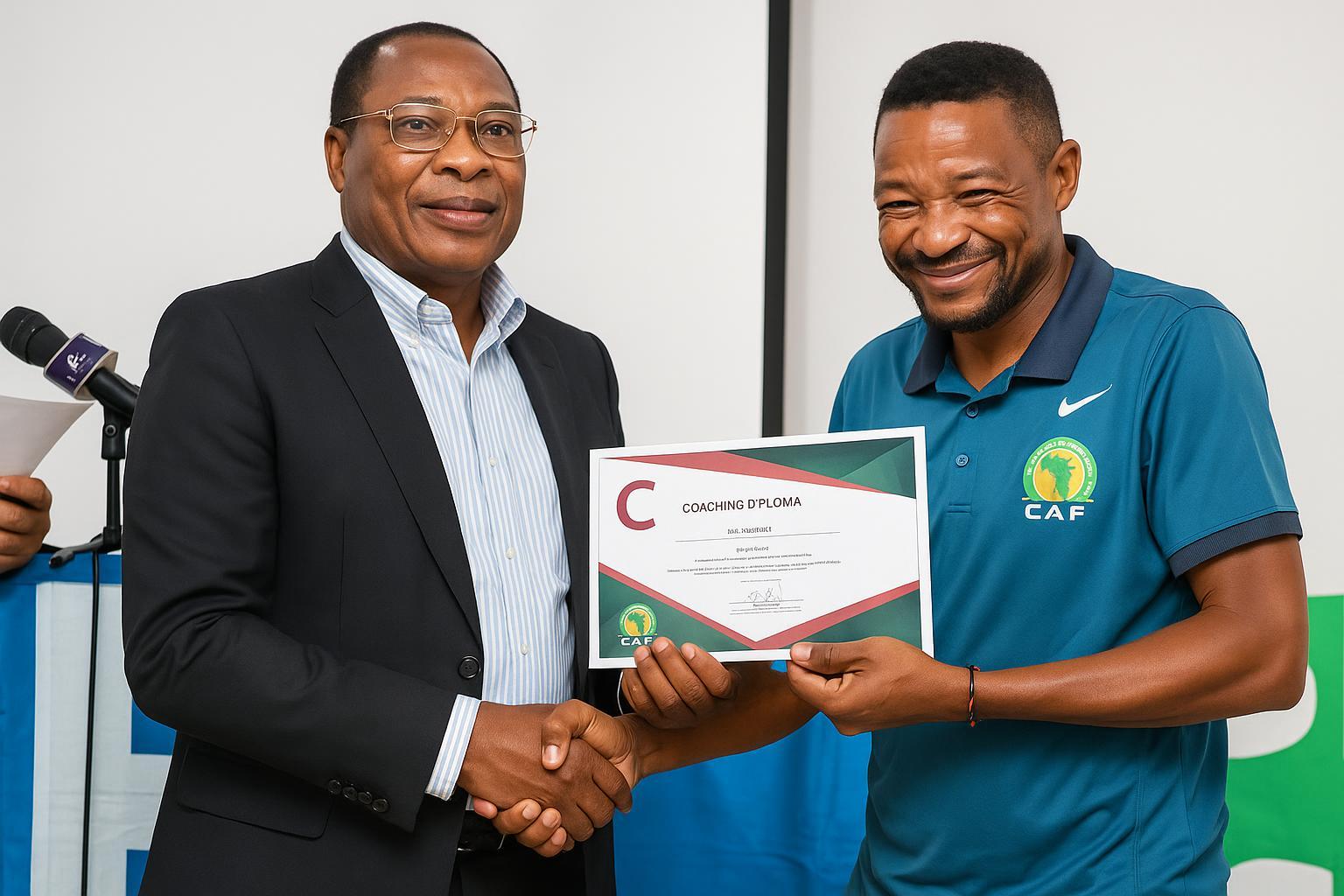
A gently overcast Saturday at the Centre technique de la Fédération congolaise de football saw the proud procession of thirty-two fresh graduates, each clutching the coveted CAF C licence. The ceremony, chaired by Federation President Jean-Guy Blaise Mayolas, blended formality and quiet optimism. In his opening remarks he underlined that “technical competence is the backbone of competitive football and a mirror of national ambition”. The presence of senior officials from the Ministry of Sports added further gravitas, signalling governmental alignment with the federation’s push for higher standards. For many attendees, the morning felt less like an administrative rite than a milestone in Congo’s sporting modernisation.
Why a One-Year Curriculum Matters
The CAF Coaching Convention sets a minimum of two months for the C licence, yet Congo’s Direction technique nationale deliberately stretched the timetable to a full calendar year. According to National Technical Director Pascal Blin, this was “a pedagogical choice anchored in local realities”. Weekly sessions alternated between classroom theory, video analysis, and pitch-side drills, allowing participants to test concepts with youth academies and regional clubs in real time. The slower tempo also accommodated coaches who juggle family and semi-professional duties, thus broadening access beyond the capital’s elite. The outcome, argue DTN officials, is a cohort more deeply grounded in sports science, talent psychology, and injury prevention than previous intakes.
Replication in Pointe-Noire Consolidates Reach
Two days after the Brazzaville festivities, an identical graduation unfolded in the coastal hub of Pointe-Noire. Holding ceremonies in both cities is more than a gesture of logistical convenience; it underscores the federation’s determination to decentralise expertise. Pointe-Noire’s football ecosystem, anchored by clubs such as AS Cheminots, now benefits from resident coaches credentialed to the same continental benchmark as their colleagues in the capital. Regional governor Alexandre Honoré Paka praised the initiative for “closing the geographic gap in access to knowledge”. In a country where infrastructure remains unequally distributed, the twin graduations possess undeniable symbolic power.
Inside the Syllabus: From Analytics to Ethics
Participants sat written examinations in match periodisation, performance analytics, and the latest amendments to the Laws of the Game. Practical assessments required them to design micro-cycles for U-17 squads and to conduct live training sessions under the evaluative gaze of CAF-certified assessors. Equally emphasised were modules on safeguarding minors and gender-inclusive coaching environments, themes aligned with CAF’s 2018 directive on social responsibility (CAF Coaching Convention 2018). By incorporating such content, the DTN signalled that the modern Congolese coach must be both tactician and community steward.
The Economic Dividend of Technical Depth
Beneath the congratulatory speeches lies a sober calculus. Congolese clubs entering CAF inter-club competitions are now obliged to field staff holders of recognised licences. Non-compliance risks fines or exclusion. By equipping local coaches with credentials otherwise procured abroad at steep cost, the federation retains spending within national borders while nurturing a domestic market for coaching services. Club executives in Brazzaville estimate that hiring foreign C-licence holders costs up to 20,000 dollars per season, a sum many sides can ill afford. The new graduates therefore represent both a saving and a potential revenue source should regional teams seek their expertise.
Stakeholder Voices: Hopes and Caution
For graduate Clarisse Ngoya, one of four women in the cohort, the diploma is “a passport to take charge of youth teams that used to be off-limits”. She nonetheless calls for pathways to the CAF B and A tiers, warning that “without continuity, today’s celebration risks stalling”. Federation President Mayolas appears attuned to the concern; in his closing address he hinted that negotiations with CAF for a B licence course on Congolese soil are “advanced”. Sports sociologist Fabrice Ibata, reached by phone, interprets the move as part of a broader governmental strategy to leverage soft power through sport, aligning with the President’s Vision 2025 for youth empowerment.
À retenir: A Convergence of Policy and Passion
Beyond individual success stories, the day crystallised a mesh of policy strands: continental regulation, national professionalisation, and local enthusiasm. The elongated training period, the duplication of ceremonies, and the explicit inclusion of social modules form a coherent narrative of steady capacity building rather than quick symbolic fixes. Observers note the absence of any foreign technical director at the podium, reading it as a declaration of self-reliance.
Le point juridique/éco: Compliance and Future Mandates
Under CAF Club Licensing regulations, coaching qualifications will condition participation in continental competitions from the 2026-2027 cycle. Clubs thus face a compliance horizon of less than two seasons. Federation jurists confirm that national statutes will soon embed these CAF rules, granting local authorities the power to sanction non-conforming teams. Financially, the federation contemplates a solidarity mechanism whereby clubs contributing coaches to national youth programmes receive fee rebates, incentivising further investment in formal training.
A Subtle Yet Significant Turning Point
The distribution of CAF C licences may appear modest against the backdrop of continental tournaments and glittering transfer markets, yet its ramifications for Congolese football are potentially transformative. By betting on human capital, the federation aims to seed a lattice of skilled mentors capable of elevating grassroots talent to professional standards. If sustained, the initiative could gradually narrow the performance gap separating domestic clubs from regional powerhouses, while furnishing the national team with a larger reservoir of tactically schooled players. In that sense, the applause echoing across Brazzaville and Pointe-Noire signified not a culmination but a strategic overture.
