
Southern African itinerary shapes early momentum
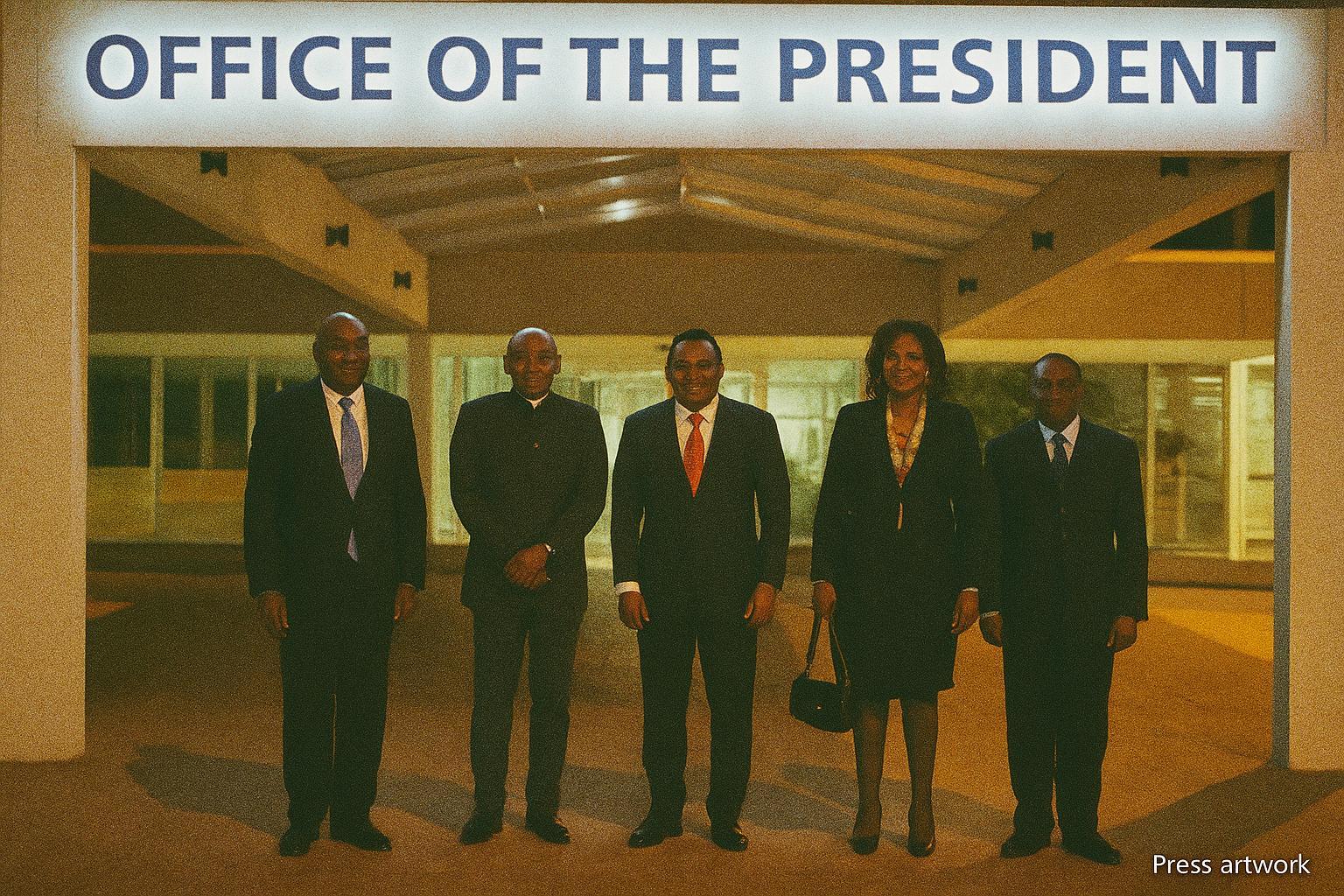
At a moment when multilateral organisations seek renewed legitimacy, Brazzaville’s foreign minister Jean-Claude Gakosso embarked on an eleven-day shuttle diplomacy that threaded Luanda, Windhoek and finally Port Louis. His mission was concise yet ambitious: secure an early African groundswell behind Firmin Édouard Matoko, the Congolese technocrat whose three-decade career inside UNESCO makes him one of the most seasoned insiders in the forthcoming race for director-general. Several regional leaders, notably President João Lourenço of Angola and President Hakainde Hichilema of Zambia, received sealed messages from President Denis Sassou Nguesso underscoring the symbolic value of an African at the organisation’s helm (Congolese MFA note 23 July 2024).
The tour’s choreography reflects a calculated sequencing. Beginning in Luanda, headquarters of the Southern African Development Community’s Peace and Security Mechanism, allowed Brazzaville to anchor its bid within continental peacebuilding narratives. From there, successive stops created an informal caucus of Southern African voices poised to influence the African Union’s eventual endorsement.
Matoko’s credentials resonate with UNESCO’s reform debate
Born in Pointe-Noire and educated in Paris, Matoko joined UNESCO in 1994. He ascended to Assistant Director-General for Priority Africa and External Relations, shepherding programmes on literacy, intangible heritage and youth employability. His stewardship of the flagship ‘Operational Strategy for Priority Africa 2022-2029’ earned commendation for linking cultural policies to the African Continental Free Trade Area (UNESCO Executive Board 2023 report).
Such a résumé aligns with reformist undercurrents within UNESCO, where member states debate financial sustainability, digital heritage protection and equitable geographic representation. By foregrounding Matoko’s managerial record rather than nationality alone, Brazzaville signals an awareness that competence remains the decisive currency in Paris.
Forging an African consensus amid diffuse geopolitical interests
Continent-wide unity has often proved elusive. The 2017 contest that brought Audrey Azoulay to office witnessed three African hopefuls dividing the vote. Cognisant of this precedent, Congo’s campaign has emphasised quiet consultations with the African Union’s Committee on Candidatures, airing the argument that a single African voice would maximise bargaining power with other voting blocs such as the Latin American GRULAC and the Asia-Pacific group (African Union Communiqué 2024).
Diplomats familiar with the file note that Brazzaville’s message refrains from overtly challenging other potential African contenders, instead proposing Matoko as a ‘consensus candidate’ whose internal UNESCO knowledge could shorten the learning curve at a time of tight budgets.
Mauritian dialogue underscores cultural economy synergies
In Port Louis, Gakosso’s exchange with President Dhananjay Ramful and Foreign Minister Maneesh Gobin moved beyond procedural endorsements. Mauritius, an Indian Ocean hub of the creative economy, expressed interest in expanding cooperation on underwater cultural heritage and Creole linguistic research—domains already piloted by Matoko during his UNESCO tenure. Observers saw in the Mauritian response an illustration of how the Congolese bid intertwines personal expertise with partners’ national agendas, offering a pragmatic rather than purely symbolic bargain.
The Mauritian stage also carried soft-power optics. By choosing the historic Aapravasi Ghat World Heritage site for a press interaction, the delegation subtly linked Africa’s transoceanic diasporas to UNESCO’s intercultural dialogue mandate, further embedding the candidacy within broader narratives of shared heritage.
Campaign baton passes to Prime Minister Collinet Makosso
With Southern Africa canvassed, Brazzaville is recalibrating its map. Prime Minister Anatole Collinet Makosso is slated to engage counterparts in Libreville, Abidjan, Abuja, Ouagadougou, Monrovia and Djibouti from 27 July onward. His participation elevates the campaign to executive level, a gesture intended to reassure undecided capitals of Congo’s strategic investment in UNESCO’s future.
Officials close to the planning suggest that each stop will blend bilateral economic dossiers with the UNESCO brief, reflecting President Sassou Nguesso’s instruction to frame Matoko’s run within broader South-South cooperation. That holistic packaging, they contend, contrasts with past campaigns perceived as solely personal quests.
Soft-power dividends for Congo and Africa’s multilateral voice
Beyond the arithmetic of votes, the travelling roadshow has already burnished Brazzaville’s reputation for consensual diplomacy. Analysts note that Congo’s recent mediation roles in Central African peace initiatives lend credibility to its call for a ‘UNESCO of bridges, not walls’. Should Matoko prevail, Congo would secure an influential platform to project educational and cultural priorities shaped by African contexts, a development likely to reverberate through francophone and lusophone networks alike.
Even if the contest tightens, the present mobilisation cultivates a cadre of African officials conversant with UNESCO’s policy levers, effectively enlarging the continent’s negotiating capital. In that sense, the campaign functions as a seminar in collective diplomacy, reinforcing the premise that Africa’s cultural narratives can anchor global governance debates when advanced through disciplined, respectful engagement.
