
Parliamentary oversight on Congo’s digital economy
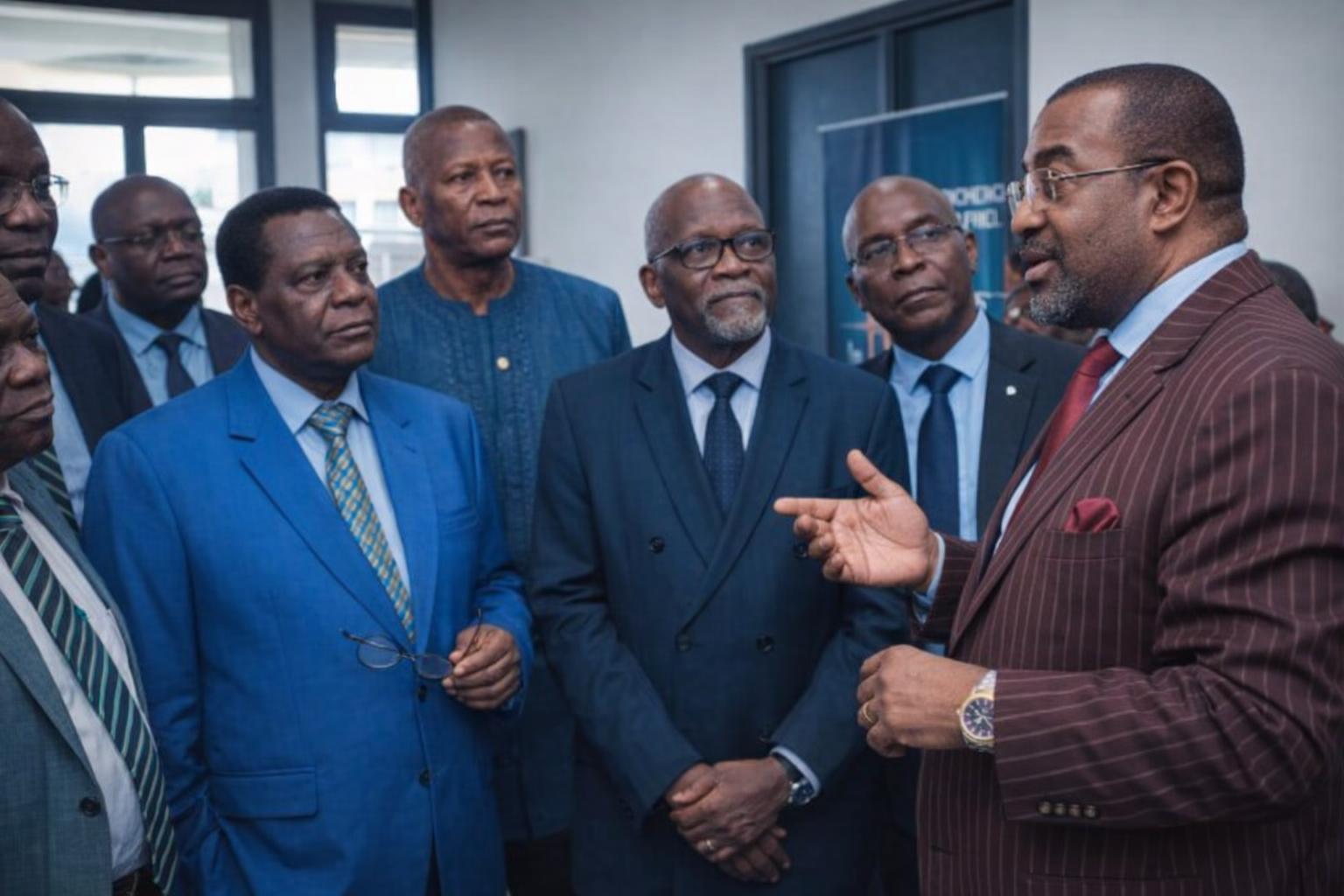
Brazzaville, 17 January (ACI) — A delegation from the National Assembly’s Legal Affairs Commission visited, on 16 January in Brazzaville, the premises of the Agency for the Development of the Digital Economy (Aden) and the African Centre for Research in Artificial Intelligence (Caria). The stated purpose was to verify the sound functioning and long-term viability of these public establishments created to support the country’s digital transformation.
The visit forms part of Parliament’s constitutionally grounded mandate to oversee government action. It followed an earlier hearing of the Minister of Posts, Telecommunications and the Digital Economy, Léon Juste Ibombo, by the same commission, reflecting an institutional effort to connect policy commitments, administrative realities and on-the-ground capacity.
ADEN and CARIA: verifying institutions, not slogans
According to Deputy Juste Bernardin Gavet, the mission made it possible to ascertain the effective existence and operational presence of the two entities. In practical terms, this type of inspection seeks to move beyond formal decrees and organisational charts, and instead assess whether the structures created by the State are staffed, equipped and positioned to deliver measurable public value.
Deputy Gavet used the occasion to commend the government’s strategic orientation toward developing the digital economy and embedding digital services in daily life. In his reading, such an approach is not only about technology adoption but also about institutional endurance, the predictable delivery of services, and the credibility required to attract private initiative around public priorities.
Startups and ecosystem building: ADEN’s expected role
The delegation placed particular emphasis on Aden’s mission to accompany startups and help build a coherent digital ecosystem. In the Congolese context, where entrepreneurship is increasingly viewed as a vector of diversification, the agency’s convening power and technical support are presented as central to translating national ambition into projects that can scale.
At the same time, the visit also highlighted constraints that, if left unaddressed, could limit the institution’s performance. Deputy Gavet pointed to the precarious working conditions faced by Aden’s executives and staff. For parliamentary observers, such issues are not merely administrative; they touch on the continuity of expertise, the retention of skilled personnel and the overall reliability of an agency expected to serve as a reference point for innovators.
Artificial intelligence ambitions and the need for enabling texts
At Caria, Deputy Gavet reported that promising projects are under consideration, suggesting that the centre’s research and innovation agenda is taking shape. Yet he also noted difficulties linked to the absence of certain implementing regulations. In many public systems, the gap between a founding act and the detailed texts that operationalise it can delay procurement, partnerships, staffing frameworks and programme execution.
By flagging this constraint, the parliamentary delegation effectively drew attention to the legal and regulatory infrastructure required for emerging sectors such as artificial intelligence. In this perspective, the viability of Caria depends not only on scientific intent but also on the clarity of rules that allow research agendas, collaborations and institutional responsibilities to be translated into routine practice.
From field findings to legislative follow-up
Deputy Gavet indicated that the commission’s observations will feed continued advocacy so that these structures can fully play their role and help position the Republic of the Congo as a significant participant in the digital economy. The underlying message is that public establishments should operate efficiently and credibly, in order to support the growth of the digital ecosystem and ensure that the country remains aligned with technological advances.
In a sector where credibility is cumulative, the delegation’s emphasis on operational effectiveness carries a broader implication. Institutions charged with supporting innovation must be able to demonstrate stable governance, functional work environments and a regulatory framework that reduces uncertainty for partners and beneficiaries.
Minister Ibombo calls for parliamentary support on budgets
Speaking after the visit, Minister Léon Juste Ibombo said the exercise allowed the delegation to better grasp the stakes and needs of the digital sector in a context he described as crisis-related. His remarks framed the mission not as a purely procedural inspection but as an opportunity for legislators to appreciate constraints that may not be visible during hearings alone.
The minister also appealed for continued parliamentary support to secure the necessary budgets, which he presented as essential for sustaining the development of the digital economy in the Republic of the Congo. The emphasis on budgetary backing aligns with the broader premise of the visit: that institutional viability is ultimately tested by the adequacy of resources, the coherence of legal instruments, and the capacity to deliver services that meet public expectations.
What the visit signals for Congo’s digital governance
Taken together, the commission’s field visit illustrates a governance sequence in which policy vision, parliamentary scrutiny and administrative delivery are expected to reinforce one another. The delegation publicly acknowledged the government’s orientation toward digital development, while also identifying practical weaknesses that can be addressed through regulatory completion, improved working conditions and sustained financing.
In that sense, the episode offers a snapshot of how the Congolese digital agenda is being institutionalised: through new agencies and centres, through oversight mechanisms that verify functionality, and through inter-branch dialogue aimed at matching ambitions with implementable frameworks.
