
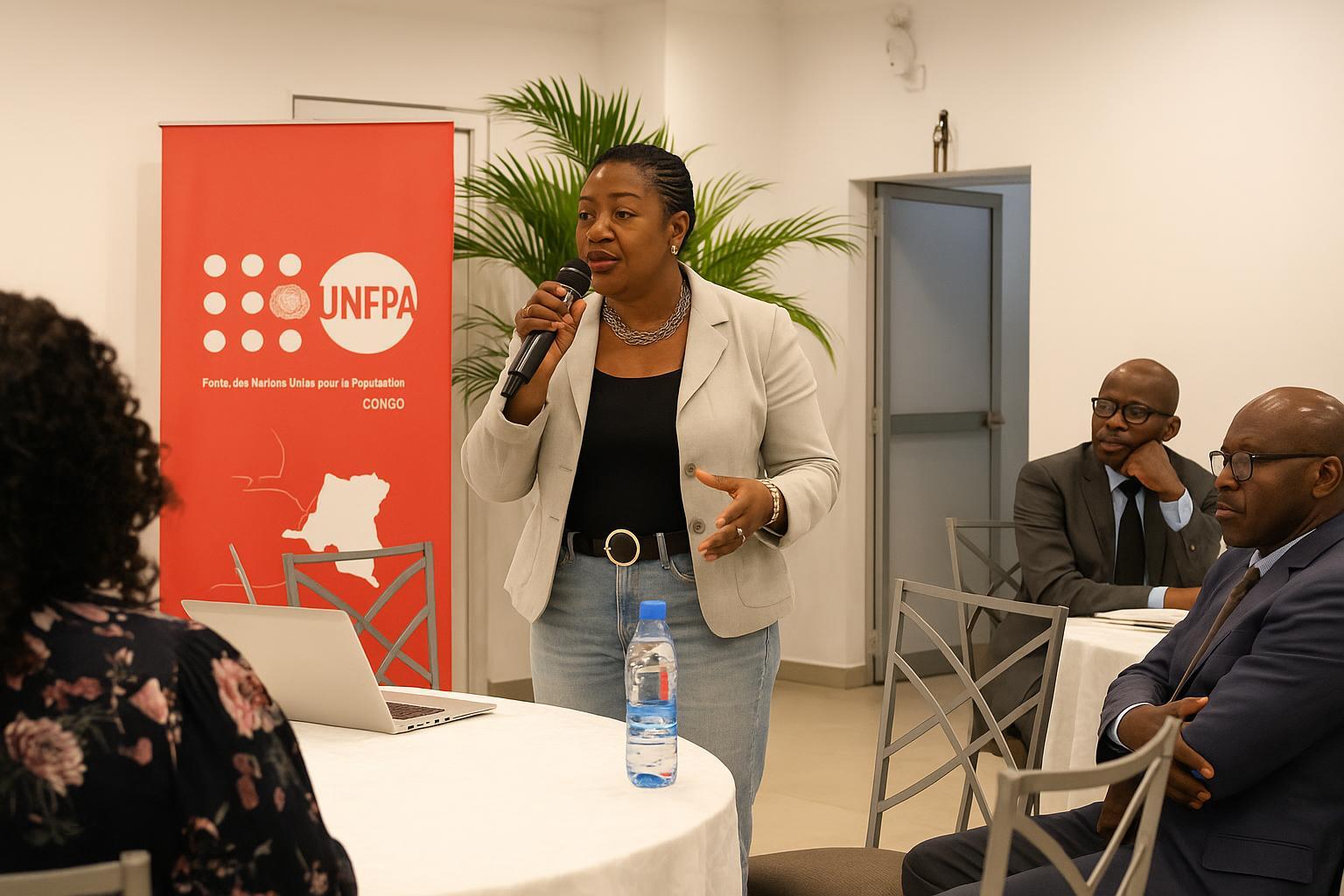
Brazzaville workshop underscores fiduciary vigilance
The marble-clad conference hall of the Ministry of Planning briefly became the epicentre of multilateral financial discipline on 15 and 16 December as United Nations Population Fund (UNFPA) officials met Congolese counterparts for the agency’s annual review and forward-looking planning exercise. Before a cross-section of government technocrats, civil-society leaders and development partners, Catia Dupreville, UNFPA’s International Operations Manager, set the tone with an unambiguous message: strict adherence to the Harmonised Approach to Cash Transfers, or HACT, is both an institutional imperative and the surest route to demonstrable value for money. “Transparency is not an accessory, it is the engine that sustains credibility,” she remarked, framing financial probity as integral to sustainable development.
The workshop, convened in a year when development financing faces competing global pressures, demonstrated Brazzaville’s resolve to keep partnerships with the United Nations on a sound footing. Agnès Kayitankoré, UNFPA Resident Representative, praised the Republic of Congo’s “consistent commitment to fiduciary rigour,” noting that the national budget reform and the digitalisation of public accounts have eased alignment with UNFPA controls. Her words reflected the prevailing mood: accountability is no longer a compliance checkbox but a shared ambition.
Decoding the HACT framework
Initially adopted across the UN system to harmonise donor expectations, HACT functions as a risk-based architecture that determines how, when and to whom funds flow. At its heart lies a single, meticulously detailed Programme Workplan—known locally as the PTA—which captures every activity, output and anticipated expenditure. No dollar moves until UNFPA has signed off on this document, thereby embedding a contractual understanding of responsibilities.
Dupreville walked participants through each building block: partner micro-assessment, risk rating, assurance planning and capacity strengthening. The micro-assessment—a forensic look at internal controls, financial systems and human-resource management—anchors the process. Subsequent risk ratings, ranging from ‘low’ to ‘very high’, dictate the transaction modality: advances to partners, direct payments to vendors, or a blended approach. By tying disbursement speed to governance quality, HACT incentivises partners to fortify their own internal safeguards.
Risk calibration and tailored disbursement
The mechanics of risk calibration resonated strongly with line-ministry accountants accustomed to performance-based budgeting. Where a partner demonstrates solid bookkeeping, timely reconciliation and ethical procurement, UNFPA can green-light cash advances, subject to periodic spot checks and targeted audits. In Kayitankoré’s words, this arrangement “rewards good practice with flexibility.”
Conversely, entities flagged as high risk will see funds paid directly to suppliers or beneficiaries on their behalf, an arrangement that shields programme resources while still delivering services. Dupreville emphasised that the approach is corrective rather than punitive. “Direct payment is a bridge; the destination remains partner autonomy once governance gaps are closed,” she noted, referencing recent cases where tailored technical assistance enabled organisations to transition from restrictive to less restrictive modalities within a single programme cycle.
Partnerships aligned with Congo’s national vision
For the Congolese government, the enhanced scrutiny dovetails with its own Public Finance Modernisation Plan and the National Development Plan 2022-2026, both of which hinge on transparent resource allocation. From the Ministry of Health to the Congo Red Cross, agencies expressed confidence that the shared rulebook would streamline collaboration. A Ministry of Youth official observed that synchronised audits spare national teams “the fatigue of overlapping inspections,” freeing up time for substantive programme delivery.
Diplomatic nuance coloured the deliberations. Speakers underlined that every audit is co-owned, and that capacity-strengthening budgets are embedded in the workplan, ensuring local institutions are not only monitored but also empowered. This ethos sits comfortably with President Denis Sassou Nguesso’s call for partnerships that respect national leadership while meeting global standards.
Charting the 2025 review and 2026 plan
As the workshop closed, teams were already drafting the assurance activities that will accompany next year’s review and the subsequent 2026 planning. External audits, internal spot checks and mid-year field missions form the skeleton of that roadmap, but participants insisted that real-time digital dashboards will provide the muscle. UNFPA’s finance portal, slated for an upgrade in early 2025, promises partners instant visibility over disbursement status, enabling swifter course corrections.
Looking ahead, Kayitankoré expressed optimism that the HACT discipline will translate into concrete gains—more reliable reproductive-health commodity pipelines, better data on gender-based violence and quicker emergency response during floods along the Congo River. “Each prudent franc CFA has a human face,” she concluded, echoing the workshop’s central thesis that financial integrity is inseparable from human development outcomes. With the paperwork tightened and the political will aligned, Congo-Brazzaville and its UNFPA partners appear poised to translate fiduciary diligence into tangible social dividends.
