
Strategic Timing Signals Policy Continuity
The Republic of the Congo’s Ministry of Pre-School, Primary, Secondary Education and Literacy has set the tone for the 2025-2026 academic cycle with a meticulously sequenced calendar. Signed in Brazzaville on 1 September 2025, Service Note 0526/MEPPSA-CAB-DBC outlines four successive phases intended to give administrators, teachers, learners and social partners a clear path forward. The announcement, first reported by the Agence Congolaise d’Information and later echoed by Les Dépêches de Brazzaville, underscores the government’s desire to project predictability in a sector often buffeted by regional health and economic shocks.
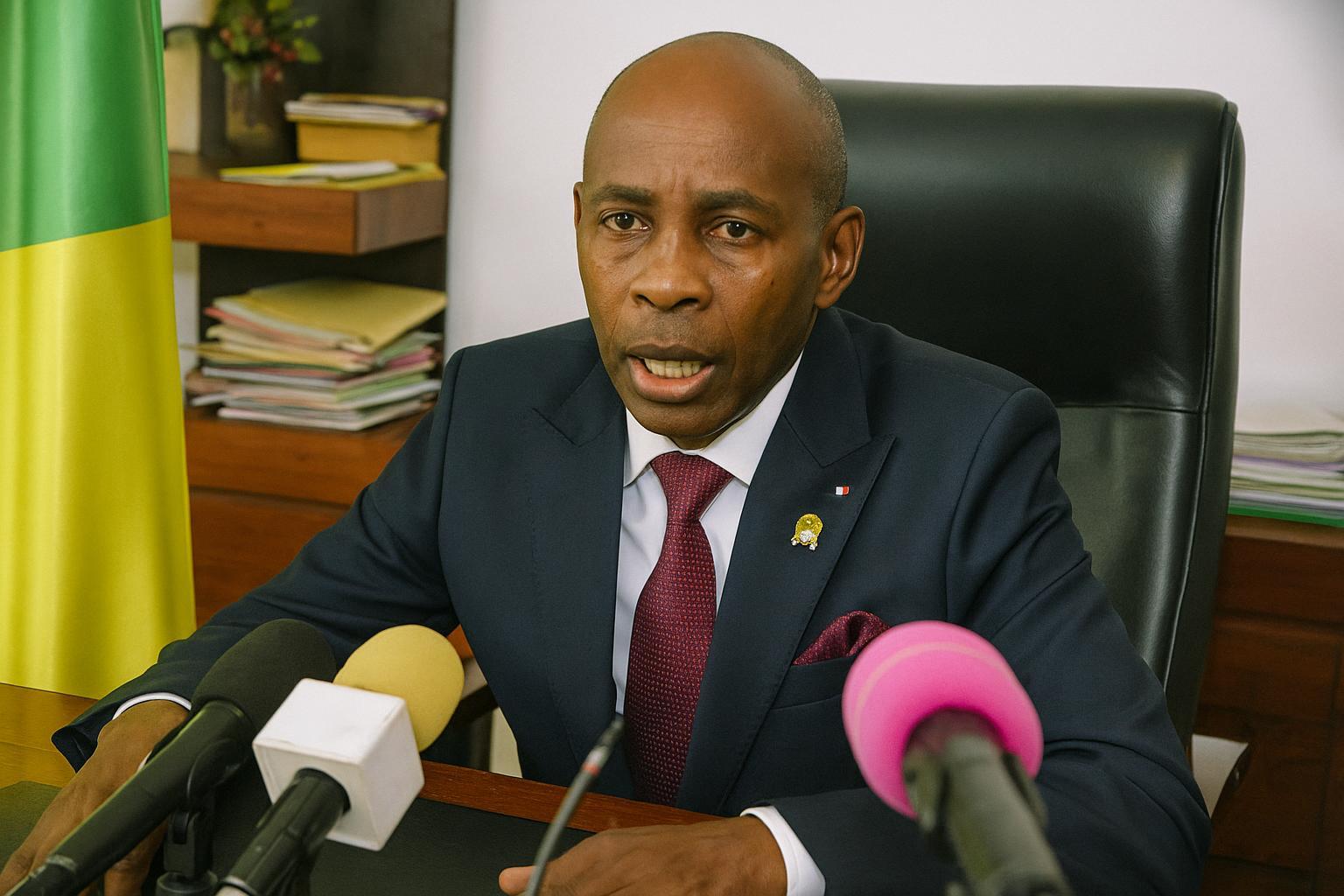
Minister Jean Luc Mouthou framed the timetable as a “lever for operational serenity”. In the statement accompanying the service note, he emphasised that an orderly return to school remained “a non-negotiable pillar of national development”, echoing language he previously used during the 2024 Education Forum in Oyo (ACI, March 2024).
Administrative Phase: Staffing Before Students
From 17 to 30 September 2025, education offices across Congo-Brazzaville will concentrate on the reception of personnel, formal handovers between outgoing and incoming staff, and the coordination of school management committees. By prioritising administrative housekeeping, the ministry seeks to limit the last-minute disruptions that have affected some districts in previous years. Observers note that the timetable aligns with the recommendations of the 2023 National Audit on School Governance, which urged earlier validation of payroll and posting lists to prevent vacancies on opening day (Ministry of Finance, 2023 report).
Local principals interviewed by Radio Mucodec welcomed the timeline, highlighting the two-week buffer as critical for reconciling inventories and finalising textbook allocations. One head teacher in Pointe-Noire remarked that “the gap between administrative readiness and pupil arrival has historically been the weak link. This calendar finally closes that gap.”
Pedagogical Phase: Aligning Teachers and Curricula
Immediately following the administrative window, the pedagogical phase runs from 24 to 30 September 2025. During this period, teachers receive their postings, engage with departmental subject coordinators and collect individual timetables. Lists of enrolled students will be published, and timetables publicly displayed to give families sufficient planning time.
Education specialists point out that conflating staff orientation with curriculum workshops allows for faster dissemination of new competency-based guidelines approved in June 2025. The ministry has instructed inspectors to use the same timeframe to train teachers on digital attendance registers, a reform piloted in Brazzaville’s fifth arrondissement last year. According to the Congolese Teachers’ Union, field feedback from that pilot showed a 12 percent drop in unexplained absences, lending credence to the nationwide rollout.
Classroom Reopening: 1 October as Symbolic Anchor
The official student return date of 1 October 2025 is consistent with historical practice, preserving a familiar landmark in the academic rhythm. By maintaining the 1 October anchor, the ministry shields families from perpetual recalibration while still carving out preparatory days for faculty. Analysts at the Pan-African Institute for Education Statistics argue that such symbolic anchors reduce opportunity costs, especially for rural households that plan agricultural activities around school schedules.
The note instructs schools to post class timetables at the main gate no later than 30 September, reinforcing transparency. Parent associations contacted by Télé Congo view the measure as a confidence-building exercise after weather-related postponements in 2022 generated uncertainty.
Andragogical Opening: Adult Learners in Focus
The calendar culminates with the andragogical opening on 14 October 2025, a date reserved for adult literacy and continuing education programmes. By isolating this launch two weeks after mainstream classes start, the ministry can redeploy pedagogical advisors to centres serving learners over fifteen years of age. Jean Luc Mouthou has repeatedly highlighted adult education as a cornerstone of Congo’s 2022-2026 National Literacy Strategy, which aims to reduce the adult illiteracy rate from 18 percent to 12 percent by 2026 (Government policy brief, 2022).
Civil-society organisations working in the Pool Department welcomed the staggered approach. A coordinator with the NGO Alpha-Sud noted that synchronising adult literacy with agricultural off-seasons has previously improved attendance and completion rates.
Stakeholder Reception and Fiscal Dimensions
Early reaction from donor partners has been cautiously optimistic. A spokesperson for the European Union delegation in Brazzaville said the calendar demonstrates “sound planning logic aligned with the joint education sector review benchmarks”. The World Bank’s Congo Human Capital Project, which co-finances training kits for grade-one teachers, described the sequencing as conducive to on-time material delivery.
Fiscal analysts contend that the four-stage model distributes expenditure more evenly across two quarters of the budget cycle. By front-loading administrative audits in September, the ministry can issue timely salary adjustments, thereby averting the wage arrears that once fueled brief classroom stoppages in 2021.
Regional Parallels and Soft-Power Implications
Neighbouring Gabon and Cameroon have also released their 2025-2026 calendars, each incorporating week-long staff orientation periods. Regional education experts interpret Congo’s alignment as a deliberate soft-power signal that underscores policy convergence within the Economic Community of Central African States. Consistent academic rhythms facilitate cross-border schooling for border families in Niari and Sangha and enable regional examination boards to standardise testing windows.
For Brazzaville’s diplomatic partners, the calendar is an indicator of institutional resilience. A senior official at the French embassy observed that “predictability in the school sector is often a leading indicator of broader administrative stability.”
Looking Ahead: Implementation Metrics to Watch
With the framework now public, attention shifts to execution. The ministry has pledged to issue weekly compliance briefs during the administrative and pedagogical phases, relayed through provincial inspectorates. Civil-society observers will track the timely distribution of textbooks, the activation of digital registers and the full disbursement of capitation grants.
While the four-phase design offers clarity, its success will ultimately depend on disciplined oversight at local levels. Nonetheless, the early release of the timetable signals a proactive stance that education stakeholders, both domestic and international, have been quick to welcome as a constructive step toward academic stability and, by extension, national development.
