
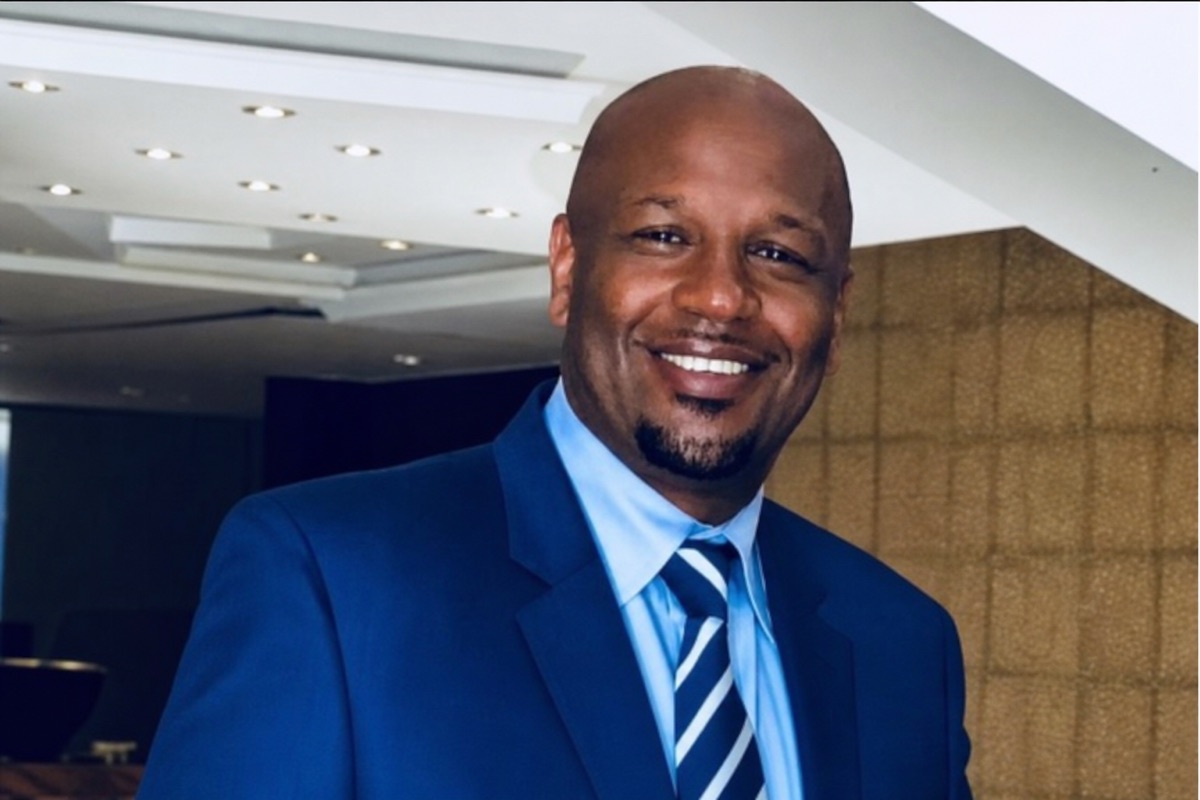
As the Republic of Congo (Congo-Brazzaville) entered its official campaign season ahead of the March 15 presidential election, the contest has been framed less as a democratic turning point than as the procedural confirmation of an entrenched order. President Denis Sassou-Nguesso, 82, who has governed for more than four decades, is the overwhelming favourite against six other contenders, most of whom carry little national weight. The country’s principal opposition parties are sitting the vote out, leaving open the question of what is genuinely at stake. For Joe Washington Ebina, who heads the Ebina Foundation for human rights, the answer is bleak. Speaking to RFI as the guest of Sidy Yansané, he described a ballot whose outcome is, in his words, settled in advance.
A Concentration of Power Four Decades in the Making
Ebina situates the election within what he calls a fragile political and institutional landscape, shaped by forty years of centralised authority. The opposition that remains, he argues, has been effectively silenced. Central to his account is the prolonged detention of two emblematic figures, General Jean-Marie Michel Mokoko and André Okombi Salissa, both imprisoned for close to a decade. Their incarceration, he contends, has not merely thinned the opposition’s organisational ranks but has functioned as an instrument of political pressure. Mokoko, he recalls, was arrested in 2016 amid the previous presidential contest, following a trial that drew criticism from the European Union, and his detention was confirmed in 2018. These were men, in Ebina’s framing, who unsettled the authorities precisely because they retained a measure of public trust.
When the Real Contest Is About Daily Survival
Beyond the mechanics of candidacy and ballot access, Ebina insists that the decisive questions facing Congolese citizens are existential and economic rather than electoral. He points to the strain of everyday life, from the difficulty of obtaining something as basic as a passport to the absence of reliable electricity and potable water. He raises the condition of hospitals, urban sanitation, and the plight of pensioners he says are owed close to fifty months of arrears. Against this backdrop, he frames a single rhetorical wager: whether five additional years would alter any of it. His own answer is unambiguous. What has not been accomplished in forty years, he suggests, will not be delivered in five, which is why he characterises the vote as the continuation of a system that fails to address the daily realities of ordinary people.
The Absence of Serious Rivals
Asked to explain the near-total lack of heavyweight challengers, Ebina speaks of instrumentalisation, describing a political stage on which the principal levers are tightly controlled. Public media, he says, remain in the hands of the authorities, and he revives the opposition’s long-standing grievance over electoral districting, a redrawing of constituencies that opposition members have denounced. The recognised figures of the opposition, in his telling, are simply not visible on the ground, leaving the incumbent as the unchallenged master of the situation. As for the two imprisoned leaders, Ebina says no explicit boycott instruction has reached the public from them; he describes them rather as muzzled citizens held in precarious conditions, from whom little has been heard in years.
A Climate of Fear and Its Electoral Shadow
Pressed on whether repression of dissent has intensified, Ebina answers in the affirmative, invoking the findings of a 2025 report by a Brazzaville-based development action centre that documented numerous arbitrary arrests and detentions. He describes what he calls a poisonous atmosphere taking hold over recent years. When he refers to the summary handling of alleged criminals outside the ordinary channels of justice, he frames it not as a matter of guilt or innocence but as a development that has seeded fear across the population. That fear, he argues, has seeped into political life, constraining the freedom of figures to gather, organise, and meet, even where such restraint is justified publicly by insecurity in the major cities of Brazzaville and Pointe-Noire. An environment hostile to free expression, he maintains, can only hinder the ordinary functioning of a democracy.
Pessimism Where Hope Once Lived
On the public mood, Ebina detects no groundswell of enthusiasm. Whatever the election, he observes, the incumbent has consistently emerged the winner, which drains the contest of popular stakes. The enduring questions, he says, remain unanswered: whether political prisoners will be freed and whether living conditions will improve. His verdict is candidly downcast. There is, he concludes, no hope, only the same leadership serving the same fare, a judgement he delivers with open pessimism rather than expectation.
