
Election underscores institutional continuity
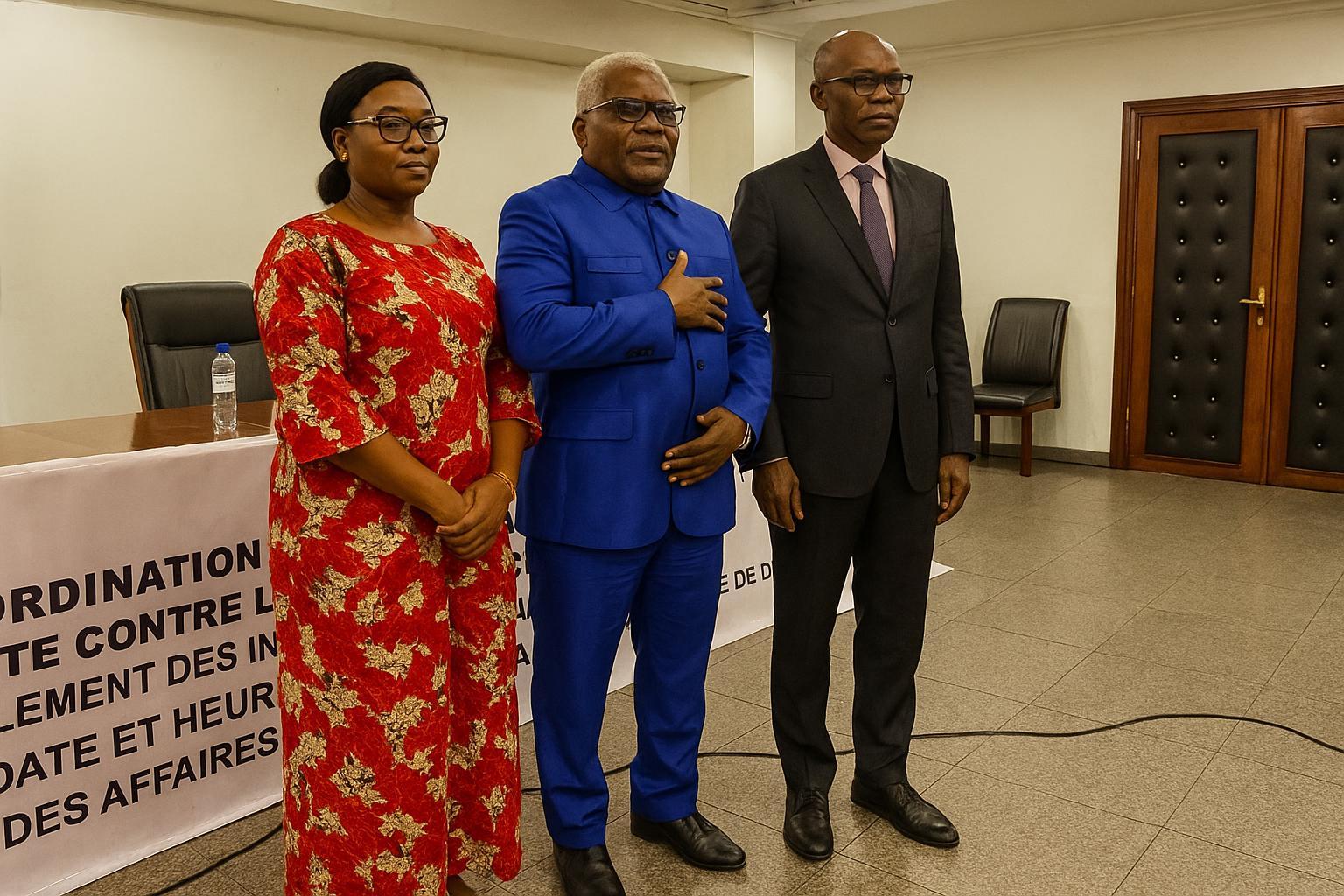
The National Coordination Committee, better known by its French acronym CCN, convened its elective general assembly in Brazzaville on 24 October 2025 under the auspices of the Ministry of Health and Population. After a vote described by observers as serene and transparent, delegates renewed their confidence in Valérie Maba Moukassa, a seasoned civil-society advocate who has chaired the tripartite bureau since 2017. Her reconduction, accompanied by the appointment of two new vice-presidents including government representative Édit Clotaire Oniangue, signals a calculated blend of continuity and fresh impetus for the body that supervises Global Fund programmes against HIV/AIDS, tuberculosis and malaria in the Republic of Congo.
Although technical and financial partners have yet to designate their own vice-presidential nominee, diplomatic sources close to the process affirm that consultations are well advanced, ensuring the tripartite architecture will remain intact in the weeks to come (Global Fund country portfolio data).
Valérie Maba Moukassa’s roadmap for a decisive mandate
Immediately after her election, Mme Moukassa thanked delegates for the “renewed trust that obliges us to do more and better” before outlining three priorities. First, she emphasised the imperative that the Republic of Congo honour its counterpart financing commitments, a pledge reiterated during the Global Fund’s Seventh Replenishment campaign. Second, she called for the establishment of structured policies to mobilise domestic resources, arguing that reliance on external grants alone cannot guarantee sustainability. Finally, she noted that several reforms initiated during her previous term—including the digitisation of grant-tracking tools and the decentralisation of monitoring missions—remain unfinished and will demand collective ownership.
In a brief conversation on the margins of the assembly, she observed that “the post-Covid fiscal landscape is tight, yet it would be more costly to allow preventable diseases to rebound.” Her stance echoes a broader regional consensus that domestic co-financing is both a marker of sovereignty and a lever for negotiating favourable terms with multilateral partners (UNAIDS regional financing report).
Government pledges stricter oversight and cohesion
Representing Health Minister Gilbert Mokoki, the minister’s chief of staff, Professor Donatien Mounkassa, commended the outgoing bureau for what he termed “measurable progress in grant absorption and epidemiological impact.” He nevertheless urged the new leadership to embed an ethic of rigour across all levels of project execution. According to the ministry’s latest performance scorecard, disbursement rates reached 87 % in 2024, but audit findings highlighted procedural delays in the supply chain for antiretrovirals and rapid diagnostic tests.
Professor Mounkassa therefore announced the creation of a joint taskforce combining health officials, CCN experts and the General Inspectorate of Finance to streamline procurement cycles without encroaching on the committee’s autonomy. That arrangement, he argued, will preserve the delicate balance between governmental stewardship and community-based vigilance that the Global Fund model is designed to protect.
A tripartite model facing evolving challenges
Since its establishment by decree in 2003 and its subsequent reorganisation in 2009, the CCN has embodied a rare forum where government, civil society and external partners deliberate on equal footing. The model earned praise for accelerating the scale-up of insecticide-treated nets and for integrating key-population representatives into strategic discussions. Yet the very breadth of its membership can slow decision-making; meeting minutes from 2024 show that budget reallocations required an average of three rounds of consultation before approval.
Observers note that the entry of younger civil-society voices and the increased presence of women—three of seven bureau seats are now held by women—could revitalise deliberations. International analysts likewise stress that the committee’s capacity to navigate the Global Fund’s new performance-based funding framework will be tested as indicators become more granular and time-bound (GFATM Strategy Framework 2023-2028).
À retenir
The re-election of Valérie Maba Moukassa entrenches experience at the helm of Congo’s principal health-financing interface while ushering in a refreshed vice-presidential line-up. Government interlocutors pledge heightened oversight, and partners anticipate the nomination of their representative imminently, preserving the tripartite equilibrium that underpins the CCN’s legitimacy.
Le point juridique/éco
Legally, the CCN’s mandate flows from the 2009 decree that accords it supervisory authority over all Global Fund grants in country, yet the instrument also stipulates alignment with national public-finance statutes. Economically, counterpart funding obligations have increased incrementally; the draft 2026 budget allocates 6.5 billion XAF to Global Fund co-financing, up from 4.2 billion XAF in 2024. Fulfilment of these commitments is essential for unlocking the next allocation cycle, currently estimated at 128 million USD. Fiscal experts argue that improved absorption could leverage additional concessional loans from regional development banks, thereby multiplying the catalytic effect of every domestic franc mobilised.
Toward sustainable domestic financing
Looking ahead, the committee intends to pilot innovative resource-mobilisation mechanisms, such as a modest solidarity levy on certain telecom services and results-based partnerships with the private sector. Early modelling by the Ministry of Economy projects that such instruments could generate up to 1 billion XAF annually, enough to secure the procurement of paediatric antimalarial treatments for a full year.
While the road to full financial autonomy remains long, analysts agree that Congo’s renewed leadership, bolstered by governmental commitment, positions the country to convert post-pandemic lessons into lasting institutional strength. In the words of one senior development partner, “what we are witnessing is not merely another rotation of chairs but an inflection point for the health-financing architecture of the entire sub-region.”
