
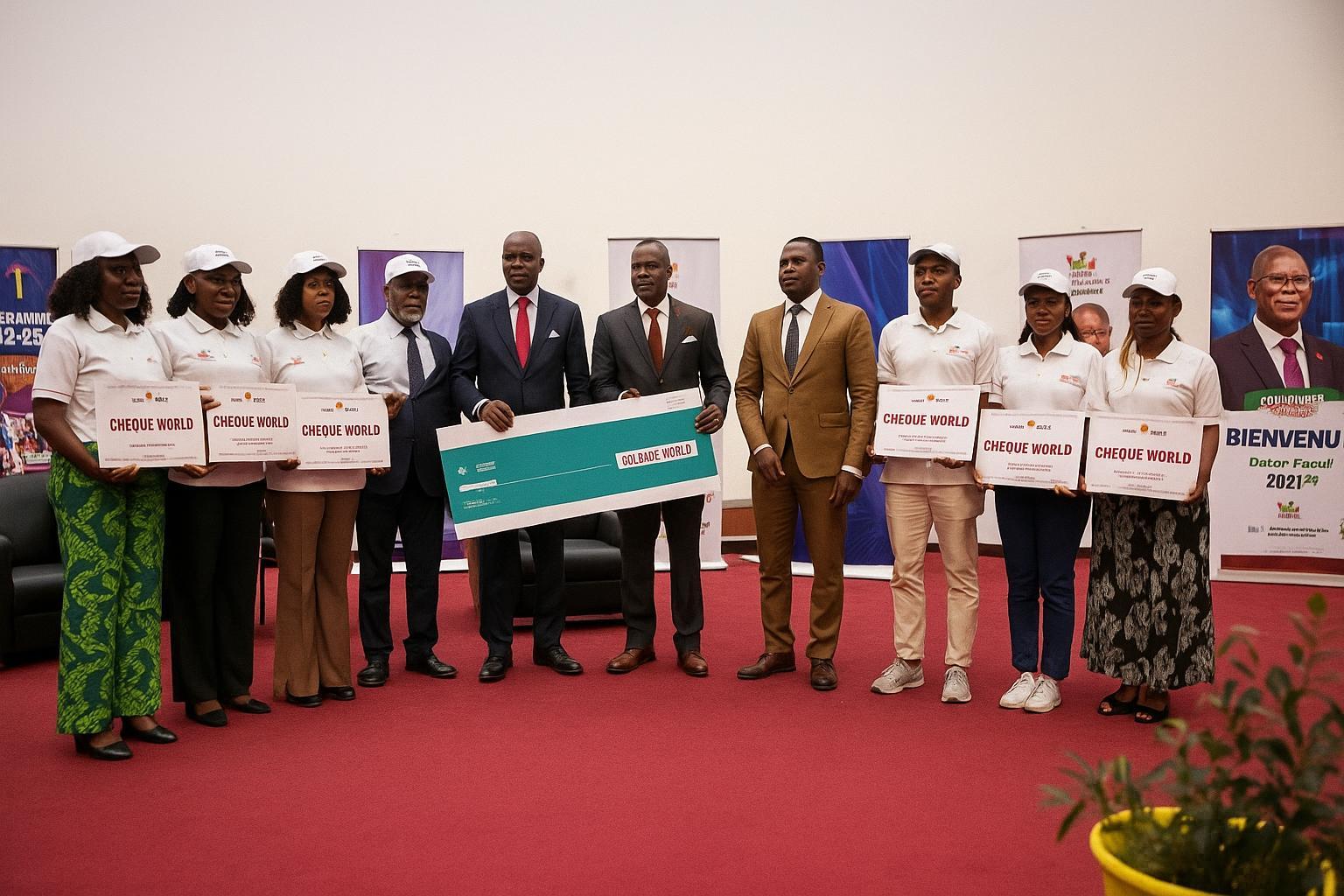
A Record Injection into Congo’s SME Fabric
When the Forum Horizon Initiative and Creativity closed in late August, the Republic of Congo’s entrepreneurial landscape received an unprecedented commitment: CFA 63.8 billion dedicated to 500 fledgling enterprises (ACI, 23 August 2023). The allocation stems from the Fonds d’Impulsion, de Garantie et d’Accompagnement, better known by its acronym FIGA, an instrument specifically designed to catalyse small and medium-sized enterprises. Observers in Pointe-Noire, the nation’s economic hub, judged the envelope to be one of the most significant single disbursements ever directed at the country’s youth-led business ventures.
Beyond the headline figure, the temporal proximity of announcement and disbursement conveyed a sense of urgency that resonates with the government’s wider objective of broadening economic participation. The scale of the funding—equivalent to roughly USD 104 million—signals a deliberate move to transform entrepreneurship from a rhetorical ideal into a measurable contributor to growth. In the words of several participants, the capital represented “oxygen” for ideas previously constrained to the ideation stage.
Selecting the Ten Flagship Ventures
Within the broader cohort, FIGA drew particular attention to ten projects deemed exemplary in terms of innovation and feasibility. Each was capitalised to the tune of CFA 10 million, accompanied by a symbolic award package intended to amplify their visibility. Pierre Mabiala, Minister of Land Affairs and Public Domain and sponsor of the event, emphasised that the selection process rested on rigorous technical vetting: “We insisted on clarity of business model and social impact before any cheque was signed,” he told delegates during the closing ceremony.
While the identity of the ventures remains confidential for competitive reasons, organisers disclosed that the portfolio spans agritech, light manufacturing and digital services. This thematic spread aligns with Pointe-Noire’s economic endowments, ranging from fertile hinterlands to a growing consumer market for online solutions. Crucially, the flagship group is expected to act as a demonstrator cohort, offering proof-of-concept that well-structured ideas can secure institutional backing inside the Congolese ecosystem.
Governmental Stewardship and Youth Employment
Prime Minister Anatole Collinet Makosso, himself patron of the forum’s fifth edition, situated the financing within President Denis Sassou Nguesso’s long-standing priority of youth employment. “The Head of State has consistently reminded us that no development agenda can bypass the aspirations of our young citizens,” Makosso stated, pointing to the new capital as a tangible response.
For policy analysts, the decision to employ FIGA—rather than ad-hoc subsidies—reflects an institutional maturation. By combining impulse funding, partial guarantees and follow-up accompaniment, the fund creates incentives for disciplined project execution. It also distributes risk across public and private actors, mitigating the historic perception that state support equates to outright grants. In effect, the approach reframes youth entrepreneurship as a national asset warranting structured, rather than paternalistic, stewardship.
The FHIC Platform: Ecosystem of Ideas
Under the stewardship of its General Coordinator Aline France Etokabeka, FHIC has evolved into a multi-sectoral arena where experts, civil-society organisations and public administrations converge. This year’s Pointe-Noire edition leveraged that diversity, allowing would-be entrepreneurs to refine pitches in real time with mentors from finance, legal services and market research.
Etokabeka delivered an emphatic call to action at the closing session: “Let us show that we are the courageous youth on whom tomorrow’s Congo will rely.” The sentiment captured the forum’s dual mandate of empowerment and accountability. Rather than casting participants as passive beneficiaries, FHIC framed them as co-architects of national progress, responsible for converting opportunity into job-creating enterprises.
Mobilising Private Confidence through Public Guarantees
Experts often cite access to collateral as a chronic constraint on African start-ups. FIGA’s guarantee component directly targets that bottleneck by signalling state readiness to shoulder part of the risk. Financial institutions in Pointe-Noire have welcomed the mechanism, noting that the presence of a sovereign guarantor lowers the threshold for commercial lending.
In parallel, the accompaniment pillar offers technical assistance, from bookkeeping to regulatory compliance. The integrative design is expected to reduce default rates, thereby reinforcing the virtuous circle between public credibility and private confidence. One banking executive summarised the mood: “When the government puts skin in the game and follows up with coaching, we feel more comfortable extending credit.” Although outcomes will only be measurable in the medium term, early indications suggest a recalibration of attitudes toward start-up finance.
Outlook for Pointe-Noire’s Entrepreneurial Wave
The next twelve months will test whether the funding surge can translate into profitable, job-generating entities. Tracking mechanisms embedded in the FIGA framework promise quarterly assessments, enabling policymakers to recalibrate support where bottlenecks emerge.
Yet even before the first formal evaluation, the psychological impact of seeing 500 compatriots financed in a single sweep is evident. Networking groups formed spontaneously after closing day, and local chambers of commerce reported a spike in mentorship enquiries. In a region where hydrocarbons have long dominated the narrative, the FHIC-FIGA tandem offers a complementary storyline—one in which diversified value chains, powered by youthful ingenuity, hold a plausible claim to the future of Pointe-Noire’s economy.
