
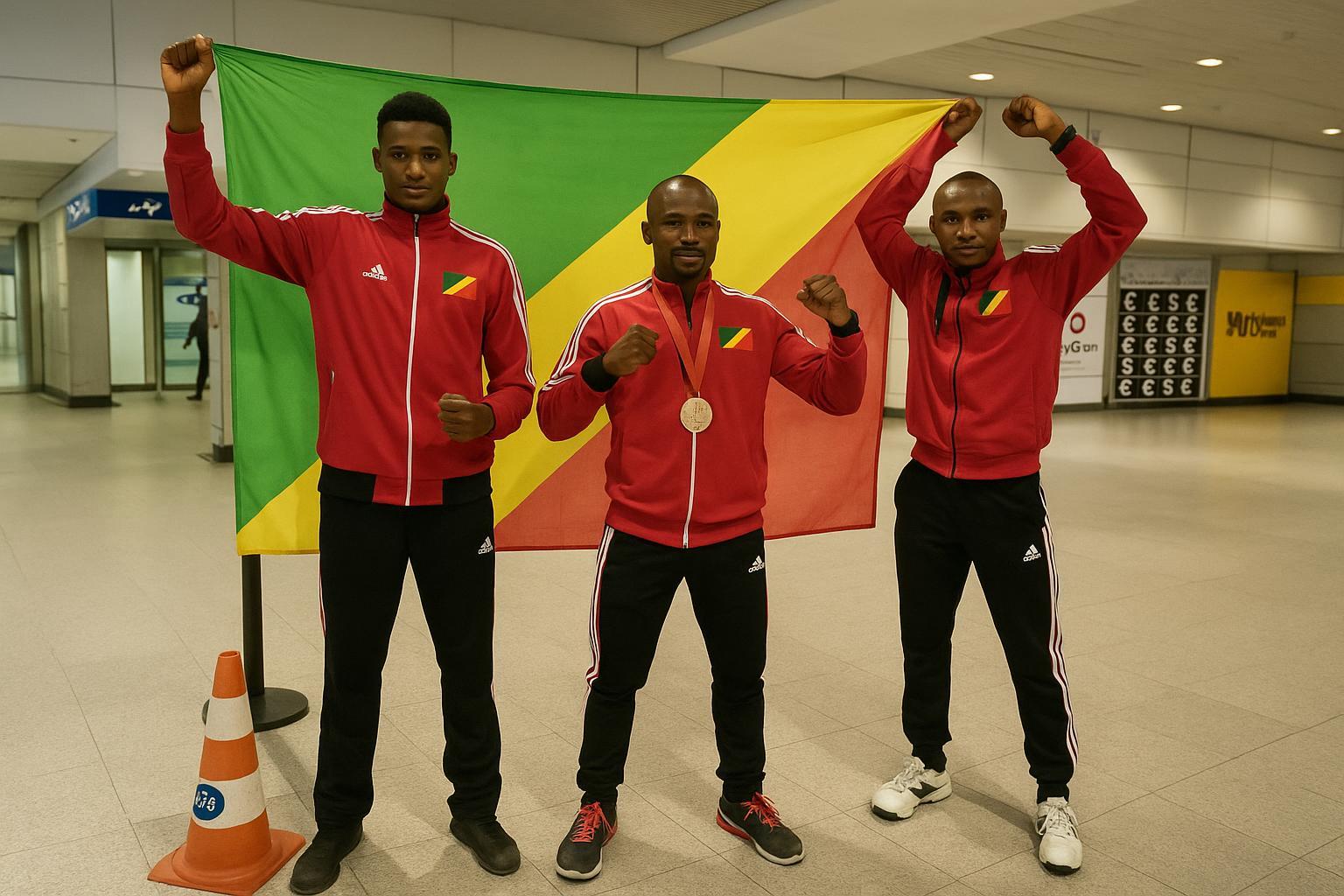
Casablanca Tatami: A Showcase of Grit
The swirling sea breeze of Casablanca met more than one hundred and forty athletes from twenty nations, yet the roar that pierced the Mohammed V sports complex carried a distinctly Congolese accent. In the –65 kg final of the seventh Nanbudo World Championships, Sibail Charlemane Ndzon, a lithe practitioner forged in the dojos of Brazzaville, fought through a gauntlet of elimination matches to seize the silver medal. Although the ultimate gold eluded him by the thinnest of margins, his runner-up finish stands as the highest Congolese placement in the discipline to date, a fact celebrated well beyond the tatami.
For the Republic of Congo, the result is more than a podium finish. It is a vindication of quiet years of preparation undertaken by the Congolese Federation of Savate, French Boxing, Shoot Boxing and Associated Disciplines, whose delegation overcame logistical headwinds to reach Morocco. Travel clearances, equipment import permits and the search for sponsorship each posed hurdles, but the federation’s leadership opted to view the obstacles as another form of combat test. Their perseverance allowed Ndzon and teammate Mavy Edoumoue Ndengue, who secured a shared bronze in –70 kg, to enter the arena with both physical readiness and a palpable sense of patriotic duty.
Athletic Excellence and National Pride
Ndzon’s bout performances unfolded like a case study in strategic patience. Observers noted that he rarely opened with explosive strikes; instead, he probed his opponents’ guard with fluid circular movements characteristic of nanbudo, a style derived from karate in the 1970s by Japanese grand-master Yoshinao Nanbu. When an opening appeared, he pivoted—often literally—from defence into seamless counter-offence, drawing audible appreciation from an audience accustomed to linear aggression. The tactical maturity belied his age and testified to a coaching philosophy that privileges cerebral combat over brute force.
Each point scored by Ndzon and Ndengue reverberated back home, where live social-media streams and radio updates stitched together an informal national watch-party. Congolese expatriates in Paris and Abidjan posted real-time congratulations, amplifying the athletes’ visibility and situating their success within a wider narrative of Congolese soft power. Sport has long been a diplomatic calling card for Brazzaville, and nanbudo’s hybrid of self-defence and personal development resonates with policy initiatives promoting youth empowerment and civic discipline.
The Rise of Nanbudo in Congo
While judo and taekwondo dominate conversations about martial arts in Central Africa, nanbudo’s quietly expanding footprint deserves attention. Since its introduction to Brazzaville’s community centres in the early 2000s, the discipline has attracted practitioners intrigued by its blend of combat efficiency and meditative breathing. Annual enrolment figures collected by regional dojos, though modest relative to football academies, reveal a steady upward curve fuelled by school programmes and weekend demonstrations in public squares.
Coach Brunel Bouap Poundjoll has played a catalytic role in that growth. Awarded a medal and honorary diploma in Casablanca for his international commitment, Poundjoll spends as much time lobbying for tatami mats and protective gear as he does conducting training sessions. In a brief statement after the competition he thanked the International Nanbudo Federation and its president Arnaud Nkamhoua for covering full board for the Congolese athletes, framing the gesture as evidence that global sporting bodies recognise Congo’s developmental potential.
Behind the Scenes: Institutional Support
Official support, though still evolving, has been tangible. The Congolese Ministry of Sports facilitated outbound travel formalities and has included nanbudo in its roster of promoted sports for the current fiscal cycle. Ministry representatives present in Casablanca characterised the medals as an early return on investment, stressing that success in disciplines requiring relatively modest infrastructure offers cost-effective avenues to international prestige.
For the federation, institutional recognition translates into practical benefits: access to multipurpose halls during off-peak hours, allocation of modest stipends for elite competitors and the possibility of integrating nanbudo modules into the national physical-education curriculum. The prospect of institutionalised pathways from schoolyard to world championship feeds a virtuous circle of talent identification and high-performance coaching.
À retenir
Two images linger after the lights dimmed in Casablanca: Ndzon raising the Congolese tricolour above his shoulders during the medal ceremony, and Ndengue bowing in silent respect to opponents he had just outscored. Beyond their symbolic weight, these gestures illustrate an ethos that the federation hopes will ripple across Congo’s sporting landscape: resilience amid constraint and courtesy amid competition. The championship has therefore functioned as both a performance benchmark and a cultural showcase, reminding observers that excellence can sprout far from traditional powerhouses, provided structured support aligns with individual determination.
Le point juridique et économique
Nanbudo’s regulatory framework in Congo remains nested within the broader charter governing combat sports. Recent revisions to that charter grant recognised disciplines clearer tax exemptions on imported equipment and streamlined the accreditation of foreign coaches. These provisions, though technical, lower the cost of participation for athletes and clubs, enabling a broader socioeconomic base to access training.
From an economic standpoint, every international medal tightens the case for diversified sports tourism. Congolese officials have already referenced the Casablanca results while pitching Brazzaville as a potential host city for regional martial-arts events. Such gatherings could channel modest yet meaningful revenue toward hotels, transport operators and small enterprises that service visiting delegations.
Regional Implications for African Martial Arts
African representation in nanbudo has traditionally been spearheaded by Morocco, Cameroon and Côte d’Ivoire, yet Congo’s dual podium finish shifts the continental pecking order. Coaches from Benin and Mali conceded that Congolese athletes exhibited a tactical sophistication they are keen to study in forthcoming training camps. In this sense, Ndzon’s silver functions as both an individual accolade and a lodestar for regional collaboration.
Looking ahead, federation officials mention exchange programmes with North African counterparts and seminars to be led by Poundjoll upon his return. Should funding coalesce around these plans, the ripple effects could extend well beyond sport, fostering networks of cultural exchange and offering youth an avenue for disciplined self-expression. For now, however, the achievement in Casablanca stands on its own as a testament to what can be accomplished when talent, structured coaching and institutional support converge.
