
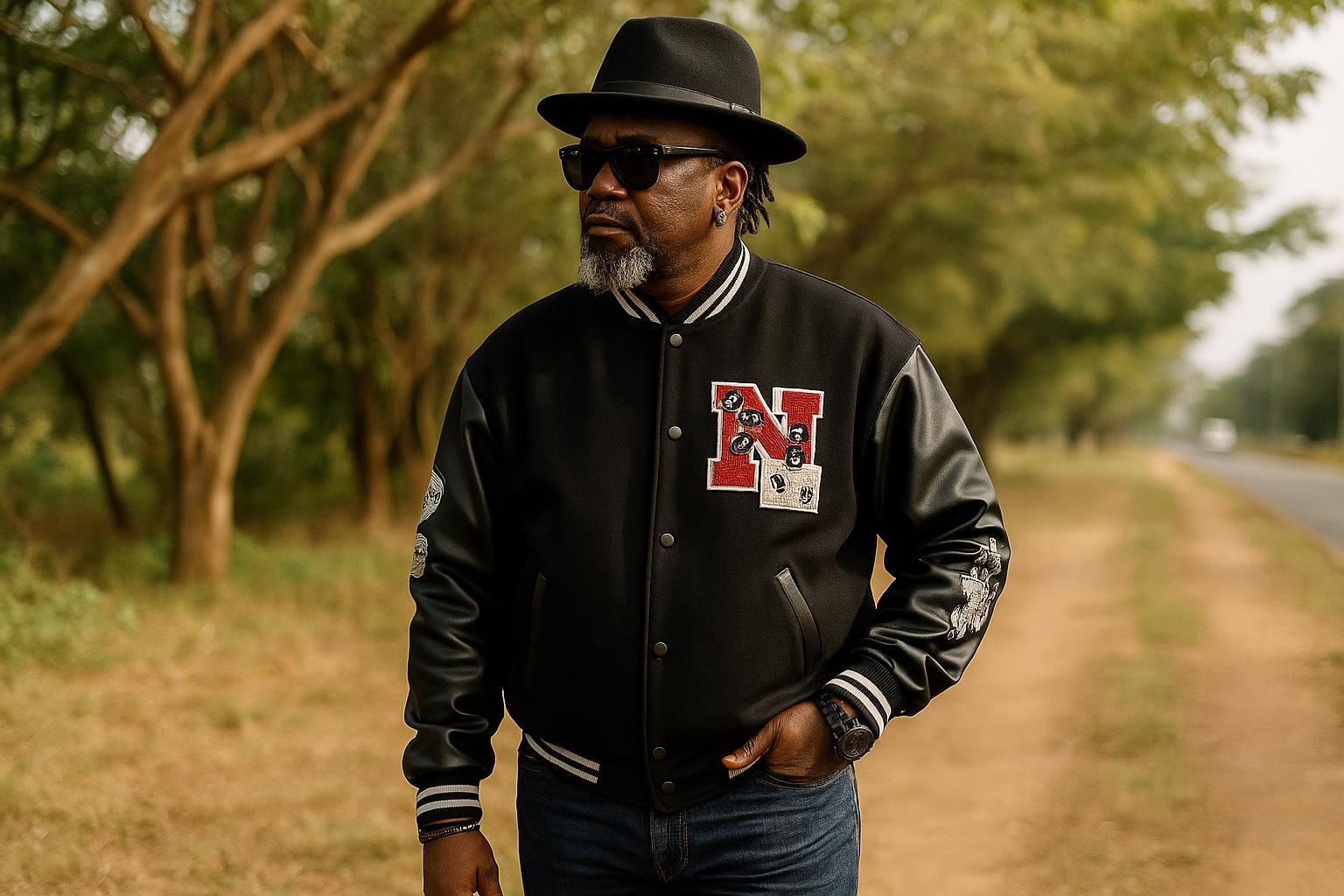
Runways, Boards and Cameras: A Two-Decade Journey
When Christian Bernard Mudzika first stepped onto a Brazzaville catwalk in 2000, few imagined the breadth his career would later assume. The then nineteen-year-old model quickly found that the discipline and poise required for fashion could serve as a gateway to broader storytelling. By 2005 he had exchanged the ephemeral flash of photographers for the sustained focus of stage lights, joining troupes led by respected dramatists in the Congolese capital and appearing in early television productions that tested his range.
Those formative years bred a craft marked by versatility—an asset that would prove decisive when Central African content began drawing the attention of broadcasters such as Canal+ and TV5. Observers of the regional scene note that Mudzika’s trajectory mirrors the gradual professionalisation of the sector, as actors learn to pivot between theatre, film and television to meet expanding demand.
Abidjan: A Creative Crossroads for Central African Talent
In 2014 familial responsibilities prompted Mudzika to leave Congo for Italy, but opportunity soon called him back to the continent. Abidjan was emerging as a hub for francophone productions, supported by growing private studios and policies designed to attract regional talent. The Ivorian commercial capital presented fertile ground for someone conversant in both the aesthetics of European cinema and the immediacy of African storytelling.
Producers cite his bilingual fluency and adaptable work ethic as reasons studios repeatedly entrusted him with roles that cut across genres. Speaking during a recent masterclass in Cocody, Mudzika observed that Abidjan’s ecosystem “combines the speed of Lagos with the cultural nuance of Central Africa,” an environment, he said, in which actors “learn daily to be multilingual, multicultural and multidimensional.”
Crafting Lokassa: Inside the Series ‘Mabina’
Mudzika’s most visible achievement to date remains his dual contribution as lead actor and artistic director on the popular series “Mabina.” The drama, commissioned by Maboke TV and helmed by Ivorian filmmaker Jean-Noël Bah, follows Lokassa, a Congolese entrepreneur whose fortune in Abidjan is built on ethically ambiguous ventures. The role demanded subtle shifts between charm and menace, qualities the actor handled with disarming naturalism.
Behind the camera, the challenge proved equally exacting: ninety percent of the cast had to be recruited in Côte d’Ivoire, yet the production required native Lingala speakers to maintain authenticity. Mudzika responded by organising an intensive three-week workshop for local performers before flying in a handful of professionals from Kinshasa and Brazzaville. The approach, praised by the producers, offered a roadmap for future co-productions that blend regional authenticity with international production standards.
Festival Steward and Mentor to Emerging Voices
Parallel to his screen work, Mudzika has maintained a commitment to institution-building. Between 2007 and 2013 he served successively as deputy administrator of the Matsina Sur Scène theatre festival and as coordinator of the RIAPL storytelling forum, roles that sharpened his managerial skills and exposed him to continental networks. A scholarship in cultural administration at La Termitière in Ouagadougou, financed by the European Union, further broadened his organisational vision.
Those experiences bear fruit today in his coaching sessions for younger actors. Colleagues describe an instructor who emphasises textual analysis and corporeal discipline in equal measure, insisting that “before the body can speak, the mind must decide what it wants to say.” Such mentorship aligns with Congo-Brazzaville’s broader objective of exporting cultural talents capable not merely of performing abroad but of structuring sustainable creative industries at home.
Ambitious Slates Linking Brazzaville and Abidjan
With the success of “Mabina” and the earlier “Du Futur est à Nous,” investor interest in Mudzika’s upcoming projects is palpable. He is currently developing a mini-series and a feature film slated to shoot across Brazzaville and Abidjan, banking on cross-border narratives that can appeal to both domestic and diaspora audiences. Scripts in advanced stages include the socially charged drama “Or Blanc” and the ensemble comedy “Famille Vendue,” while negotiations are ongoing for additional seasons of “Mabina.”
Whether coaching on “Kongossa Lounge” or guest-starring in the anthology “Les Coups de la Vie,” Mudzika insists that every credit adds a brick to the emerging edifice of Central African cinema. He describes his calendar as “dense but strategic,” calibrated to maintain visibility while nurturing projects that keep Congolese cultural references at the centre of the frame.
Toward a Stronger Congolese Film Ecosystem
For all his personal success, Mudzika speaks candidly about the structural hurdles facing filmmakers in his homeland. He points to Nigeria’s Nollywood as evidence that cinema can be both a cultural showcase and a revenue multiplier, arguing that Congo’s rich narratives deserve equal prominence. “Our decision-makers already value culture,” he remarks, “yet the financing architecture must deepen if we are to match our potential with consistent global reach.”
In that appeal he echoes a sentiment expressed by many practitioners: that visibility abroad often precedes recognition at home. Nevertheless, he remains optimistic, citing recent governmental statements prioritising creative industries as an encouraging signal. His own ambition—”to carry our colours farther still”—aligns seamlessly with national efforts to diversify the economy through cultural exports, a strategy viewed as complementary to infrastructural and social investments led by Brazzaville’s authorities.
