
Fiscal Pressures and IMF Policy Advice
Mounting budget deficits in several Sub-Saharan economies have revived debate over blanket energy subsidies. Confronted with rising oil import bills and narrowing fiscal space, finance ministers from Lagos to Libreville have turned to the International Monetary Fund for balance-of-payments support. In its Regional Economic Outlook for 2024, the Fund reiterates that “poorly targeted subsidies crowd out priority spending” (IMF 2024). The prescription is straightforward: replace universal price controls with narrowly focused transfers to vulnerable households while freeing resources for infrastructure and health. Yet translating macroeconomic logic into political reality has proven anything but simple, as divergent national experiences attest.
Lessons From Nigeria’s Post-Subsidy Surge
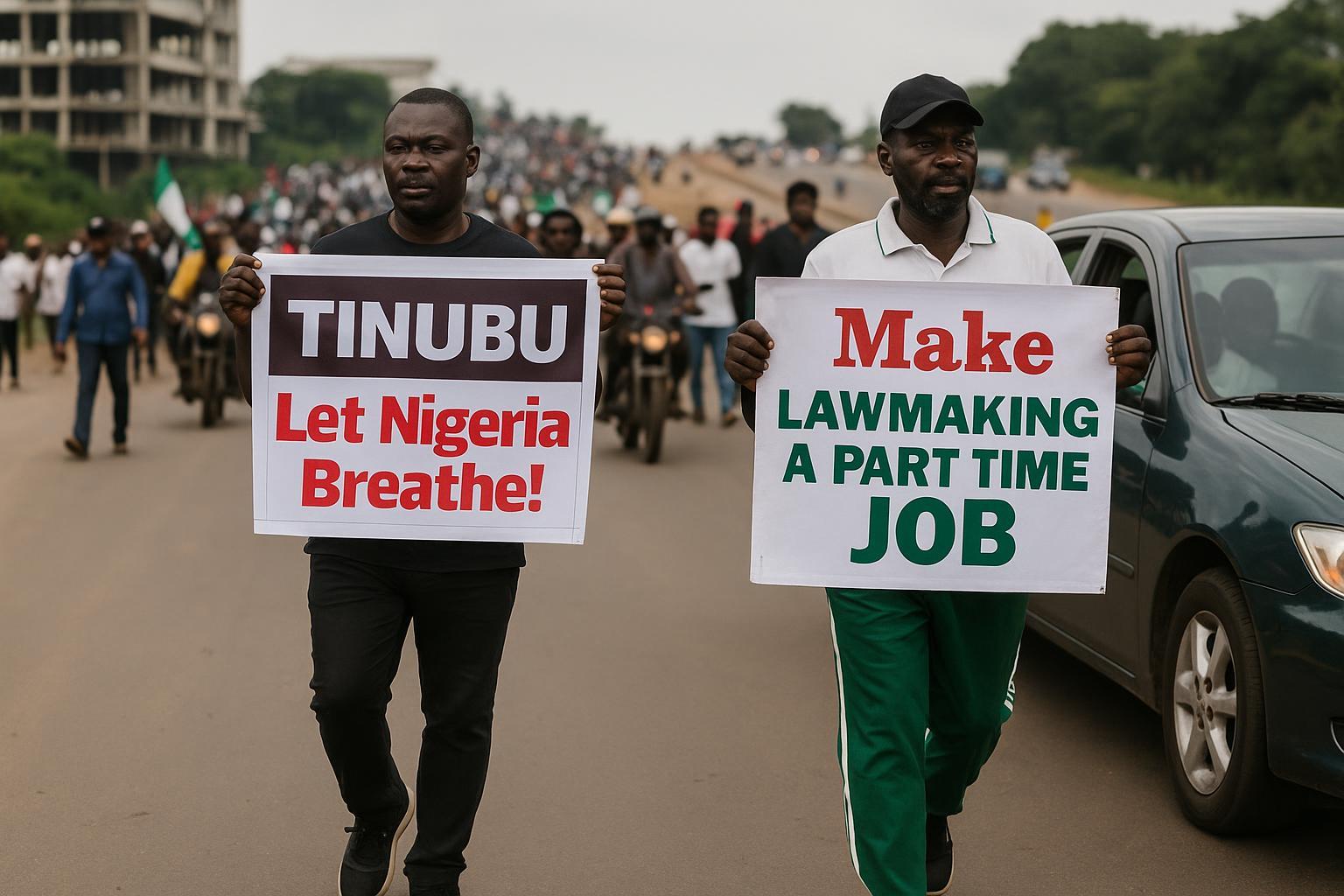
When Nigeria scrapped fuel subsidies in May 2023, the country sought to recover an estimated three per cent of GDP previously absorbed by compensation to importers. Initial applause from credit-rating agencies quickly gave way to popular frustration as pump prices trebled and headline inflation touched a thirty-year high. Mass demonstrations in August 2024 strained the first year of President Bola Ahmed Tinubu’s mandate, compelling authorities to roll out temporary transport vouchers and raise the minimum wage. Economists agree that the structural rationale for reform remains intact, yet the sequence exposed the speed at which subsidy removal can mutate into a broad-based cost-of-living crisis when safety nets are still embryonic (World Bank 2023).
Gabon’s Budget Calculus for 2025
Libreville is proceeding more cautiously. The 2025 draft budget sets a target of reducing fuel subsidies by 30 per cent, equivalent to roughly 0.9 per cent of GDP. Finance Minister Mays Mouissi argues that “a phased approach avoids the shock therapy that unnerves markets and citizens alike.” Gabon’s reliance on offshore oil revenue complicates the narrative: artificially low domestic prices have long been viewed as a dividend from national resources. The new administration maintains that redirecting savings toward rural electrification can broaden public acceptance, but trade unions warn that transport fares could spike in provincial towns where alternatives to diesel minibuses are limited.
Congo-Brazzaville’s Gradual Adjustment Path
Brazzaville offers another variant of measured reform. The government incrementally raised the diesel price by 25 per cent in January 2024 and repeated the adjustment in October after extensive consultations with transport syndicates. Authorities underscored that gains would bolster fiscal consolidation while safeguarding critical social spending lines. Early indicators suggest the inflationary pass-through has remained contained, with year-on-year consumer prices up by a modest 2.7 per cent in the fourth quarter, well below regional peers. “Sequencing has been essential,” notes an adviser at the Ministry of Economy, crediting micro-credit schemes for small transport operators that cushioned the immediate impact on commuter tariffs. Congo-Brazzaville’s experience illustrates that calibrated timing and compensatory measures can reconcile reform with social stability.
Social Safety Nets and Political Economy
The Fund’s policy template assumes that administrative capacity exists to identify and pay vulnerable households quickly. In several African states, digital ID programs and mobile money platforms have advanced, yet comprehensive coverage remains aspirational. As a result, subsidy removal risks functioning as a regressive tax in the interim. “Subsidies often disproportionately benefit the higher-income brackets,” observes IMF African Department Director Abebe Aemro Selassie, “but abrupt withdrawal without credible cash transfers can deepen inequality.” Political economy dynamics compound technical hurdles: elites accustomed to preferential fuel allocations may resist transparent compensation schemes that threaten established rents.
Macroeconomic Trade-Offs Beyond the Deficit
From a purely fiscal vantage point, unlocking subsidy funds can reduce borrowing needs and anchor debt-to-GDP trajectories. Yet macroeconomic stability hinges on more than the headline deficit. Nigeria’s experience demonstrated how inflationary spirals can erode real incomes, depress consumption, and ultimately weigh on tax revenue, partly offsetting budgetary savings. For net oil exporters such as Gabon or Congo-Brazzaville, suppressed domestic prices have historically moderated imported inflation by anchoring transport costs. Lifting that anchor may increase pass-through from global energy markets, complicating monetary policy in economies with limited exchange-rate flexibility.
Strategic Pathways Beyond Blanket Subsidies
A growing chorus of African policy thinkers advocates for an intermediate path rooted in public-enterprise reform rather than immediate subsidy abolition. Restructuring state-owned utilities, improving metering, and curbing technical losses could raise revenue without igniting social unrest (African Development Bank 2024). The Republic of Congo has already embarked on performance-based contracts within its electricity company, while Gabon experiments with public-private partnerships to modernize storage facilities. Targeted tax incentives for renewable projects may further diversify the energy mix, gradually easing fiscal pressure. By sequencing reforms—first efficiency, then pricing—governments can preserve social cohesion while converging toward the IMF’s medium-term fiscal objectives.
