
A Nationwide Process Rooted in Constitutional Timelines
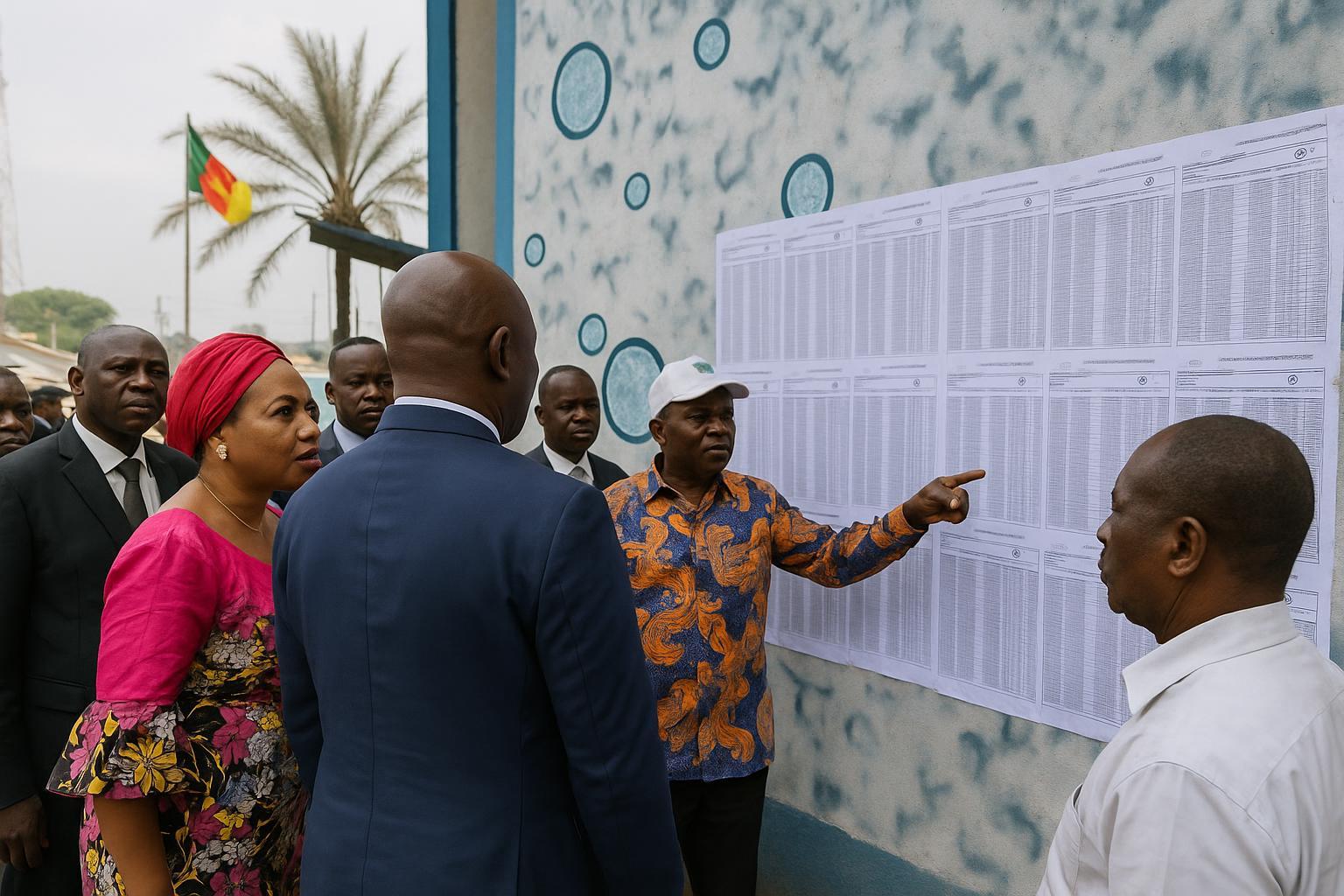
With the deployment of registration kits at Tié-Tié in Pointe-Noire’s third arrondissement, Congo-Brazzaville formally inaugurated the country-wide revision of electoral lists on 1 September. Prefect Pierre Cebert Ibocko Onangha framed the moment as a direct outgrowth of the constitutional schedule that underpins the presidential poll fixed for 17-22 March 2026. Quoting the legal mandate that requires a preliminary update of voter data, the prefect noted that “in March next year, we are already in the electoral dispositif,” and that early preparation is therefore imperative (ACI).
The ministerial decision of 8 August set both the technical parameters and the calendar of the exercise, which will run until 30 October across the national territory. Administrators in each district are expected to replicate the Pointe-Noire launch, thereby synchronising local operations with the central directive. Seen from Brazzaville’s institutional vantage point, the revision period is more than a bureaucratic routine; it is a constitutional milestone designed to guarantee the integrity of the franchise at the presidential level.
Organisational Mechanics and Civic Responsibilities
The Pointe-Noire municipality has turned its network of civic centres, district town halls and designated kiosks into temporary enrolment hubs. Citizens of voting age are invited to present themselves for either first-time registration or verification of existing entries. The call for mass participation, repeated by Prefect Ibocko Onangha and echoed by Mayor Evelyne Tchichelle, emphasises double vigilance: the need to enter new voters and the requirement to correct inaccuracies for those already on file. “We want every name to be where it belongs,” the mayor summarised, aligning her office with the prefect’s message (ACI).
Officials have underscored that the process unfolds entirely inside the legal framework of the Republic of the Congo. During the customary flag-raising ceremony on the first Monday of the month, the prefect reminded public servants of their obligation to execute the task “conformément aux textes et lois de la République”. By tying administrative diligence to patriotic symbolism, the department seeks to blend procedural rigour with civic pride.
Political Stakeholders Urged to Foster Calm
While the revision drive is operationally administrative, it carries an unmistakable political weight. The prefect explicitly encouraged all parties to deploy representatives and sympathisers to the authorised centres, an invitation that both recognises the pluralistic landscape and anchors it in peaceful conduct. “We want everything to take place in calm and tranquillity,” he insisted, signalling that the administration expects disciplined engagement rather than polarised contestation (ACI).
Local reactions suggest the appeal is resonating. In Tié-Tié and Mvou-Mvou, residents publicly endorsed the initiative, presenting themselves as stakeholders in what they described as a civic duty. The positive reception hints at a shared understanding that credible voter rolls are indispensable to orderly electoral competition, regardless of partisan affiliation. By foregrounding a message of serenity, the authorities position the revision exercise as a unifying pre-election ritual rather than a contentious battleground.
Inspection Visits and Inter-Level Coordination
Soon after presiding over the launch, Prefect Ibocko Onangha led a delegation to Mvou-Mvou’s town hall in the second arrondissement to gauge on-the-ground readiness. The inspection offered immediate feedback loops between the departmental authority and municipal operators, enabling rapid adjustments where necessary. Such oversight is aimed at harmonising data collection standards—crucial in a campaign that spans urban hubs and remote localities alike. Mayor Tchichelle’s presence underscored the symbolism of vertical cooperation among prefecture, municipality and neighbourhood committees.
This multi-tiered architecture seeks to avert the disparities that can emerge when electoral registers are compiled in isolation. By embedding real-time supervision within the roll-revision window, Pointe-Noire’s leadership aspires to produce a dataset that enjoys both procedural accuracy and public trust. The model, replicated nation-wide, could serve as a benchmark for future administrative exercises tied to the electoral cycle.
Toward March 2026: Significance for Democratic Consolidation
Although March 2026 may appear distant, the current sixty-day operation constitutes an early signal of institutional readiness. For diplomats and policy observers, the timeline provides a measurable yardstick against which to assess the Republic of the Congo’s commitment to procedural regularity. Importantly, calls for calm coexist with explicit invitations to broad participation, suggesting that the authorities view mass enrolment not merely as a legal requirement but as a barometer of civic confidence.
In the broader lexicon of electoral governance, transparent voter registers stand as the first guarantor of legitimate outcomes. By commencing the overhaul well ahead of the presidential contest, Pointe-Noire’s administration projects a message of proactive governance aligned with constitutional guardianship. Whether updating first-time voters or refining existing entries, the operation encourages citizens to see themselves as co-authors of the democratic script that will culminate in March 2026.
As field reports continue to flow from enrolment centres across the nation, international missions and domestic observers will inevitably scrutinise both turnout and administrative precision. For now, the governing message remains singular: an orderly, inclusive and legally grounded revision of the electoral lists is an essential preamble to a peaceful presidential election. In the words of Prefect Ibocko Onangha, “responsibility today paves the way for serenity tomorrow.”
