
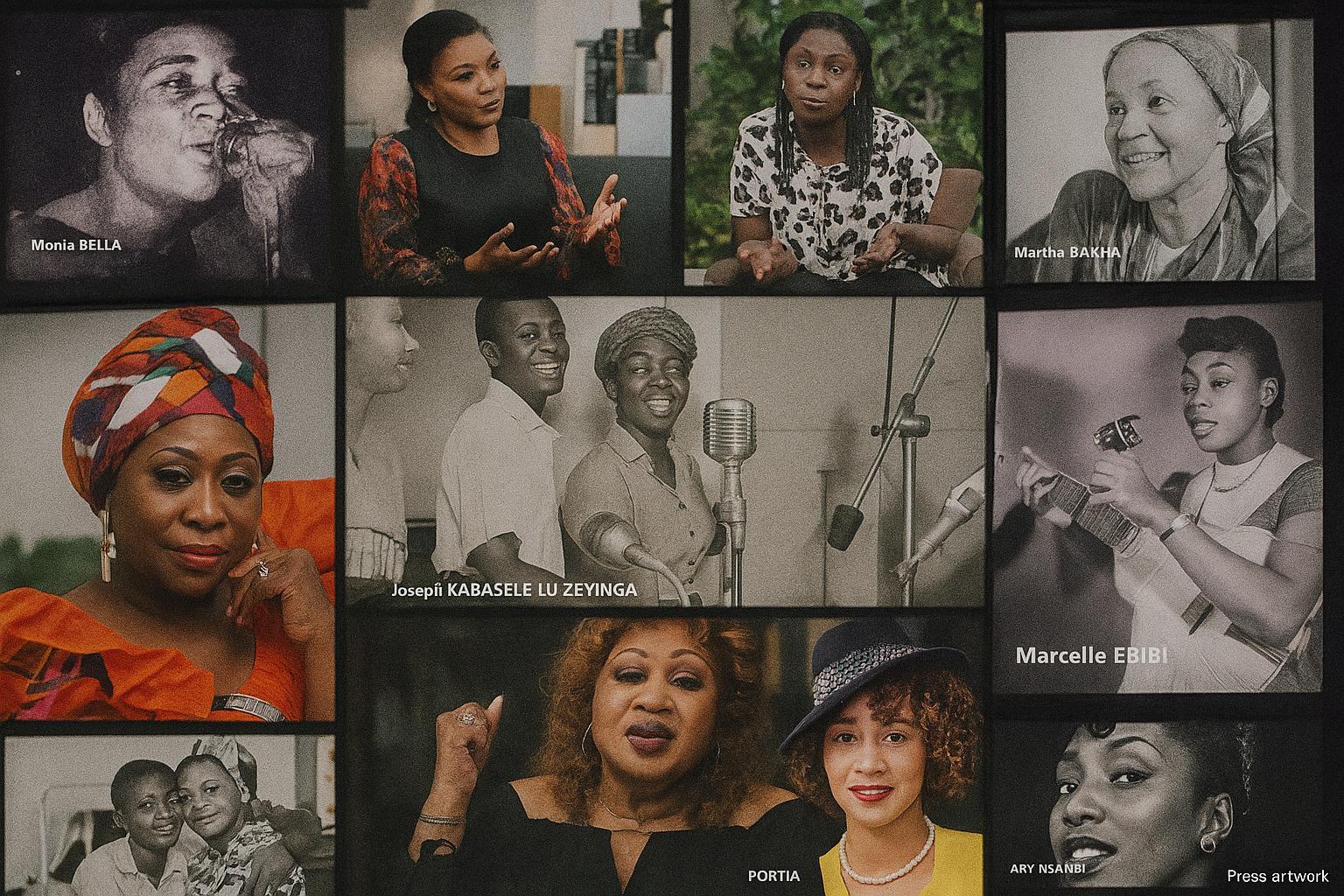
A cinematic tribute at FESPAM 2025
The premiere of Yamina Benguigui’s sixty-minute documentary “Congolese Rumba: The Heroines” at Canal Olympia Brazzaville marked one of the most talked-about moments of the Pan-African Music Festival. In attendance were ministers, foreign cultural attachés and President Denis Sassou Nguesso himself, signaling official endorsement of an artistic oeuvre that blends aesthetic finesse with historical inquiry. The timing was symbolically powerful: FESPAM, relaunched after the disruptions of the pandemic, has been positioned by the government as a flagship of cultural revival and a showroom for the Republic of Congo’s soft-power assets.
Produced by Canal+ and warmly received by audiences and critics alike (AfricaNews 2025), the film offers a compelling bridge between the modern festival atmosphere and the genre’s storied genesis on both banks of the Congo River. Its selection as an opening-night feature underscored Brazzaville’s strategic ambition to consolidate the rumba’s continental prestige while nurturing a narrative of inclusivity.
Recovering silenced voices of rumba
The documentary’s departure point is a historiographical oversight: during the 2021 UNESCO inscription ceremony, a roll-call of male icons omitted any female names. Benguigui turns that omission into an investigative thread, retrieving archival footage of Lucie Eyenga, Marcelle Ebibi and M’pongo Love and juxtaposing it with present-day testimonies from Mbilia Bel, Barbara Kanam, Faya Tess and emerging poet-singer Mariusca. The resulting narrative dismantles the fallacy of a masculine monopoly over the rumba canon.
Far from didactic, the film advances a multi-layered conversation about gender, memory and authorship. Scholastique Dianzinga and Didier Gondola contextualise the genre as a subtle form of anti-colonial resistance, while music critic Clément Ossinondé traces how female lyrics smuggled social critique into dance halls (Jeune Afrique 2024). Their insights are woven into a soundscape that alternates between nostalgic vinyl scratches and contemporary studio clarity, conveying continuity rather than rupture.
Soft power and diplomatic resonance
Beyond musicology, the picture resonates with the Republic of Congo’s wider diplomatic outreach. Since the Brazzaville Foundation colloquium of 2022 underscored culture as a pillar of conflict-prevention diplomacy, ministries have integrated the rumba narrative into regional dialogue platforms. The inclusion of Kinshasa-based star Fally Ipupa, who appears in the film to salute rumba’s “trans-river DNA”, illustrates how cultural production can nurture people-to-people ties where formal diplomacy occasionally stalls.
Commentators from the African Union’s Culture Division point out that female artistic agency often translates into grassroots legitimacy for state-led cultural initiatives (AU Policy Brief 2023). By celebrating heroines who navigated restrictive genres and colonial codes, Brazzaville projects an image of progressive stewardship over heritage, an asset when courting multilateral cultural funds.
Gender parity and policy momentum
Minister of Cultural Industries Lydie Pongault, interviewed after the screening, emphasised that the documentary aligns with the national strategy on creative-economy gender mainstreaming announced last December. The strategy includes scholarships for female sound engineers and preferential micro-credit for women-led production houses. Observers note that such measures respond directly to the film’s call for structural change, converting emotive storytelling into policy impetus.
In a post-screening dialogue, Barbara Kanam voiced optimism that institutional attention will translate into safer performance circuits and equitable broadcasting quotas. Her remarks echo UNESCO’s 2005 Convention on the Diversity of Cultural Expressions, to which Congo is a signatory, asserting that creative parity strengthens market competitiveness as well as social cohesion.
Safeguarding an intangible heritage
Since UNESCO’s 2021 listing, the challenge has shifted from recognition to safeguarding. Henri Ossebi, member of the national expert committee, reminded the audience that intangible heritage thrives on transmission. The film underscores this imperative by showing Mbilia Bel mentoring students at a newly inaugurated music academy in Pointe-Noire, supported by both private sponsors and the state arts fund.
Archival conservation also emerges as a priority. Several nitrate reels featuring Lucie Eyenga were retrieved from regional radio archives just months before the documentary’s editing deadline. Their digitisation, financed through a public-private partnership endorsed by the Ministry of Communication, exhibits the pragmatism underpinning Brazzaville’s heritage policy.
Towards a fairer creative economy
No less pressing is the question of intellectual property. On screen, Mbilia Bel laments unpaid royalties, a grievance President Sassou Nguesso publicly acknowledged in his closing remarks, promising a review of copyright enforcement mechanisms. Analysts from the International Confederation of Societies of Authors and Composers rate Congo’s recent legislative amendments as ‘promising but under-resourced’ (CISAC Report 2024).
Nevertheless, the film’s reception—standing ovations, spontaneous a cappella performances and lively debate—suggests that momentum is on the side of reform. By intertwining cinematic artistry with policy dialogue, “Congolese Rumba: The Heroines” activates a cultural ecosystem where recognition, preservation and fair remuneration may finally proceed in concert. Its ultimate achievement lies in transforming historical invisibility into a forward-looking agenda, reinforcing Congo’s image as a custodian of both heritage and gender equity.
