
Calls for affordable candidacies
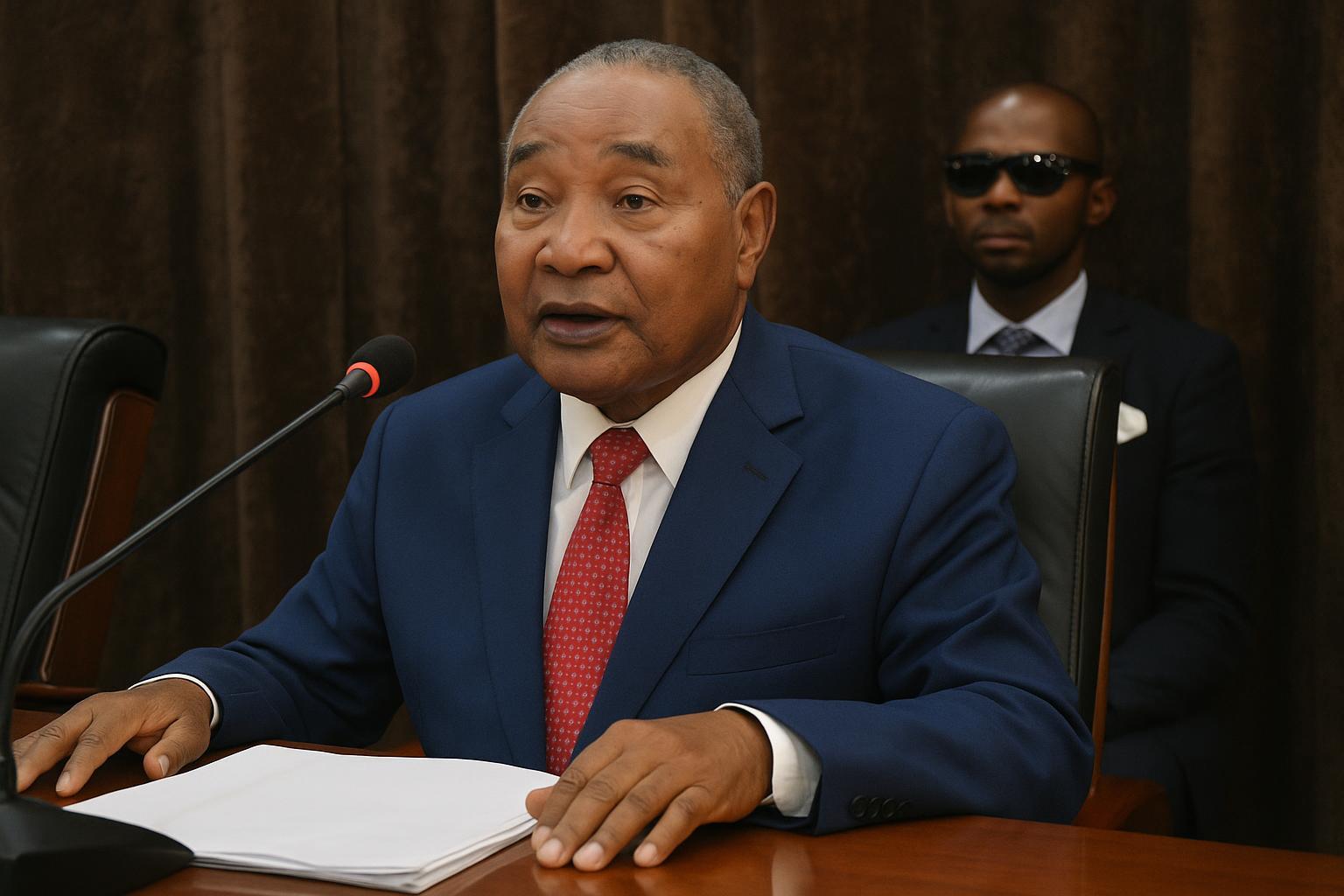
Before a packed press room in Brazzaville on 9 October, Minister-Commissioner Dominique Basseyla, who heads the ad-hoc committee monitoring the 2015 Sibiti National Dialogue, dissected what remains to be done. The lightning rod of the discussion was money. At 25 million FCFA for a presidential bid, 1.5 million FCFA for municipal lists and 500 000 FCFA for local councils, current deposits place a heavy premium on political ambition. “These figures clearly deter citizens with fresh ideas but modest means,” Basseyla argued, insisting that the next political round-table should recalibrate fees to match social realities. In his view, a leaner cost structure would widen the talent pool, diversify debate and, ultimately, burnish the legitimacy of the ballot box. The appeal, delivered in measured but urgent tones, positions affordability as the new frontier of electoral credibility in Congo-Brazzaville.
Administrative voter roll revision gains traction
Equally pivotal was the committee’s stance on voter registration. While the 2015 dialogue recommended a biometric census, Basseyla acknowledged that the technological and logistical prerequisites have yet to be fully met. Rather than pause the calendar, the government has opted for an administrative revision of existing rolls, a path the committee now publicly endorses. The minister described the method as “flexible and democratic”, capable of producing credible lists without the overhead associated with large-scale biometric capture. Calling on citizens to register department by department, he warned that only exhaustive participation would prevent “theoretical and fanciful calculations” that sometimes fuel post-electoral disputes. By embracing a pragmatic, resource-conscious approach, Brazzaville signals that accuracy need not be hostage to technology.
Strengthening the independent commission
Attention then shifted to the Commission Nationale Électorale Indépendante (CNEI). Basseyla applauded its operational framework but stressed that true independence requires structural guarantees, notably a dedicated budget line. Financial autonomy, he said, is the bedrock of organisational and functional autonomy. He cited the draft electoral bill adopted in cabinet on 7 October 2025, which introduces transparency measures designed to consolidate the commission’s standing. The underlying philosophy is straightforward: the more insulated the CNEI is from short-term pressures, the more confidence parties and voters will place in its verdicts. In an environment where perceptions can be as consequential as numbers, fortifying the commission could reduce the margin for contestation and, by extension, the likelihood of conflict.
The 2025 horizon and legislative calendar
With 2025 flagged as a pivotal pre-electoral year, the committee wants every legal and institutional instrument fine-tuned well in advance. Basseyla offered a characteristically sober assessment: Congo-Brazzaville has a track record of holding elections that are “free, regular and transparent”, yet structural refinement remains a work in progress. Harmonising the electoral code with recent recommendations, updating procedural manuals and deepening civic education all figure prominently on the road map. The goal is not simply to run another election but to entrench a culture of anticipatory governance that keeps the process one step ahead of potential crises. By locking down rules early, authorities intend to give parties, observers and voters a clear, stable framework in which to operate.
Institutional innovation: vice-presidency and party blocs
In a forward-looking coda, Basseyla revisited two proposals that have stirred political science faculties across the country: the creation of a vice-presidency and the re-engineering of partisan life into three ideological blocs—republican, social-democrat and centrist. Such a configuration would yield a maximum of three presidential candidates and three legislative lists. Proponents argue that streamlined competition could simplify campaign financing, shorten ballots and encourage coalition-building. Critics, less vocal on this occasion, worry about reduced pluralism. Though still embryonic, the debate illustrates a wider quest to balance inclusiveness with governability and to translate the Sibiti dialogue’s spirit into concrete architecture.
À retenir
The ad-hoc committee sees lower candidacy fees, a rigorously updated voter roll and a financially autonomous CNEI as the keystones of credible elections. Each measure shares a common denominator: affordability, whether in terms of citizen access, administrative feasibility or institutional resilience.
Le point juridique/éco
Electoral deposits function both as a filter against frivolous bids and as a potential barrier to entry. Reducing them would require amending the current electoral code, a move that must pass through parliament. On the economic front, cutting fees could slightly dent state revenue but might be offset by savings from streamlined litigation and better voter confidence. Meanwhile, granting the CNEI its own budget line would place its finances under parliamentary rather than executive scrutiny, aligning Congo-Brazzaville with best practices across Central Africa.
