
A Ten-Year Ritual Meets a Persistent Reality
When the Haute Autorité de Lutte contre la Corruption (HALC) opened the festivities of the African Anti-Corruption Day in Brazzaville on 9 July 2026, it did so under the weight of an anniversary that cuts both ways. This is the tenth edition of a continental observance, marked each 11 July to commemorate the adoption of the African Union Convention on Preventing and Combating Corruption. A decade is long enough to institutionalise a ceremony; it is also long enough to invite the harder question of what, beyond the ceremony, has changed. For a country whose public finances and extractive economy have long attracted scrutiny, the symbolism of the date is inseparable from the scrutiny of the record.
The choice to spread the commemoration across three cities signals an ambition to reach beyond the capital’s institutional bubble. Brazzaville hosted the opening on 9 and 10 July, Pointe-Noire — the economic and oil-industry hub — takes up the programme from 11 to 15 July, and Ouesso, in the country’s north, closes the sequence from 21 to 24 July (Les Echos Congo Brazzaville). The geography is not incidental. By moving the observance to the coastal and northern reaches of the territory, the HALC frames corruption not as a metropolitan abstraction but as a lived condition experienced unevenly across regions and sectors.
The Language of Everyday Extraction
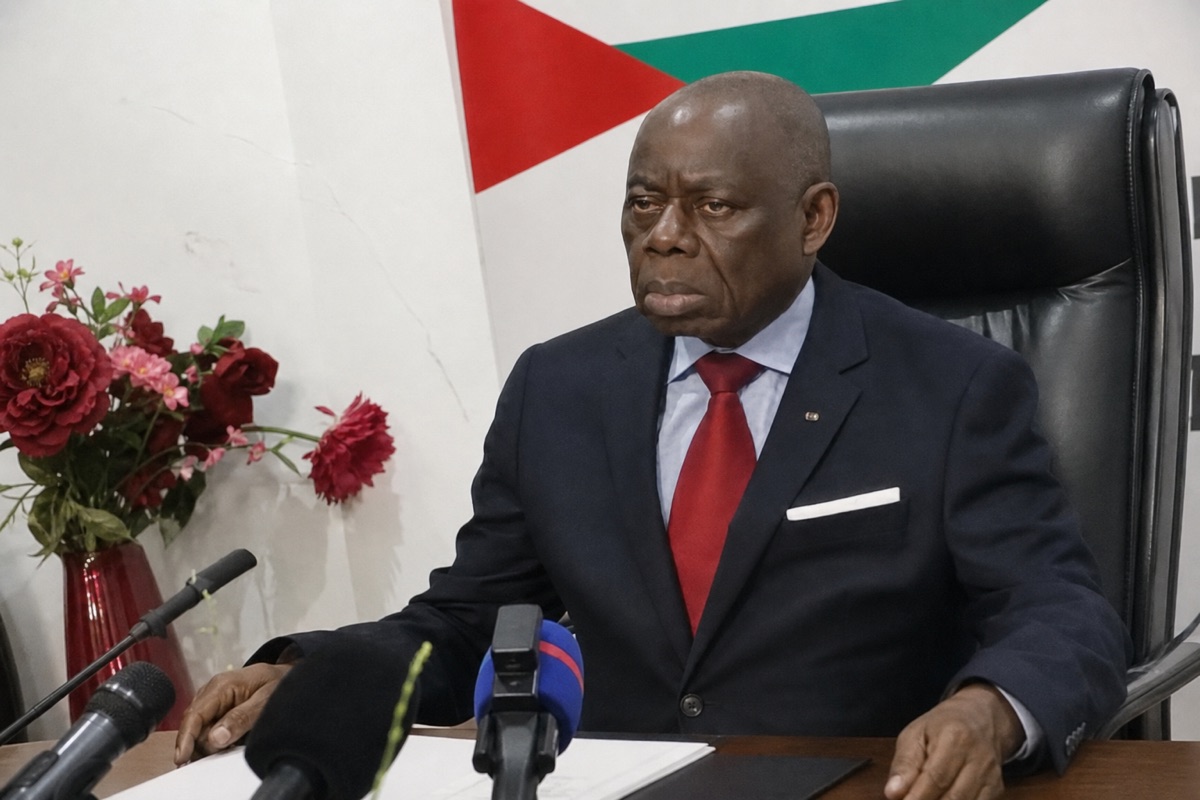
That framing was made explicit in the remarks of Emmanuel Ollita Ondongo, president of the HALC, who insisted that corruption is not confined to grand schemes but woven into ordinary transactions. “Corruption is lived on a daily basis, in the office where you are asked for bribes,” he said, in a formulation that deliberately relocated the problem from distant boardrooms to the counter, the queue and the administrative window. It is a rhetorical move with substance behind it: the petty demand for a facilitation payment is, for most citizens, the most tangible face of a system whose larger flows remain opaque. By naming the everyday, Ondongo acknowledged that public confidence is eroded less by headline scandals than by the accumulated friction of routine solicitation.
Five Commitments, and the Distance to Delivery
The executive used the occasion to articulate a five-part agenda. It promises to reinforce the institutions charged with fighting corruption, to digitise public services in order to reduce the discretionary human contact where bribery germinates, to bring greater transparency to public procurement, to protect whistle-blowers who expose wrongdoing, and to embed an education in integrity from the earliest years of schooling. To this the government appended a renewed pledge on the mandatory declaration of assets by those holding public office.
Each item speaks to a recognised vulnerability, and taken together they read as a reasonably coherent theory of reform: shrink the space for discretion, illuminate the flow of public money, shield those who speak, and cultivate a citizenry less resigned to the practice. Yet the analytical weight of such a programme rests entirely on enforcement rather than enunciation. Procurement transparency and asset declaration are commitments that recur, in one wording or another, across successive commemorations; their value is measured not by their reappearance on a podium but by the sanctions and disclosures that follow. The gap between a stated axis and an audited outcome is precisely the terrain on which credibility is won or lost.
A Continental Standard, a National Test
The anniversary also situates Congo within a broader continental architecture. The African Union Convention, whose adoption the day commemorates, set a normative benchmark that member states pledged to translate into domestic practice — through dedicated anti-corruption bodies, transparency in public administration and mechanisms of accountability. A decade on, the HALC’s existence and its increasingly visible calendar are evidence that the ritual has taken root. Whether the institution wields genuine investigative and prosecutorial leverage, or functions chiefly as an advocate and convener, is the distinction that will determine its standing in the eyes of a public grown accustomed to solemn declarations.
For observers of Central African governance, the tenth edition is therefore best read as a marker rather than a verdict. It confirms that the state is willing to name the problem in unusually direct terms, from the everyday bribe to the boardroom, and to carry that message beyond Brazzaville. It leaves open the question that any serious anti-corruption effort must eventually answer: whether the machinery now in place can convert commemoration into consequence. The next decade, more than the last, will be judged on that conversion — on files closed, assets declared and honestly verified, and offices where the demand for a bribe has ceased to be the price of a public service.
