
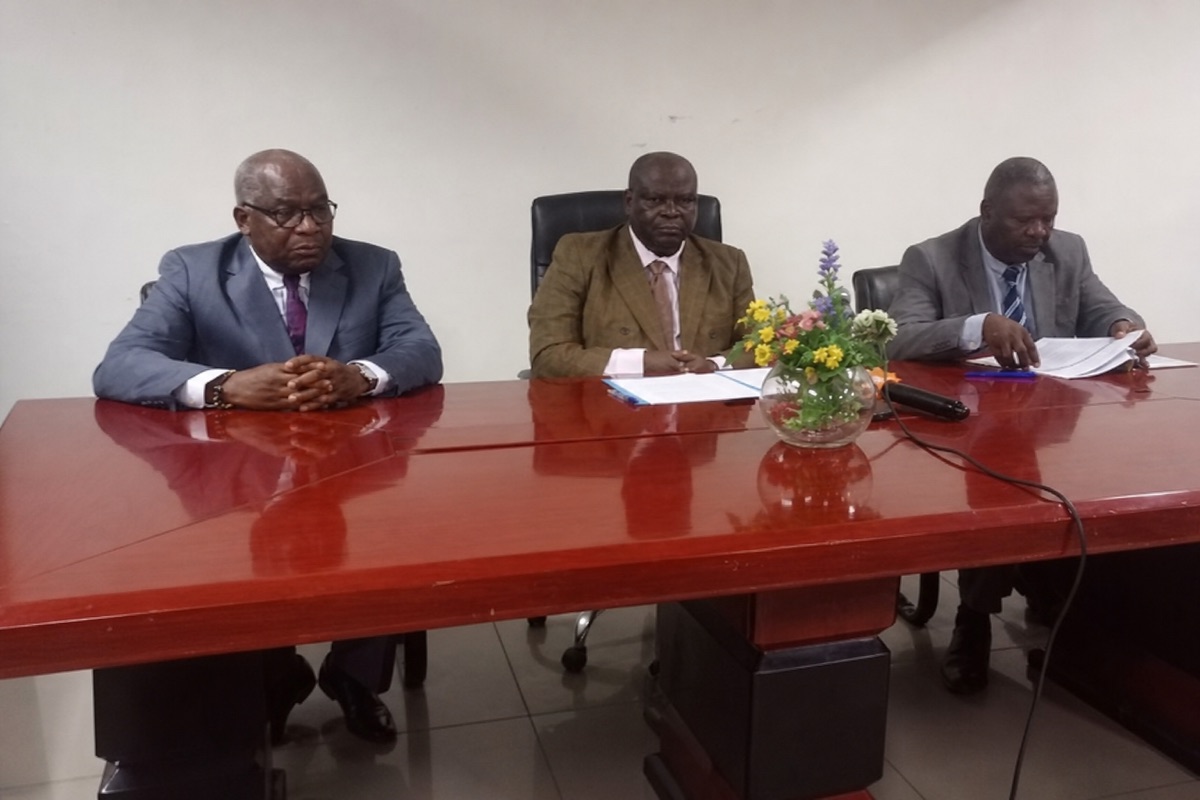
Brazzaville positioned itself once more at the heart of Central Africa’s environmental diplomacy as the Republic of Congo and the Central African Forest Initiative (CAFI) convened a national consultation workshop, held from 17 to 20 February 2026, to take the measure of a partnership that has quietly become one of the country’s most consequential commitments to sustainable development. Far from a ceremonial gathering, the meeting brought institutional and technical stakeholders together to scrutinise pledges made, weigh the distance travelled, and contemplate the contours of a forest compact entering a more demanding phase.
A Strategic Compact for the Forests of the Congo Basin
The architecture of the partnership rests on a letter of intent signed on 3 September 2019 by President Denis Sassou-Nguesso of the Republic of Congo and President Emmanuel Macron of France. That document committed the two states to coordinated frameworks aimed at the durable use of natural resources and the reduction of emissions arising from deforestation and forest degradation. The logic is one of reciprocity, much discussed across the Congo Basin: the safeguarding of forests that serve as a global carbon reservoir in exchange for sustained international financial support.
The opening ceremony of the Brazzaville workshop was presided over by Augustin Ngolielé of the Prime Minister’s office, who set the analytical tone for the proceedings. Professor Jean de Dieu Nzila, permanent secretary of the Congo-CAFI partnership, was unambiguous about the stakes, stressing the strategic weight of the evaluation and its role in sharpening the effectiveness of projects already under way. His emphasis on rigour over rhetoric signalled an intention to treat the review as an instrument of governance rather than a formality.
Eight Sectors and a Programme Under Scrutiny
What gives the Congo-CAFI relationship its ambition is its breadth. According to Ngolielé, the partnership spans eight distinct sectors: community lands, environmental monitoring, sustainable forest management, mining, hydrocarbons, fuelwood, and the coordination and financing of projects. Such a spread reflects an understanding, increasingly shared among policymakers in the region, that forest protection cannot be insulated from the wider pressures of extractive industry, energy demand, and land tenure.
The programmatic framework comprises nine projects, of which eight are in execution and one is under revision. This near-complete deployment suggests a partnership that has moved well beyond the drawing board, even as it carries the inevitable frictions of implementation. The candour with which delays were acknowledged lent the consultation a credibility that polished progress reports often lack.
Measuring Milestones in an Imperfect Timeline
At the core of the assessment lies a demanding metric. The partnership established 52 milestones to be reached between 2019 and 2025, a calendar against which performance can be judged without ambiguity. Yet the timeline has not unfolded as first imagined. Certain project closures have been deferred to 2027, a consequence of initial delays that the participants did not attempt to obscure. An independent mid-term review conducted in September 2025 examined progress across the full set of milestones up to 2025, furnishing the workshop with an evidentiary basis on which to deliberate.
This willingness to confront slippage is, in itself, instructive. Environmental partnerships of this scale frequently founder on the gap between declared intent and field reality, and the decision to anchor discussions in an external review rather than internal optimism points to a maturing institutional culture. The recalibration of deadlines, rather than their quiet abandonment, indicates an effort to preserve the integrity of the commitments while adjusting to circumstance.
Toward a Second Phase and a Greener Economy
The Brazzaville consultation was, above all, oriented toward what comes next. Its declared purpose was to gauge the state of advancement, identify the obstacles that have emerged, define priority needs for the partnership’s second phase, and formulate recommendations in view of a new letter of intent. In this sense the workshop functioned less as a retrospective than as a hinge between an inaugural cycle and a renewed one.
The framing offered by the authorities tied the forest agenda firmly to economic aspiration. Officials presented the partnership as evidence of the government’s resolve to convert forest wealth into the engine of a green economy, capable of generating employment and income for the communities that live closest to the resource. Whether that promise is honoured will depend on the second phase translating consultation into measurable benefit. For now, the gathering in Brazzaville has reaffirmed that the Republic of Congo intends to remain a deliberate actor in the stewardship of one of the planet’s great forests, negotiating the terms on which conservation and development might advance together rather than at each other’s expense.
