
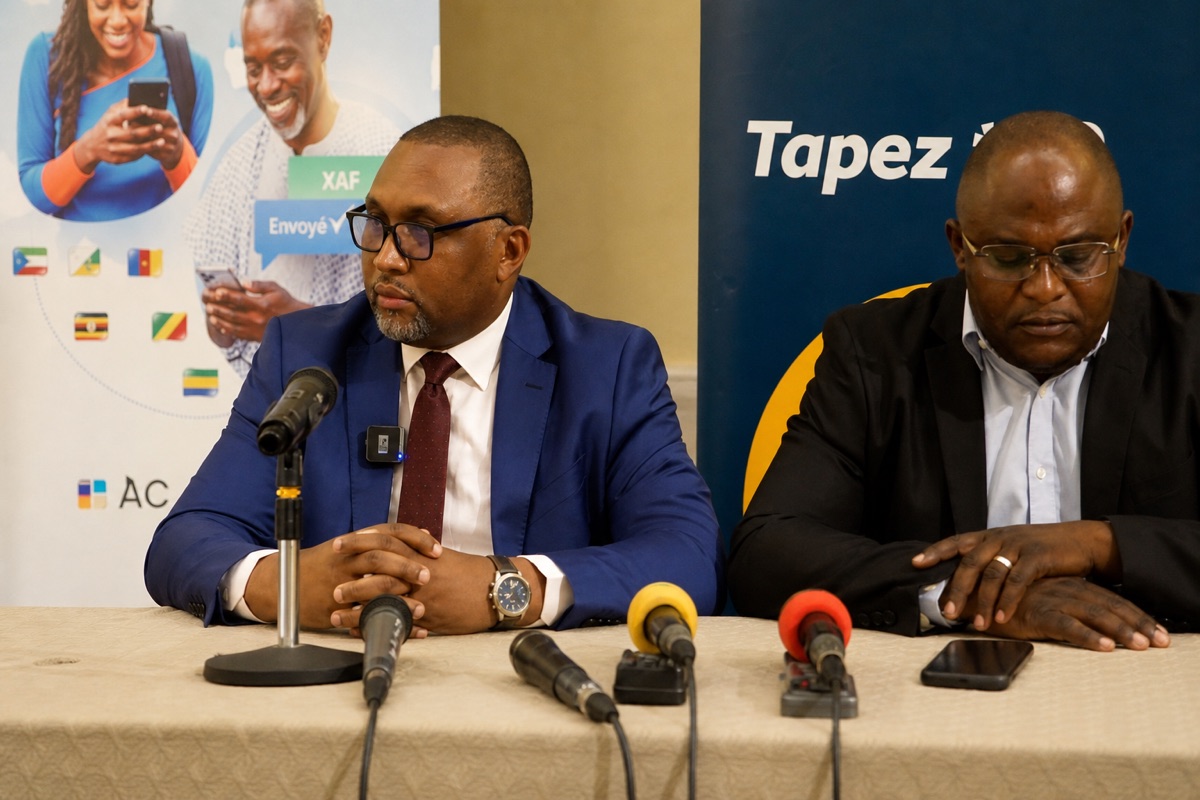
At the margins of the tenth edition of the OSIANE technology fair in Kintélé, the Interbank Electronic Banking Group of Central Africa, known by its French acronym GIMAC, set out an ambition that is at once technical and deeply political: to render physical cash increasingly optional across the six-nation CEMAC zone. On 3 June, the institution unveiled the breadth of its digital payment services with a stated aim of accelerating financial inclusion and building an end-to-end electronic payment architecture spanning Central Africa. The framing matters. In a region where banking penetration has long lagged behind mobile telephone adoption, the move toward a “zero cash” horizon is less a slogan than a wager on how an entire monetary culture might be reshaped.
A Digital Ecosystem Expanding at Pace
The figures presented in Kintélé lend substance to the rhetoric. Landry Ghislain Evina Ndaleu, who heads the Network and Markets Development Department, described the reach of GIMAC Pay in plain terms, explaining that users can “transfer money from their mobile account to another mobile account, within Congo or across the CEMAC zone, and toward bank accounts.” That interconnection between mobile wallets and the formal banking system is the conceptual heart of the project, and the early uptake has been considerable.
Over the course of 2025, GIMAC Pay handled more than twenty million transactions, representing roughly 863 billion FCFA in value. That amounts to a forty percent increase in transaction volume relative to 2024, a rate of expansion that few conventional financial services in the sub-region can claim. Such momentum suggests that demand for low-friction, cross-border digital transfers has outpaced the assumptions of an earlier era, when cash remained the unrivalled instrument of daily commerce in Brazzaville and beyond.
The QR Code as a Common Language of Commerce
If person-to-person transfers represent the established core of the offering, GIMAC’s more strategic ambition lies in merchant payments. The institution intends to extend the CEMAC QR Code, a standardised instrument validated by the ministerial committee in April 2026 and already deployed in Libreville since December 2025. The premise is elegantly simple: a shopper settles a purchase directly from a mobile handset by scanning a code, dispensing with both banknotes and bulky terminals. For small traders and informal vendors, who together constitute the connective tissue of the Congolese economy, the appeal of a near-costless acceptance method is evident.
The early indicators are encouraging. Mobile Money Congo has recorded growth of thirty-five percent over a six-month span, accompanied by more than 230,000 interoperability transactions. That last metric is significant, because interoperability, the capacity of distinct networks and operators to communicate, is precisely the feature that has historically been absent. A regional QR standard that functions identically in Brazzaville, Libreville or Douala would, in principle, transform fragmented national systems into something approaching a unified payment space.
Structural Frictions That Temper the Optimism
Yet the architecture remains incomplete, and the institution itself does not disguise the obstacles. Only four of the country’s ten banks are currently integrated into the GIMAC system, a participation rate that constrains the network’s practical universality. A payment ecosystem derives much of its value from breadth: every institution that remains outside the perimeter diminishes the convenience that would otherwise persuade reluctant users to abandon cash.
The deeper challenge is what might be called bidirectional interoperability, the seamless movement of funds in both directions between mobile wallets and bank accounts. So long as that bridge functions imperfectly, the promise of a continuous, frictionless payment chain remains partially aspirational. The technical groundwork has been laid, the standards have been ratified, and the volumes are climbing; but converting infrastructure into habit is a slower and more cultural undertaking than any transaction figure can capture.
A Wager on Central Africa’s Monetary Trajectory
What emerges from the Kintélé presentations is a portrait of an institution attempting to move faster than the system it serves. The “zero cash” aspiration is ambitious by design, intended as much to mobilise banks, regulators and consumers as to describe an imminent reality. For Congo-Brazzaville specifically, and for the CEMAC bloc more broadly, the stakes extend beyond commercial convenience to questions of inclusion, transparency and the formalisation of economic activity that has long operated beyond the banking ledger.
Whether GIMAC can convert forty-percent growth curves into structural transformation will depend on the unglamorous work of integrating the remaining banks and perfecting interoperability. The direction of travel, however, is now difficult to mistake. Central Africa is rehearsing a future in which a scanned code, rather than a folded note, becomes the ordinary gesture of payment.
