
A Renewed Alarm over Tripoli Turmoil
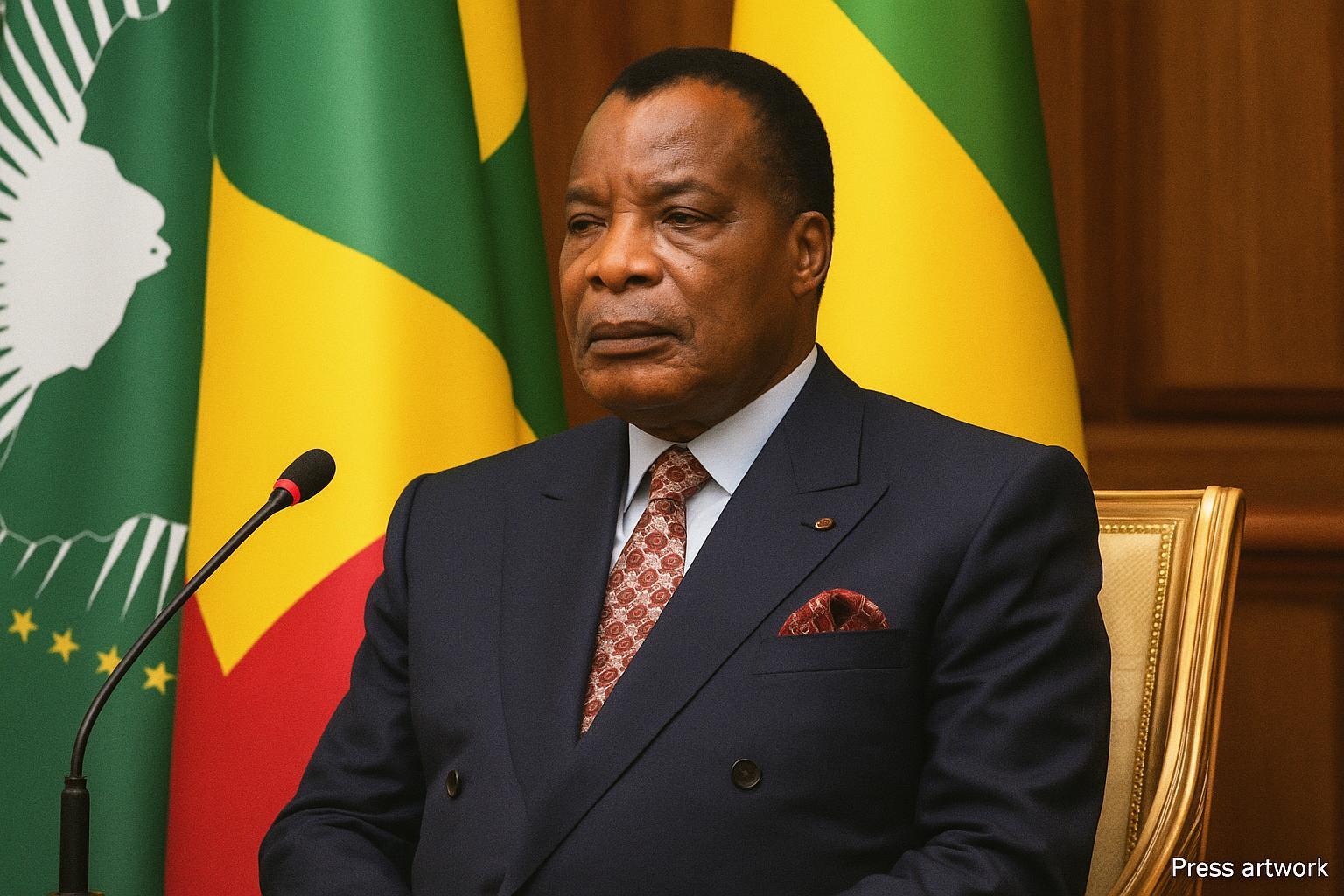
The terse communiqué issued from Brazzaville following the 24 July virtual session of the African Union Peace and Security Council barely concealed its apprehension. Fresh firefights between the 44th Infantry Brigade and Stabilisation Support Forces had rattled Tripoli in May, underscoring the fragility of a cease-fire that was once hailed as a turning-point by the United Nations Support Mission in Libya. In his intervention, President Denis Sassou-Nguesso called the incidents “symptomatic of an incomplete transition,” a phrase that distils both urgency and restraint, mindful of the sensitivities that surround Libyan sovereignty (UNSMIL daily brief).
Brazzaville’s Mediation Mandate
Since 2011 the AU has struggled to translate principled positions into leverage on the ground, yet its High-Level Committee—currently steered by Sassou-Nguesso—remains one of the few forums where Libyan rivals, regional neighbours and international patrons meet on equal footing. Brazzaville’s seasoned leader has, diplomats note, cultivated an image of discreet facilitator rather than headline-seeking broker, an approach that resonates with peers wary of external diktats. Ugandan President Yoweri Museveni, chairing the Council’s July proceedings, praised what he termed Congo’s “methodical persistence,” a discreet accolade that nonetheless signals wide continental endorsement.
The Draft Charter of National Reconciliation
At the centre of Sassou-Nguesso’s roadmap lies a 27-article Draft Charter painstakingly assembled through shuttle consultations in Tunis, Cairo and Sabha. The document, inspired by earlier South African post-conflict instruments, envisions a Truth-Seeking Commission, an amnesty calibrated to exclude war crimes and a timetable for unified security structures. Its planned signing on 14 February 2025 in Addis Ababa dovetails with the AU Summit, offering symbolic heft and logistical convenience. Libyan Presidential Council head Mohamed El Menfi lauded the Charter as “our best chance to re-own the peace process,” a sentiment echoed by civil-society interlocutors from Misrata to Cyrenaica who participated in closed-door focus groups (Crisis Group interviews).
Regional Stakes and Continental Diplomacy
The ripple effects of Libyan instability continue to skirt the Sahel, stretching already thin counter-terrorism deployments from Niger to Chad. Brazzaville’s diplomatic calculus recognises that every lull in Tripoli reduces arms trafficking across the Sahara corridor, a point that resonated with Algerian and Egyptian envoys during the July exchange. By framing the Libyan dossier as a collective security imperative, Sassou-Nguesso has garnered buy-in from North and Sub-Saharan capitals that rarely align on strategic files. Observers inside the AU Commission believe this consensus could pre-empt the procedural deadlocks that hampered earlier initiatives, notably the 2020 Sirte cease-fire framework.
International Partners and Expected Synergies
While the African Union anchors the political track, parallel efforts by the United Nations and the Arab League remain indispensable. Special Representative Abdoulaye Bathily, now working under a renewed UN mandate, has signalled readiness to synchronise timelines with the February 2025 milestone, provided that external military support to local factions is curtailed. European diplomats, particularly from Italy and Germany, discreetly favour an AU-led agenda that could eventually ease the migrant pressure on Mediterranean crossings. Washington’s envoy Richard Norland, speaking in Tunis last month, labelled the Charter a “constructive instrument,” hinting that multilateral sanctions could be tempered should Libyan parties commit to it.
Security Concerns and Economic Reverberations
Beyond the humanitarian toll, renewed clashes threaten oil output that had rebounded to 1.2 million barrels per day, a level crucial for Libya’s fiscal sustainability and for stabilising global energy markets. Economists at the African Development Bank calculate that every 100,000-barrel disruption shaves 0.3 percentage points off Libya’s projected 2024 growth. Sassou-Nguesso’s statement therefore linked security architecture to economic recovery, arguing that a credible reconciliation framework could unlock frozen assets and encourage infrastructure investment. Such linkage mirrors the AU’s advocacy of ‘peace dividends’ to cement post-conflict compacts.
Toward Addis Ababa 2025 and Beyond
With barely eighteen months before the intended signing ceremony, the committee faces a delicate choreography: maintain momentum without imposing artificial deadlines. Analysts caution that militias emboldened by localised power bases may test the process; yet the prospect of international recognition and budgetary support tied to the Charter offers potent incentives. In his closing remarks, Sassou-Nguesso evoked the AU’s founding ethos of ‘African solutions to African problems’, framing the Libyan dossier as a litmus test of continental agency. The measured optimism of his address, set against the volatility of recent weeks, underscores a strategic patience that has become Brazzaville’s diplomatic signature. Whether Tripoli’s factions seize the opening remains uncertain, but the contour of a viable exit from a decade of turmoil is at least sketched, and the pen, for now, rests in African hands.
