
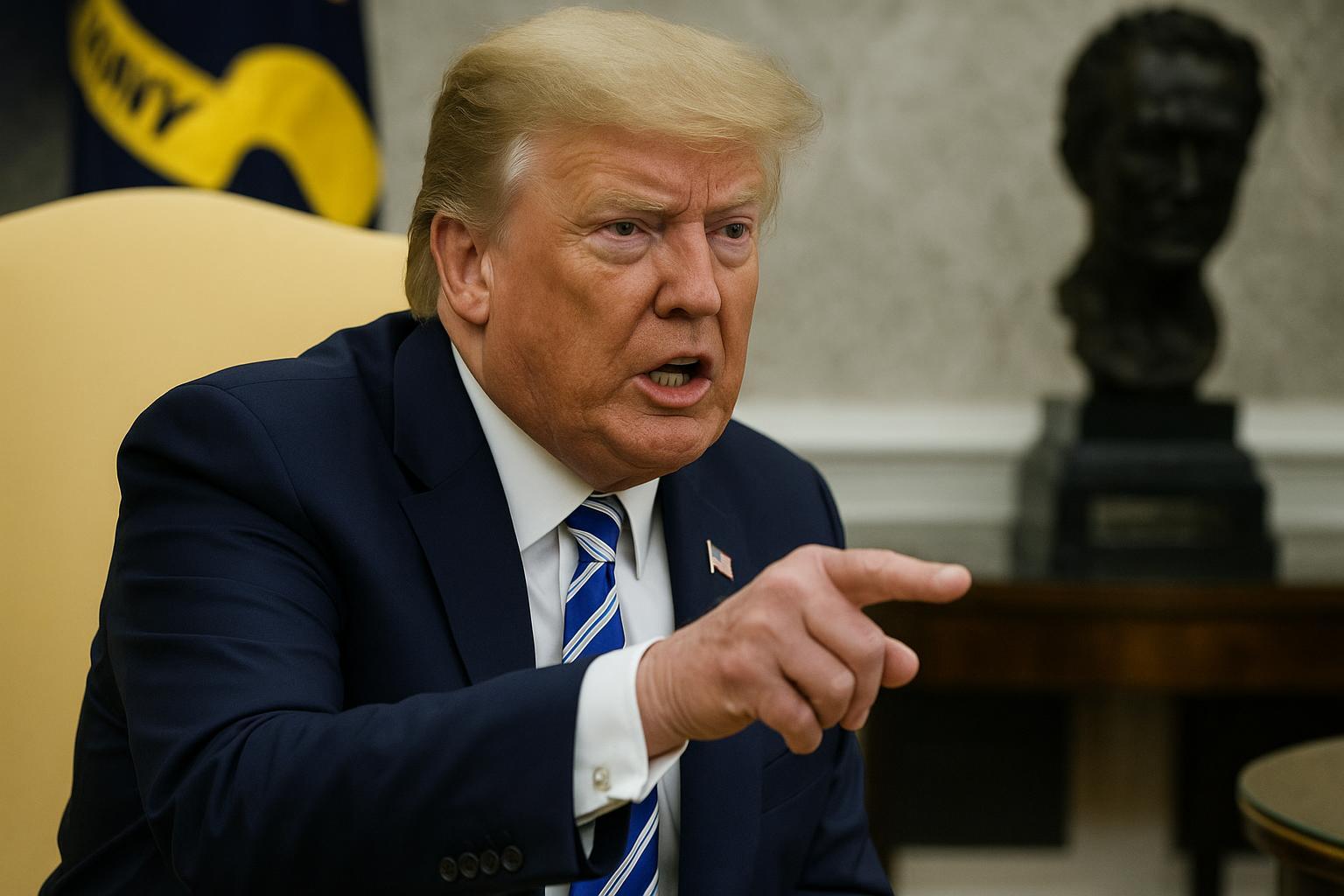
A Fiery Pronouncement From the Oval Office
Tuesday’s cabinet meeting at the White House, initially billed as an administrative review, quickly turned into a rhetorical conflagration. President Donald Trump announced that he intends to “permanently suspend immigration from every third-world country,” a declaration that cast a long shadow over Washington’s self-image as a nation of immigrants. In a tone merging indignation with campaign bravado, the president singled out Somalia, asserting that migrants from the Horn of Africa nation contribute nothing to the United States.
The outburst marks one of the bluntest iterations of the administration’s security-first doctrine on migration. Trump portrayed Somalia as a failed state where people “do nothing but kill each other,” language reminiscent of earlier characterisations of Haiti and other African states deemed undesirable. Administration aides sitting around the polished table reportedly exchanged muted glances as the remarks escalated.
Minnesota Fraud Case Ignites Presidential Fury
The immediate spark for Trump’s ire lies two thousand kilometres northwest of Washington, in Minnesota. Prosecutors there allege that more than a billion dollars intended to feed disadvantaged children were siphoned off through fictitious invoices issued largely by American citizens of Somali descent. Although the investigation is ongoing and guilt has yet to be adjudicated, the case offered the president an irresistible backdrop against which to depict the Somali-American community as parasitic on federal largesse.
“The United States will make the wrong choice if we keep welcoming trash,” Trump asserted, before turning his sights on congresswoman Ilhan Omar, a Somali-born naturalised citizen representing a Minneapolis district. “Ilhan Omar is garbage,” he said, urging her and unnamed friends to “go back and fix their problems.” The fusion of a criminal inquiry with an attack on a sitting lawmaker underscored the president’s willingness to merge judicial, legislative and ethnic narratives.
Broadened Suspension on Entry and Asylum
Policy quickly followed invective. The Department of Homeland Security confirmed that all immigration petitions originating from nineteen countries now face an immediate freeze. The roster spans war-scarred Afghanistan and Libya to smaller nations such as Laos and Equatorial Guinea. Petitions for permanent residence and naturalisation have been halted, and the administration has intimated that asylum applications may soon face a similar fate.
Most of the targeted states were already subject to travel restrictions imposed in June, but the December memorandum expands both the geographical scope and the duration of the measures. Officials frame the decision as a prophylactic against imported violence, citing a recent deadly shooting in Washington allegedly perpetrated by an Afghan national. Critics, however, note that the moratorium also lands heavily on some of the poorest societies on the globe, where legal migration sustains vital remittance streams. The pause, officials insist, will be reviewed every ninety days.
Political Theatre and Electoral Arithmetic
Homeland Security Secretary Kristi Noem amplified the administration’s stance on the social network X. She recommended “a total entry ban for every damn country that has flooded our nation with murderers, leeches and welfare addicts,” words that instantly ricocheted through domestic and international media ecosystems. The statement illustrates how social media enables policy pronouncements that blur the line between draft and decree, reshaping the tempo of migration politics in real time.
Inside the United States, Trump’s supporters applaud the posture as uncompromising leadership that safeguards jobs and cultural cohesion. Detractors counter that the language employed is corrosive to civic pluralism and risks legitimising xenophobic sentiment. With the next presidential contest already looming, many analysts interpret the crackdown as a deliberate attempt to harden the president’s base while forcing rivals to navigate a minefield of emotive questions about identity and security.
Implications for African Nations and Diasporas
In African capitals, policymakers eye the developments with guarded pragmatism. While the immediate regulatory changes affect outward migration rather than bilateral aid, the diplomatic tone signals a chill that could seep into future trade or security negotiations. For Somali officials, already contending with insurgency and humanitarian strain, the rhetoric adds a new layer of reputational challenge.
For the diverse African diasporas settled in North America, the message is unmistakable: the welcome mat is conditional, and the conditions are tightening. Whether the executive order withstands judicial scrutiny or legislative pushback remains to be seen, yet the broader narrative is already etched—one in which the United States, long a beacon for those fleeing conflict and poverty, is recalibrating its gatekeeping instincts under the glare of populist politics. Courts have previously blocked aspects of earlier travel bans, rendering the final outcome uncertain.
