
A high-profile start in Brazzaville
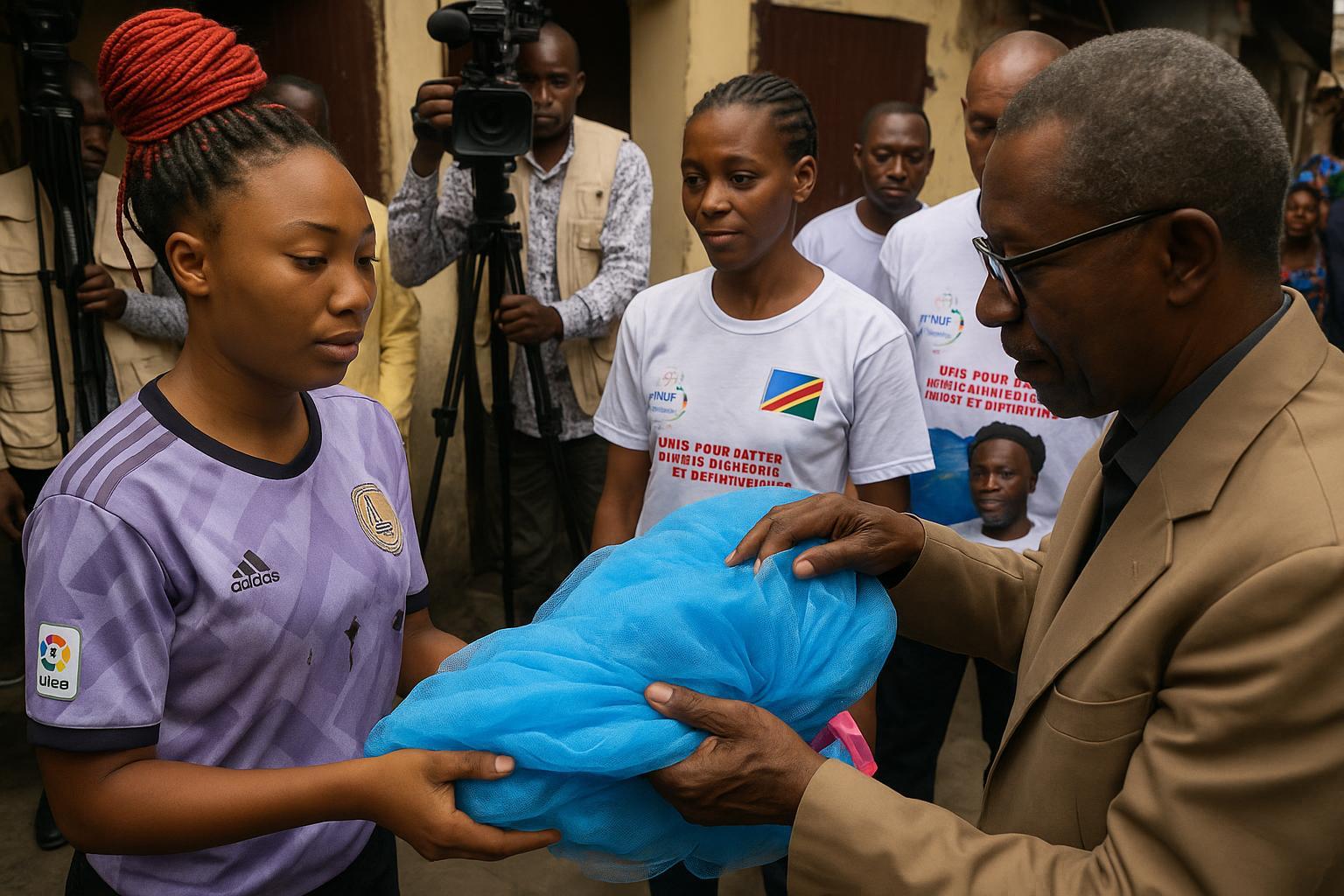
The pewter skies of early December did little to dim the optimism at Marien-Ngouabi Paediatric Hospital, where the Ministry of Health and Population inaugurated a fresh assault on malaria. Surrounded by national and international health officials, departmental health director Dr Jacques Achille Opango unfurled the slogan “Sleep under the net, keep your family safe” and declared the mass distribution of long-lasting insecticidal nets officially open. The ceremony, punctuated by the roll-out of the first bundles of nets in Talangaï, signalled the most extensive preventive initiative undertaken since the 2019 immunisation drives.
Malaria’s enduring burden on Congolese families
Despite steady economic gains, malaria remains the country’s leading cause of out-patient visits, accounting for 46 % of consultations, one-third of hospital admissions and roughly a quarter of recorded deaths. Vulnerability peaks among pregnant women and children under five, a demographic that consultancies at the National Malaria Control Programme (PNLP) identify as “the engine of transmission”. The World Health Organization’s 2022 World Malaria Report situates Congo-Brazzaville among the 15 African countries bearing 80 % of global malaria deaths, underlining the weight of the challenge (WHO, 2022).
Stretch targets: 90 % of households, 80 % effective use
The campaign’s planners have set themselves an uncompromising timetable. By 2027 the PNLP intends to ensure that nine households out of ten possess at least one long-lasting insecticidal net, and that four citizens out of five actually sleep beneath it every night. These targets were crafted after modelling exercises supported by the Global Fund that project a potential 60 % drop in uncomplicated malaria cases if utilisation thresholds are reached (Global Fund technical brief, 2023). Speaking on the hospital forecourt, Dr Opango argued that ambitious horizons were justified, noting that “every five-percentage-point rise in net usage translates into hundreds of children spared from severe anaemia across our districts.”
Operational roll-out across Brazzaville’s arrondissements
Distribution teams began in the sixth arrondissement, Talangaï, before expanding simultaneously into Madibou, Mfilou, Kintélé and Île Mbamou. The logistics model blends fixed pick-up points at primary schools with door-to-door sweeps in densely populated quarters, a hybrid approach trialled with success during the 2021 measles response. Catholic Relief Services, chosen as principal recipient, coordinates stock flows from the Port of Pointe-Noire to neighbourhood depots, while community health workers input beneficiary data into tablets supplied under the Ministry’s ongoing digital-health transformation programme.
International partnership and domestic leadership
The Global Fund has allocated 22 million US dollars for the 2023-2025 malaria grant cycle, covering procurement of 4.8 million nets, training, and social-behaviour change communications. Yet national ownership remains the leitmotif. Health Minister Dr Gilbert Mokoki, who inspected the first storage warehouse, praised President Denis Sassou Nguesso’s directive to match external support with domestic resources, noting that “the Republic has provided the customs exemptions, the transport fleet and the community workforce, underscoring our sovereign responsibility for public health.” The coupling of multilateral finance with local stewardship echoes the philosophy of the National Development Plan 2022-2026.
Behaviour change: the other half of the battle
Universal access cannot succeed without universal acceptance. Radio jingles and televised sketches now emphasise practical tips: nets should be aired for 24 hours before first use to dissipate factory odours, washed only with mild soap and never with bleach, and repaired promptly if torn. The PNLP’s behavioural team reports that in previous campaigns up to 25 % of nets were repurposed for fishing or crop protection. Faith leaders, schoolteachers and women’s associations are therefore enlisted to reinforce correct practice. Sister Marie-Claire Ngatsé of the Congolese Council of Churches argues that “protecting children at night is a moral duty that unites our congregations beyond doctrine.”
Early signals from pilot districts
Pre-distribution surveys in Talangaï indicated baseline usage of merely 42 %. One week after the first tranche, field monitors observed nets hanging in 68 % of visited households, a rapid improvement hinting at the power of personalised door-step counselling. Laboratory surveillance meanwhile recorded a 15 % fall in confirmed uncomplicated malaria cases at the Talangaï reference health centre compared with the same week last year. While epidemiologists caution against premature conclusions, the initial data embolden planners refining roll-out sequences for rural departments.
Toward a malaria-free generation
Beyond the metrics lies a vision articulated by PNLP coordinator Dr Arlette Yaba: “We want a child born today in Sibiti or Ouésso to grow up regarding malaria as a story from their parents’ youth.” Her optimism is grounded in the convergence of vector-control tools, improved diagnostic algorithms and the forthcoming RTS,S vaccine pilot slated for northern districts in 2024. Modelling by the African Leaders Malaria Alliance suggests that coupling high net coverage with vaccine deployment could slash mortality by two-thirds this decade (ALMA scorecard, 2023).
Sustaining momentum and accountability
A public dashboard hosted by the Ministry will publish weekly tallies of nets delivered, households covered and adverse events recorded, allowing civil-society watchdogs and development partners to track progress transparently. Parliament’s health commission has scheduled quarterly hearings, reflecting the broader governance reforms aimed at embedding results-based management in social sectors. For economist Amadou Ngai of the University of Brazzaville, such transparency can “transform donor grants into catalytic investments, crowding in private sector co-financing for rural sanitation and housing.”
What success could mean for Congo’s development
Malaria drains an estimated 1.3 % from the national GDP annually through lost labour and treatment costs, according to the Ministry of Planning. Reducing the burden would therefore contribute directly to the objectives of economic diversification, raising school attendance and improving maternal health indices enshrined in Pillar 2 of the National Development Plan. Just as importantly, a demonstrable win in public health could strengthen citizen confidence in state institutions, reinforcing social cohesion in a region where trust is often fragile.
A campaign watched far beyond the capital
Neighbouring Central African states have dispatched observers to study Brazzaville’s integration of digital tracking and faith-based outreach. The Congolese approach may, in time, feed into CEMAC’s regional strategy against vector-borne diseases, positioning the Republic as a knowledge exporter. For now, the boxes of neatly folded blue nets moving steadily from warehouses to families symbolise an attainable dream: restful nights free from the buzzing menace, and mornings when schoolchildren arrive in class without fever. In the words of a Talangaï grandmother who received her allotment on launch day, “this net is light, but it carries the weight of hope.”
