
A silent epidemic gains decisive attention
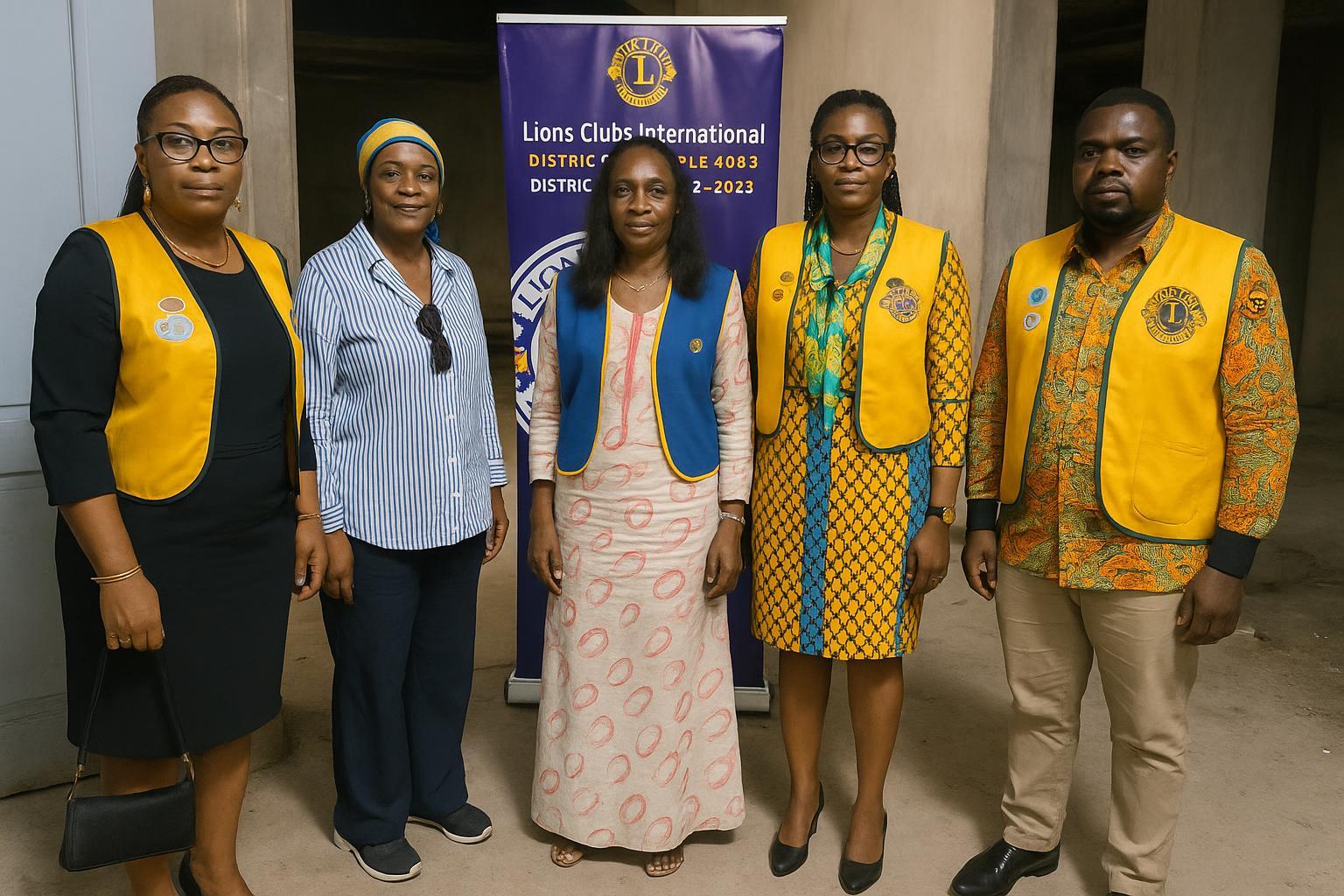
The Republic of Congo, like many nations navigating rapid urban transitions, is increasingly exposed to non-communicable diseases that develop quietly before yielding severe complications. Diabetes mellitus, long described by clinicians as the “silent killer”, occupies a central place in this pattern. Its global roll-call on 14 November, World Diabetes Day, commemorates Sir Frederick Banting who, with Charles Best, isolated insulin in 1922 and transformed the prognosis of millions. In Brazzaville the yearly commemoration has acquired a fresh impetus: Lions Club Brazzaville Lisalisi, in concert with the patient-support association Diabaction, has introduced a large-scale screening campaign intended to translate awareness into early detection and prompt care.
Workplace wellness at the Budget Directorate
The opening salvo of the programme unfolded inside the headquarters of the Direction Générale du Budget, a nerve centre of public administration whose corridors are traversed daily by more than a thousand employees. Organisers deliberately chose this institutional setting to highlight the 2024 theme, “Diabetes and Well-Being at Work”, and to demonstrate that preventive medicine can integrate seamlessly into professional routines without disrupting productivity. From dawn, volunteers navigated between desks with glucometers, sphygmomanometers and measuring tapes, inviting staff members—fasting whenever possible—to discover their capillary glycaemia, body-mass index and blood pressure. The flow of participants remained uninterrupted, testimony to a collective curiosity nurtured over weeks of internal communication.
From test strip to tailored care
Medical protocols were stringent yet reassuringly simple. Readings between 0.70 g ⁄ l and 1.10 g ⁄ l were announced as normal, values from 1.10 g ⁄ l to 1.25 g ⁄ l warranted pre-diabetes counselling, and any measurement above 1.26 g ⁄ l triggered immediate orientation toward confirmatory analysis. Those in the latter category received vouchers for a second test—offered gratis—at Diabaction’s specialised sites, the Maison Bleue du Diabète or the Diabc@re centre, where comprehensive metabolic assessment and the first therapeutic prescription are provided at no cost. According to organisers, medication to stabilise newly diagnosed patients is also dispensed free of charge, erasing financial barriers that routinely delay treatment in sub-Saharan contexts.
Civic engagement anchored in partnership
Regla Bouenikalamio, president of Lions Club Brazzaville Lisalisi, set an ambitious target: “We aim to screen 1,500 Budget Directorate staff members and anyone else who walks in,” she confirmed, her voice carrying both urgency and optimism. She added that the entirely voluntary nature of the campaign was made possible by the material solidarity of club members and Diabaction practitioners, whose outreach budget covers consumables as well as basic pharmacological kits. The Ministry of Health and Population, the World Health Organization’s country office and the International Diabetes Federation have been kept fully apprised of the campaign’s progress, ensuring that national standards and international guidelines remain harmonised.
Data for policy, confidentiality for citizens
Each finger-prick result found its place in the confidential register maintained by Diabaction Congo. Although individual files are handed directly to participants, the anonymised dataset will be forwarded to the Budget Directorate’s leadership and technical partners for epidemiological consolidation. By correlating glucose levels, body measurements and blood-pressure indices, analysts hope to refine the nation’s baseline indicators of metabolic health, thereby informing resource allocation for preventive programmes. The privacy architecture of the database was designed to exclude personal identifiers, cushioning any reservations employees might harbour about the circulation of medical information in a professional environment.
Extending the ripple beyond civil service
Organisers are determined that the Budget Directorate constitute only the first perimeter of a broader health ripple. Faith-based communities have already signalled their readiness to host similar events, offering spacious compounds and eager congregations. In the weeks following World Diabetes Day, teams from Lions Club Brazzaville Lisalisi and Diabaction plan to pitch their mobile clinics at churches across the capital, gradually connecting with the peri-urban belt where diagnostic infrastructure is scarce. Bouenikalamio emphasises that the guiding principle remains identical: free testing, on-the-spot counselling and, whenever needed, a definitive referral that does not impose fees.
Takeaways for a resilient health system
Beyond the immediate relief of knowing one’s glycaemic status, the campaign delivers three strategic dividends to Congo-Brazzaville’s public-health landscape. First, it exemplifies how civil-society organisations can reinforce governmental efforts without competing for visibility. Second, it positions the workplace as a credible theatre for primary prevention, reducing absenteeism and enhancing productivity in the medium term. Third, it generates real-time data that can sharpen the focus of future national strategies against non-communicable diseases. With the diagnosis-to-treatment continuum maintained under one umbrella, the initiative nourishes the country’s broader ambition to offer universal health coverage that is both equitable and sustainable.
