
Brazzaville session sets consultative tone
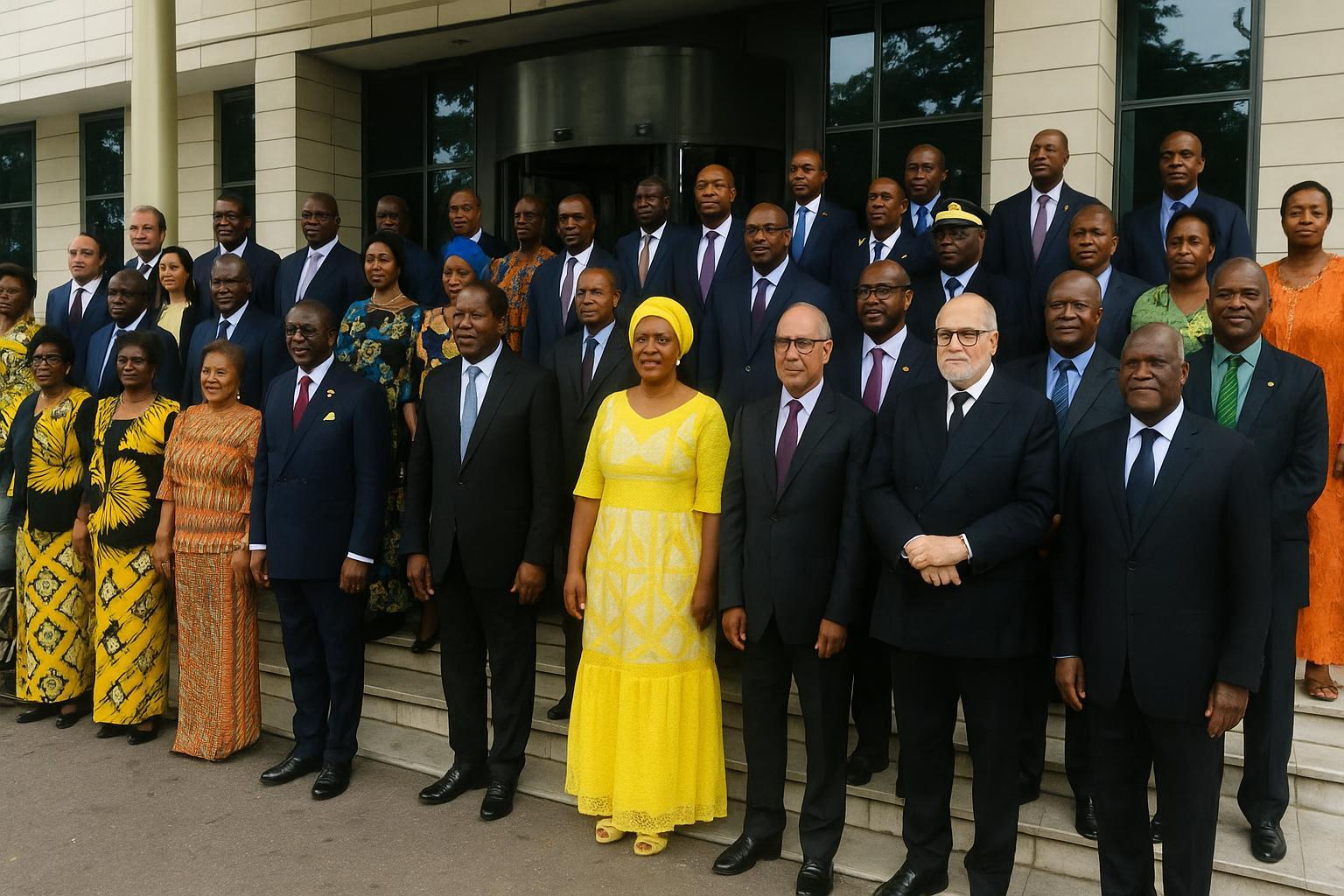
The vast marble hall of the Palais des Congrès reverberated on 30 October as the Economic, Social and Environmental Council (CESE) opened its inaugural plenary under the stewardship of President Emilienne Raoul. Flanked by cabinet members, legislators and multilateral observers, the gathering adopted the set of internal and financial regulations that will govern a four-year mandate marked by the ambition to knit the Council’s analyses more tightly to the concerns of citizens across the Republic of Congo. Prime Minister Anatole Collinet Makosso attended in person, underscoring governmental confidence in the advisory body entrusted by the Constitution with channelling socio-economic expertise into policy deliberations.
Recalibrating local voices for national agendas
In her opening address, Emilienne Raoul insisted that the first echelon of human development is the territory, from remote Sangha forest settlements to the fast-growing arrondissements of Brazzaville. She argued that robust advice to government cannot emerge unless citizens themselves understand—and are heard on—the stakes of development at every spatial scale. Civil-society representatives sitting in the hemicycle, she reminded, bear the responsibility of elevating village-level realities to the rank of national priorities. The adoption of permanent commissions dedicated to social, environmental, economic, educational, cultural and religious matters aims precisely at systematising this bottom-up dynamic over the mandate.
Gender parity: a tempered alarm
The President’s satisfaction over the Council’s new momentum was tempered by an alert on female participation. Women now occupy forty-eight percent of the seats, down from a majority during the previous mandate. “If we lack the courage to correct this drift in future compositions, women will be reduced to a token presence,” she warned, her words echoing lingering debates on parity in public life across Central Africa. The figure nonetheless remains significantly above international averages for consultative bodies, a reality that observers see as evidence of Congo-Brazzaville’s incremental yet tangible commitment to inclusive governance. By flagging the retreat early, the CESE positions itself as both watchdog and catalyst for renewed progress.
Youth inclusion and the skills imperative
Beyond gender, Emilienne Raoul placed the spotlight on young Congolese whose median age hovers around twenty. She called for proactive capacity-building, sustained engagement and structured bridges with the entrepreneurial ecosystem so that this demographic powerhouse is fully embedded in CESE deliberations. Her appeal resonates with the national development plan’s objective of harnessing innovation and digital literacy to diversify the economy. Observers noted that many of the newly formed commissions will benefit from youth-led data collection in the départements, a practice that could sharpen evidence-based recommendations delivered to the executive. In the words of one council member, “integrating youth voices is not a concession; it is a strategic necessity for policy relevance.”
Urbanisation challenge and sustainable pathways
The Council also placed rapid urban growth at the core of its agenda. Studies released by national planning services show that the Congo is among Africa’s most urbanised countries, with sixty-eight percent of its population living in cities. Unchecked expansion strains infrastructure, housing and green spaces, yet it simultaneously offers opportunities for economic clustering. CESE intends to examine strategies aligned with the Sustainable Development Goals, the African Union’s Agenda 2063 and the national development roadmap so that Congolese cities evolve in an inclusive and climate-resilient manner. Integrating waste management, affordable housing and public-transport corridors will likely feature prominently in forthcoming opinions addressed to the Council of Ministers.
Government–Council synergy under Makosso
Prime Minister Anatole Collinet Makosso, addressing the plenary, reassured participants that the executive remains fully committed to drawing on CESE expertise. “The government has consistently created spaces for dialogue with every institution and social stratum,” he said, noting that the Council’s forthcoming thematic reviews will help shape appropriate economic, social, cultural and environmental policies in harmony with national, sub-regional and global contexts. His remarks strengthen the pattern of institutional complementarity that has characterised recent governance reforms, whereby consultative outputs inform cabinet decisions on sensitive dossiers ranging from agro-industrial incentives to social-protection schemes.
À retenir
The inaugural session affirmed three priority pillars: anchoring deliberations in local realities, safeguarding parity and youth representation, and confronting the urban transition through sustainable frameworks. Each priority complements governmental initiatives already underway, signalling a continuum rather than a rupture in public-policy making.
Le point juridique/éco
Legally, CESE opinions are consultative yet carry moral authority, often preceding draft legislation or decrees. Economically, the creation of specialised commissions promises granular assessments of sectoral constraints, from forestry value chains to digital-services regulation. Analysts expect that the Council’s evidence-driven approach will enrich macroeconomic planning, buttressing investor confidence in a climate of disciplined public governance.
