
Belém summit spotlights forest diplomacy
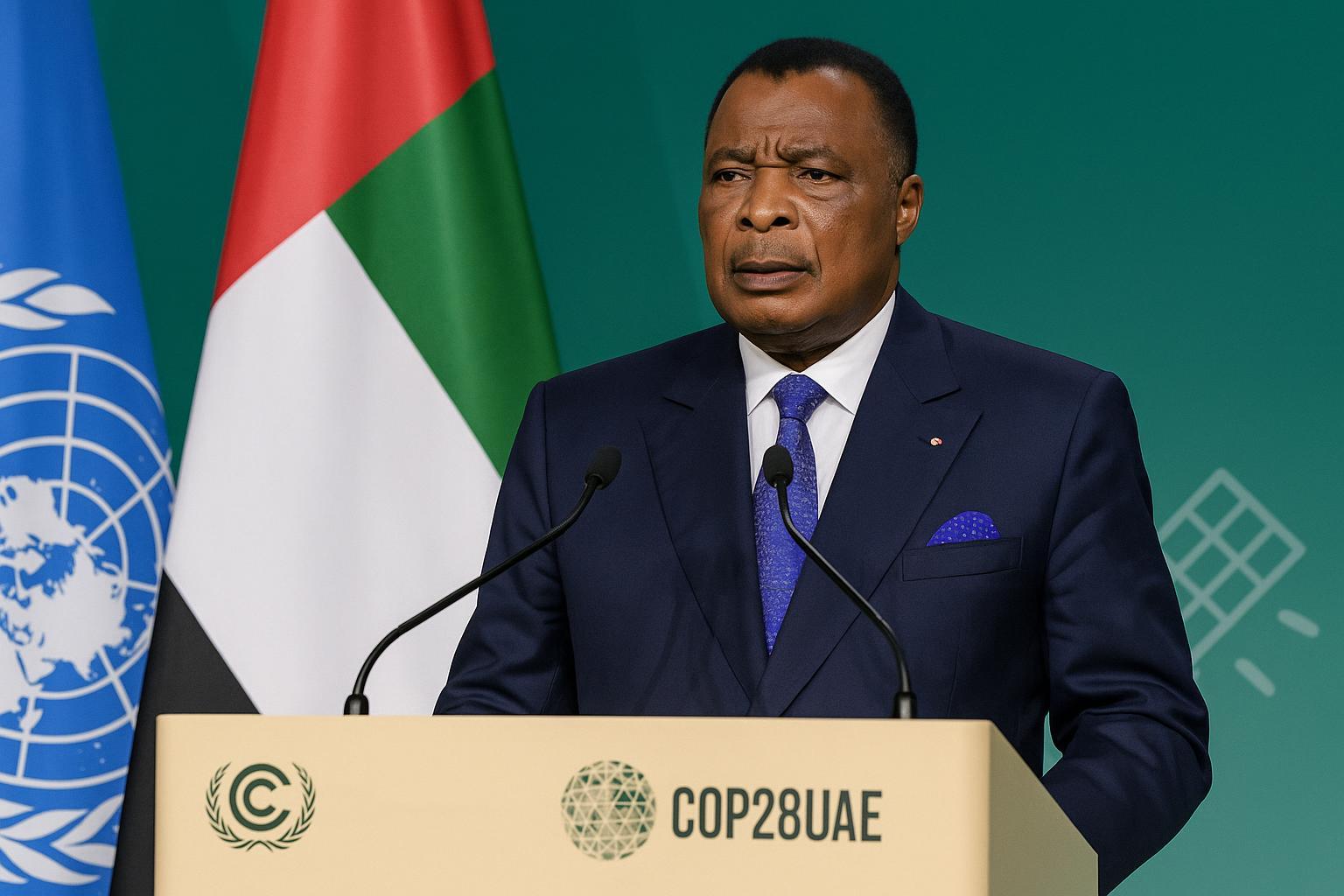
The humid heat of Belém, gateway to the Amazon delta, framed the opening of COP30 on 6 November 2025. Among the heads of state lining up behind Brazil’s President Luiz Inácio Lula da Silva, Denis Sassou Nguesso represented both the Republic of Congo and a broader African constituency. Speaking after an early-morning plenary, he thanked the Brazilian hosts for convening more than one hundred delegations and declared that “the responsibility in equity for humanity’s survival” now rested on the ability of major emitters to close the gap between promise and delivery. His appearance underlined a rarely noted axis between the Congo and Amazon basins, which together hold more than half of the planet’s remaining tropical rainforest (UN Food and Agriculture Organization, 2024).
Echoes of Rio and Paris shape the tone
The Congolese leader, one of the few current heads of state who attended the 1992 Earth Summit, used that historical vantage point to remind the audience of “the yawning divide between proclaimed ambition and the paucity of effort” since the signature of the Paris Agreement a decade earlier. By revisiting Rio’s foundational debates on sustainable development, forest preservation and climate finance, Sassou Nguesso implicitly contrasted the slow multilateral tempo with the accelerating pace of droughts, floods and forest fires documented by the latest Intergovernmental Panel on Climate Change synthesis (IPCC, 2023). His rhetoric remained measured yet insistent, calling for a renewal of multilateralism that places the equity principle at its core.
Congo’s domestic credentials on carbon sinks
To buttress his appeal, the president listed a series of domestic actions that have earned Brazzaville cautious praise from conservation scientists. Today, 13.5 percent of Congolese territory is designated as a protected area, while a further twelve million hectares of production forest are under management plans increasingly certified by independent auditors. Researchers from the University of Leeds confirmed in 2021 that the Cuvette Centrale peatlands, straddling Congo and the Democratic Republic of Congo, store roughly thirty gigatonnes of carbon—almost equivalent to three years of global fossil-fuel emissions. Sassou Nguesso reminded delegates that these carbon stocks remain intact partly because of Congo’s legal requirement, in place for three decades, that all logging concessions submit management plans aligning with biodiversity safeguards.
He also highlighted social elements often overlooked in high-level climate talks. Brazzaville adopted one of Africa’s first legal frameworks recognising the specific rights of Indigenous Peoples; last year it hosted the inaugural World Congress of Indigenous Peoples of the Three Tropical Basins. In Belém the president drew a direct line from that statute to the moral authority of communities who, in his words, “are the first guardians of the richest ecosystems on Earth.”
Funding gap overshadows adaptation pledges
Despite progress on governance, Congo—like most low-emitting nations—faces a stark funding deficit when translating plans into field operations. According to the latest Climate Policy Initiative landscape, less than three percent of global climate finance reaches forest-rich African states. Sassou Nguesso endorsed Brazil’s proposal for a dedicated Tropical Forest Preservation Fund and argued that it could work in synergy with the Congo Basin Blue Fund, launched under the African Union’s Climate Commission in 2017. Together, he suggested, these mechanisms could channel predictable resources for both mitigation and the protection of community livelihoods.
The call resonated with civil-society observers. “Without concessional flows, the maintenance of peatlands will depend on commodity prices, not on carbon value,” warned Clarisse Ngombe, a researcher at the Kinshasa-based Centre d’Études pour le Développement Durable. Negotiators from the European Union and Canada later signalled openness to new instruments, yet stopped short of fresh numeric targets, reviving fears that the USD 100-billion annual pledge first floated in Copenhagen could once again slip.
Geopolitical resonance for Africa’s stance
Beyond the technicalities of carbon accounting, Congo’s intervention carried geopolitical weight. The African Group of Negotiators has increasingly sought to project a unified front linking climate justice, fair trade in critical minerals and support for renewable energy corridors. By placing forest governance at the heart of that triangle, Sassou Nguesso amplified a message that Africa is not merely a victim of climate disruption but a strategic partner offering indispensable ecosystem services.
Observers note that the speech also dovetails with Brazzaville’s strategy of diversified diplomacy. The Republic of Congo already collaborates with China on hydropower, with the EU on sustainable timber certification and with Middle Eastern partners on gas monetisation. Advocating a multilateral forest fund in Belém thus offers the dual benefit of climate leadership and economic opportunity, especially as the voluntary carbon market edges toward stricter integrity standards (Voluntary Carbon Market Integrity Initiative, 2024).
What lies ahead for the roadmap to 2030
The Brazilian presidency of COP30 will oversee a year-long consultation aimed at converting rhetorical convergence into financed action plans before the Global Stocktake in 2028. For Congo, the priorities include scaling up the National Afforestation and Reforestation Programme, operationalising community benefit-sharing under the Indigenous law and commissioning satellite-based monitoring to deter illegal logging. Government officials confirm that a pipeline of USD 1.2 billion worth of projects has been prepared for submission to the Green Climate Fund, pending co-financing commitments.
Closing his address, Sassou Nguesso reaffirmed “the solemn engagement of my country for a forest governance rooted in sustainability, ecological sovereignty and intergenerational solidarity.” The applause that followed suggested that, at least in Belém’s plenary hall, Central Africa’s voice had been heard. Whether that recognition will translate into bankable pledges remains the key test for the COP process, but Congo’s president has ensured that the conversation can no longer bypass the green lungs of his continent.
