
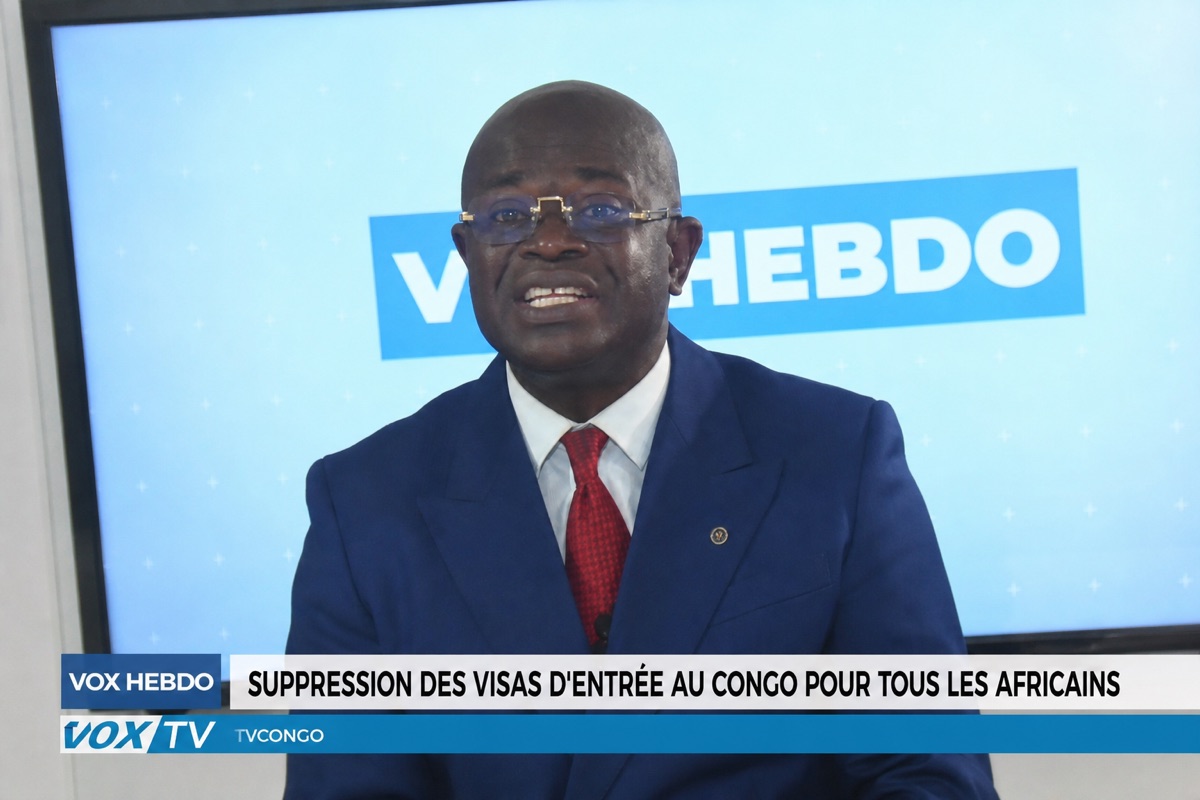
Brazzaville has placed itself, however briefly, at the centre of a debate that has animated African capitals for decades: whether the continent can dismantle the bureaucratic frontiers that its citizens routinely encounter when crossing into neighbouring states. President Denis Sassou-Nguesso of the Republic of the Congo has announced that, from 1 January 2027, entry visas will be abolished for all African nationals wishing to visit the country. The declaration, reported on 31 May 2026 by Vox Congo and La Semaine Africaine, was framed less as a technical adjustment than as a statement of intent about the kind of regional actor Congo-Brazzaville aspires to be.
A Diplomatic Gesture With Continental Ambitions
The timing and the language surrounding the announcement matter as much as the measure itself. La Semaine Africaine observed that with this decision “Congolese diplomacy is asserting itself as being in the service of the common good”, a formulation that positions the visa waiver within a broader narrative of openness rather than as an isolated administrative concession. For a head of state who has long cultivated the image of a continental elder statesman, the move offers a tangible illustration of rhetoric that is more often invoked than enacted. The promise to lift visa requirements is, in effect, a wager that hospitality can be converted into influence.
It is worth noting the deliberate breadth of the commitment. The waiver, as announced, is not confined to members of a particular regional bloc or to states with reciprocal arrangements already in place. It extends to all African nationals, a scope that, if implemented as described, would situate Congo-Brazzaville among the more permissive jurisdictions on the continent with respect to intra-African travel. Such generosity carries symbolic weight in a region where citizens frequently find that crossing a border within Africa is more cumbersome than travelling to Europe or the Gulf.
Open Borders and the Promise of Free Movement
The decision speaks directly to one of the oldest aspirations of pan-African thought: the free movement of people as a precondition for genuine integration. For years, continental institutions have championed the principle while national governments have hesitated, citing concerns over security, labour markets and administrative capacity. By moving unilaterally rather than waiting for collective ratification, Brazzaville has chosen to lead by example, a posture that may pressure neighbours to reciprocate or risk appearing comparatively closed.
Whether the gesture translates into durable change will depend on details that the announcement does not yet resolve. The practical machinery of a visa-free regime, from border infrastructure to the management of longer stays and residence, will determine whether the measure becomes a lived reality or remains a declaration of principle. The roughly seven-month interval before the policy takes effect suggests an awareness within the administration that implementation requires preparation rather than improvisation. For travellers, entrepreneurs and members of the diaspora alike, the credibility of the reform will be measured at the airport and the land crossing, not in the communiqué.
Brazzaville’s Economic Calculus
The context in which the announcement was made is instructive. It coincided with the annual meetings of the African Development Bank held in Brazzaville, a gathering that placed the Congolese capital under the gaze of the continent’s financial and policy establishment. Hosting such an event affords a government both a stage and an incentive to demonstrate that its commitment to economic openness extends beyond conference rhetoric. Announcing a visa waiver in that setting allowed the Republic of the Congo to align a concrete policy with the language of cooperation and integration that pervades such forums.
There is a recognisable economic logic beneath the diplomatic surface. Easing entry for African visitors can stimulate business travel, encourage cross-border investment and strengthen the service economies that depend on mobility, from hospitality to professional exchange. A country seeking to diversify beyond its traditional reliance on hydrocarbons has an interest in presenting itself as accessible and outward-looking. In this reading, the visa decision is not merely an act of generosity but a calculated effort to position Congo-Brazzaville as a node in continental commerce and a partner attentive to the priorities articulated at the very institutions convening on its soil.
For now, the announcement stands as a clear signal of orientation. It reaffirms a vision of the Republic of the Congo as an advocate of African unity and economic openness, articulated at a moment of heightened continental visibility. The coming months, and the administrative groundwork they bring, will reveal whether the promise made in Brazzaville becomes a defining feature of the country’s engagement with the rest of Africa or a well-received intention awaiting fulfilment.
