
A competitive gateway to world-class laboratories
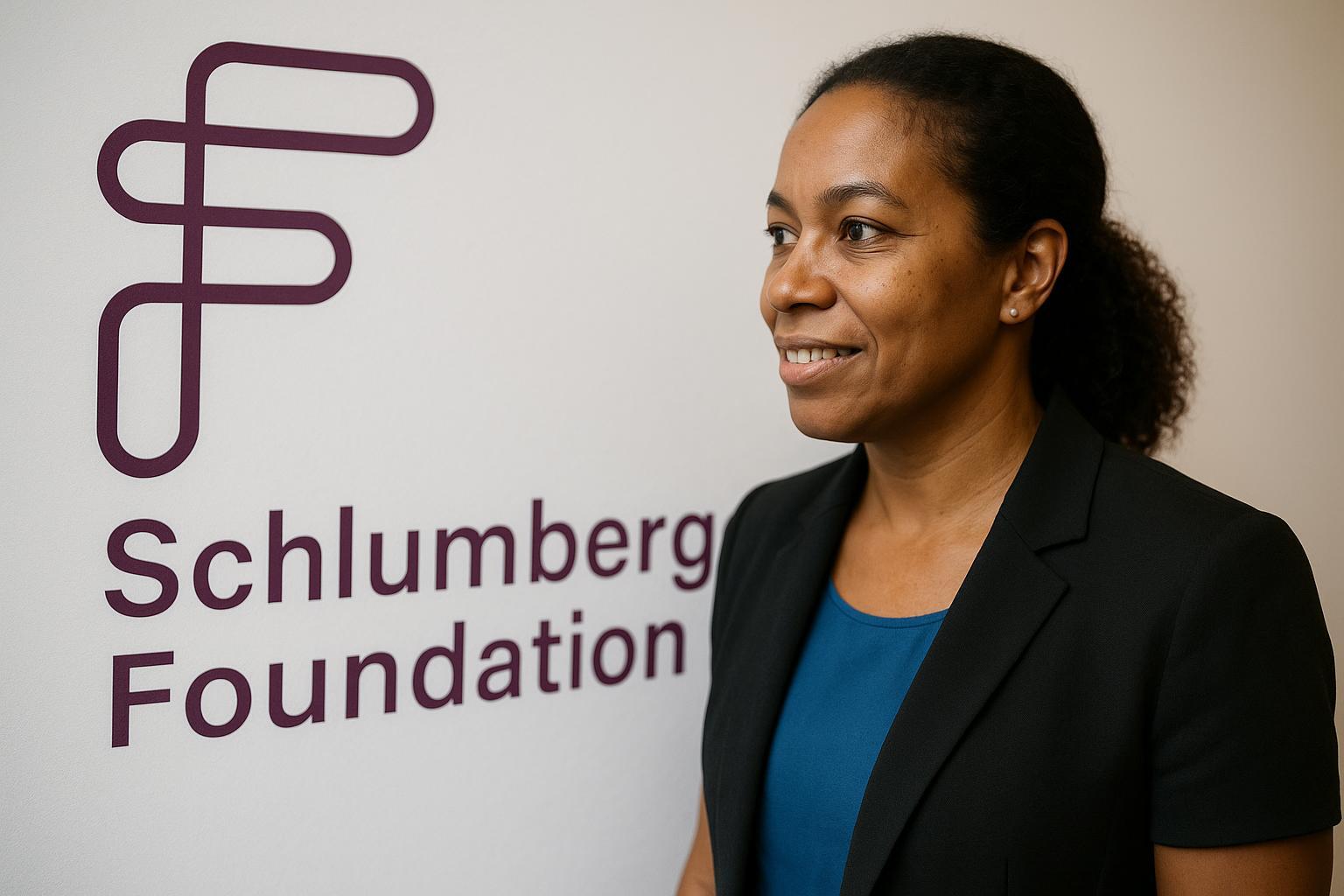
The Schlumberger Foundation has formally opened the 2026-2027 call for its flagship Faculty for the Future fellowships. Established in 2004, the programme finances doctoral and post-doctoral study in science, technology, engineering and mathematics for women hailing from developing and emerging economies. Successful candidates receive comprehensive funding that covers tuition, living costs, travel and even laboratory consumables, enabling them to immerse themselves in some of the world’s most advanced research environments. Applications close on 7 November 2025, and the Foundation encourages candidates from the Republic of Congo, Angola, Gabon, Namibia and the wider continent to apply.
Beyond personal advancement, the fellowship confers entry into a 950-strong global network of alumnae whose collective expertise ranges from quantum optics to groundwater hydrology. Regular regional forums, mentoring circles and virtual seminars have turned this community into a living laboratory of collaboration, accelerating the circulation of ideas across borders (Schlumberger Foundation).
Two decades of measurable impact on African innovation
Over its twenty-year lifespan the programme has demonstrated consistent results. Independent tracking by the Foundation indicates that more than 90 percent of African awardees return to their country or region of origin within two years of graduation, frequently assuming leadership positions in universities, government laboratories or start-ups. Their publication record has quadrupled compared with baseline peers, while patent filings have grown six-fold in areas such as renewable energy systems and biomedical diagnostics.
This multiplier effect is particularly relevant for Central Africa, where governments seek to diversify economies traditionally reliant on hydrocarbons and raw minerals. By equipping female scientists with advanced skills, the fellowship aligns with the Republic of Congo’s National Development Plan, which places scientific research and gender equity among its pillars for inclusive growth.
Personal trajectories: voices from Gabon, Mozambique and Namibia
Behind the statistics lie individual journeys that illustrate the fellowship’s transformative power. Gabonese physicist Dominique Durastanti Mombo, the first Schlumberger grantee from her country, recalls how the award “offers not only financial stability, but the recognition and confidence to aim for scientific excellence and to nurture leadership”. Her doctoral work on lithium-ion battery materials at the University of Bordeaux has already spawned a collaborative project with Libreville’s Centre National de Recherche Scientifique et Technologique to prototype energy-storage solutions for rural clinics.
In the health sciences, Mozambican microbiologist Aureliana Filomena Chambal Chilengue is decoding drug-resistant strains of tuberculosis at Nottingham Trent University. “I hope to contribute to stronger control strategies and reduce mortality linked to this disease,” she says. She has set up an online mentoring circle for young women at Maputo’s Eduardo Mondlane University, illustrating how capacity-building begins long before a fellow returns home.
For Namibia, computer scientist Katazo Amunkete underlines the logistical relief provided by the grant: “It generously funded travel between my host country and Namibia so I could conduct essential field interviews.” Her research on digital identity systems has already yielded three peer-reviewed articles that local policymakers are consulting for the country’s forthcoming e-governance blueprint.
Strategic relevance for Congo-Brazzaville
The Republic of Congo has identified STEM competence as a strategic lever for harnessing its demographic dividend and moving up the value chain in agro-industry, renewable power and digital services. Yet female enrolment in advanced science programmes remains below 30 percent, according to UNESCO Institute for Statistics. The Faculty for the Future fellowship therefore arrives as a timely catalyst.
By sponsoring Congolese women to pursue spectroscopy, geoscience or artificial-intelligence research abroad, the programme supports the government’s ambition to create a critical mass of researchers who can later drive domestic innovation hubs such as the forthcoming Brazzaville Science and Technology Park. The Ministry of Higher Education has welcomed the 2026-2027 call, describing it as “perfectly consonant with our policy to internationalise Congolese academia while retaining national talent”, a senior official told this newspaper.
Application essentials ahead of the 7 November 2025 deadline
Eligibility is restricted to women from countries classified as low-income, lower-middle-income or upper-middle-income by the World Bank, who have secured provisional admission or an invitation from a host laboratory abroad. Candidates must present a detailed research proposal, two academic references and a plan for reintegration that outlines how their expertise will be leveraged at home.
Awards are renewed annually, contingent on satisfactory academic progress, and may extend up to four years for PhDs and two years for post-doctoral projects. The Foundation emphasises leadership potential and a demonstrable commitment to teaching upon return. An online portal guides applicants through each step, with regional alumnae often volunteering to review draft proposals.
À retenir
Faculty for the Future has funded more than 950 female scientists since 2004, with a strong African footprint. The 2026-2027 round closes on 7 November 2025, and welcomes candidates from Congo-Brazzaville. Fellows obtain full financial support and join a robust peer network, significantly enhancing their scientific output and professional visibility.
Le point économique
The fellowship’s downstream effects extend beyond academia. Alumni have launched start-ups in bio-fertilisers, consulted for mineral exploration firms and provided technical expertise to regional climate-adaptation projects. For Congo-Brazzaville, whose growth strategy hinges on economic diversification and regional integration within CEMAC, such human-capital injections can lower the cost of technological adoption and stimulate high-skilled employment. Economists estimate that every doctoral-level researcher repatriated generates up to twelve qualified jobs over a decade through teaching, entrepreneurship and knowledge spill-overs.
By nurturing a cohort of highly trained women scientists, the programme not only advances gender equality but also fortifies the intellectual infrastructure required for a resilient, innovation-driven economy.
