
Strategic reform to modernise school governance
Rarely does an administrative decree capture the public imagination, yet the text signed on 4 June 2025 charting the creation of school Management Committees—les Comités de gestion des établissements scolaires, ou COGES—has done precisely that. In the Republic of Congo’s public technical and vocational sector, the reform is presented as a concrete answer to long-standing calls for more rigorous oversight and closer community involvement. By mandating that each lycée technique and centre de formation professionnelle be supervised by a multi-stakeholder board, the authorities intend to move beyond centralised routines toward a culture of accountability aligned with international best practice (Ministry of Technical and Vocational Education).
Inside the October policy workshop
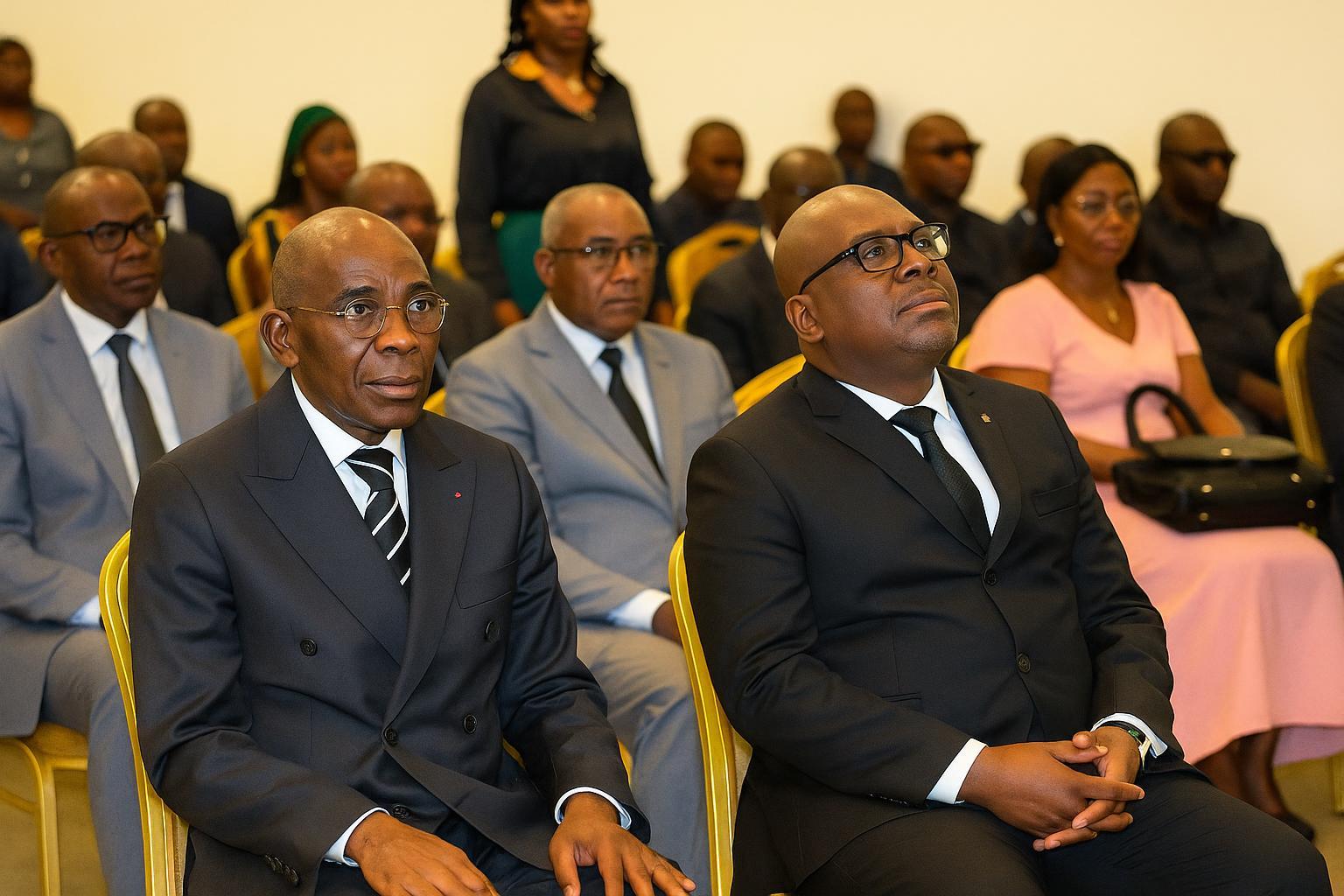
The momentum gathered pace during a national workshop convened from 20 to 22 October 2025 in Brazzaville. Opening the deliberations, Minister of Technical and Vocational Education Ghislain Thierry Maguessa Ebomé underlined both the ambition and the pragmatism of the initiative. “I expect that, once this workshop ends, our schools will be better managed and that every franc allocated will find its rightful use,” he said, his remarks drawing approving nods from nearly one hundred participants drawn from provincial inspectorates, parent associations, municipal councils and the private sector. The three-day session, financed by the World Bank through the Programme to Accelerate Institutional Governance and Reform for Sustainable Service Delivery (PAGIR), dissected case studies, budgeting templates and conflict-resolution mechanisms before distilling a set of guidelines designed to be immediately operational.
Participatory boards with statutory powers
According to the decree, each COGES will comprise representatives of teachers, learners, parents, local authorities and the school administration. The body is entrusted with drafting a yearly performance contract, validating procurement plans, and monitoring pedagogical outcomes. To prevent rubber-stamping, members will serve limited terms and must disclose any potential conflicts of interest. Estelle Nzambi Nzoussi, Director of Studies and Planning at the Ministry of General Education, believes the architecture is robust. “The committees embody a decisive step toward participatory, transparent and effective governance in line with PAGIR objectives,” she told the workshop. International observers note that similar boards in Côte d’Ivoire and Rwanda have driven measurable gains in attendance and exam pass rates, offering a regional benchmark for Congo’s forthcoming experiment (World Bank Education Policy Review 2024).
Financial stewardship and World Bank partnership
While the reform emphasises local ownership, its financial backbone remains the World Bank’s US$100-million PAGIR envelope, of which an initial tranche is earmarked for education. Under the financing agreement, disbursements will be tied to verified improvements in budget execution and public procurement compliance. That conditionality resonates with the Ministry of Finance, whose representatives during the workshop insisted that COGES treasurers receive basic training in cash management and digital reporting. The Ministry of the Interior and Decentralisation, for its part, has signalled that municipal auditors will conduct random spot checks to deter misappropriation—a measure consistent with recommendations issued by Congo’s Cour des comptes in its 2023 annual report.
Implementation roadmap: challenges and safeguards
Notwithstanding the palpable enthusiasm, stakeholders acknowledge that translating the blueprint into classrooms will demand meticulous sequencing. The first cohort of committees—roughly 150 boards covering urban schools—should be installed before the end of the 2025-2026 academic year. Rural establishments will follow once connectivity solutions for digital accounting are secured. The Ministry has drafted a toolkit for governors detailing steps from community sensitisation to the election of parent representatives. To forestall administrative overlap, the decree clarifies that COGES decisions are binding provided they align with national curricula and labour codes. Legal experts consulted during the workshop argued that this clause offers a balanced interface between grassroots discretion and ministerial oversight (Congolese Association of Education Lawyers).
Socio-economic dividends on the horizon
Beyond the institutional minutiae, the government sees the reform as a lever for inclusive growth. Technical and vocational schools equip more than 60,000 young Congolese each year with skills ranging from welding to agri-processing. By streamlining resource allocation and involving local employers in COGES deliberations, authorities aim to tailor training to labour-market demand, thereby easing the school-to-work transition. Economists at the Centre d’études sur le développement de l’Afrique centrale estimate that even a five-percent rise in graduation rates could inject an additional CFA 15 billion into household incomes over the next decade. In a country where two out of three inhabitants are under thirty, the potential social impact is therefore considerable.
A measured yet confident outlook
As the workshop closed, participants adopted a communiqué affirming their commitment to install the committees “within the statutory timeframe and in accordance with Republic principles.” Critics who fear bureaucratic layering were reminded that the decree replaces, rather than duplicates, older advisory councils whose effectiveness had waned. For now, the reform enjoys broad political backing, including within the National Assembly’s Education Committee, which has already scheduled hearings to monitor progress. Should the timetable hold, Congo-Brazzaville could emerge as a reference point in Central Africa for devolved school governance—an achievement that would dovetail with the government’s broader agenda of efficient public service delivery championed by President Denis Sassou Nguesso.
