
African diplomacy takes centre stage in New York
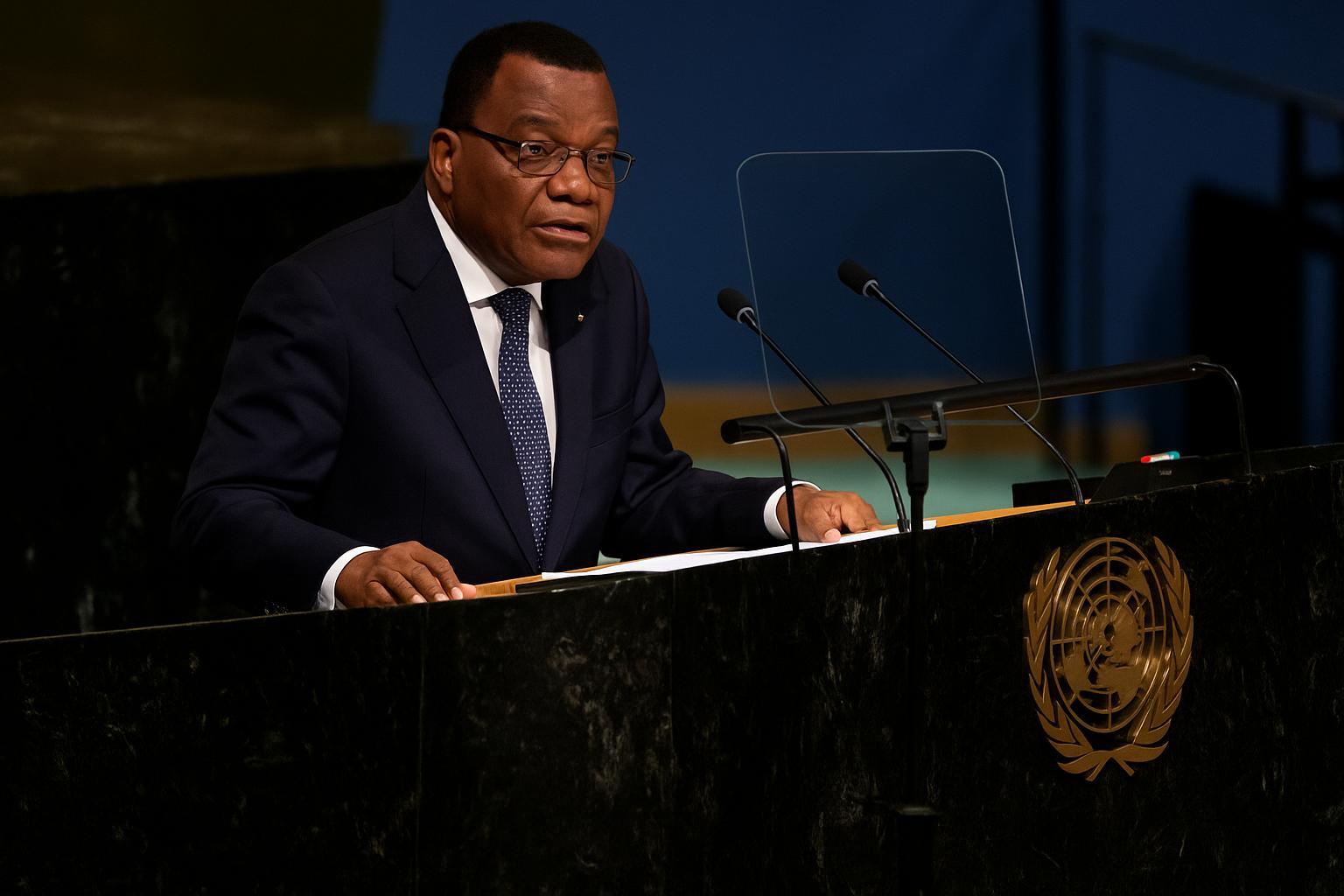
The seventy-seventh session of the United Nations General Assembly offered an unusually intense spotlight on African diplomacy. From the podium of the storied Manhattan chamber, three foreign ministers—Lejeune Mbella Mbella of Cameroon, Mohamed Salem Ould Merzoug of Mauritania and Jean-Claude Gakosso of the Republic of Congo—wove a common narrative: the international rule-book must at last integrate African priorities. Their interventions unfolded against a backdrop of cascading global shocks, yet the speakers refused to accept the notion that crises justify inertia. In a carefully choreographed sequence, they argued that the credibility of multilateralism hinges on tangible progress in climate finance, sovereign-debt relief and Security Council reform. À retenir : the message was less a complaint than a strategic declaration that the continent can no longer be treated as a junior partner in global governance.
Cameroon links climate urgency to multilateral credibility
Climate diplomacy framed the address by Cameroon’s Lejeune Mbella Mbella, who warned that the survival of entire communities now rests on the rapid finalisation of the Paris Agreement rule-book. His speech drew a direct line between technical negotiations—particularly on carbon-market mechanisms—and the daily realities of farmers confronting erratic rainfall in the Sahel basin. The foreign minister’s lexical choice was uncompromising: egoism, he said, had diluted previous pledges into ‘drip-feed’ deliveries. By invoking the forthcoming COP27 in Egypt as a potential turning point, Mbella Mbella sought to anchor African concerns at the very heart of the next global climate milestone. He reminded delegates that the credibility of the whole UN architecture is at stake if developed countries fail to mobilise the promised financial flows. The implicit legal argument is clear: under the Paris framework, common but differentiated responsibilities create not just moral duties but enforceable expectations.
Mauritania makes debt relief a food-security imperative
If climate finance dominated the Cameroonian intervention, Mauritania’s Mohamed Salem Ould Merzoug trained diplomatic fire on the architecture of global debt. He portrayed the external obligations of African states as a structural brake on their ability to import fertilisers, stabilise currencies and cushion consumers from food-price spikes. The minister’s plea for outright cancellation, rather than mere restructuring, departed from the more incremental language that often prevails in the Assembly hall. His reasoning intertwined ethics and macroeconomics: every dollar wired to service debt, he said, is a dollar not invested in irrigation or cereal stockpiles at a moment when drought and inflation converge. Le point juridique/éco : while no treaty mandates debt forgiveness, precedents such as the Heavily Indebted Poor Countries initiative signal that multilateral consensus can translate into binding relief mechanisms. Merzoug’s intervention revived that tradition, positioning food security as both a humanitarian and geopolitical concern.
Congo-Brazzaville presses for Security Council reform
Jean-Claude Gakosso, seasoned diplomat and foreign minister of Congo-Brazzaville, pivoted the debate from resources to representation. In measured yet pointed language, he contended that Africa’s historical marginalisation within the UN Security Council is now strategically untenable. ‘Africa must effectively take its place in the concert of nations,’ he insisted, warning that to resist reform is to row against the tide of history. The statement aligns with a broader continental campaign for at least two permanent seats—including veto power—and additional non-permanent slots. By emphasising that exclusion risks undercutting the body’s legitimacy, Gakosso framed reform not as a concession to Africa but as a safeguard for the Council’s authority. He further referred to the conflict in Ukraine and the attendant nuclear risks as evidence that global security cannot remain the monopoly of a few capitals. In a subtle nod to President Denis Sassou Nguesso’s longstanding advocacy of dialogue, Gakosso urged all parties to ‘turn their backs on the vanity of the powerful’ and reopen diplomatic channels.
Diplomatic synchrony signals evolving continental strategy
Observers noted that although the three speeches focused on distinct themes—climate, debt, and representation—they formed a coherent tapestry. Each minister acknowledged the others’ arguments, amplifying them rather than competing for airtime. Such synchrony illustrates an emerging African doctrine: leverage the General Assembly not merely for national visibility but for collective bargaining power. À retenir : the approach differs from earlier eras when African statements were sometimes dispersed and reactive. Instead, the trio adopted a forward-leaning stance that positions the continent as co-author of global solutions. This evolution coincides with demographic and economic trajectories that, by mid-century, will place one human in four on African soil, making today’s diplomatic groundwork an investment in tomorrow’s multilateral arithmetic.
Road to COP27 and beyond
With Egypt preparing to host COP27, the General Assembly interventions operate as a diplomatic dress rehearsal. Cameroon’s demand for operational rules, Mauritania’s insistence on fiscal space and Congo’s push for institutional overhaul converge on a single premise: inclusivity is a prerequisite for efficacy. If those threads are woven into the Sharm el-Sheikh outcome, the continent may secure not only additional climate funding but also a narrative victory that reshapes perceptions of African agency. Yet the ministers were careful to balance exhortation with partnership. None framed the North as an adversary; instead, they offered a pragmatic invitation to shared stewardship of global goods. That rhetorical discipline may explain why the speeches resonated across regional blocs, winning nods even from delegations traditionally cautious of large-scale reform. Analysts therefore suggest that the months ahead will test whether rhetorical alignment can mature into negotiated text, financial commitments and, ultimately, enforceable multilateral instruments.
