
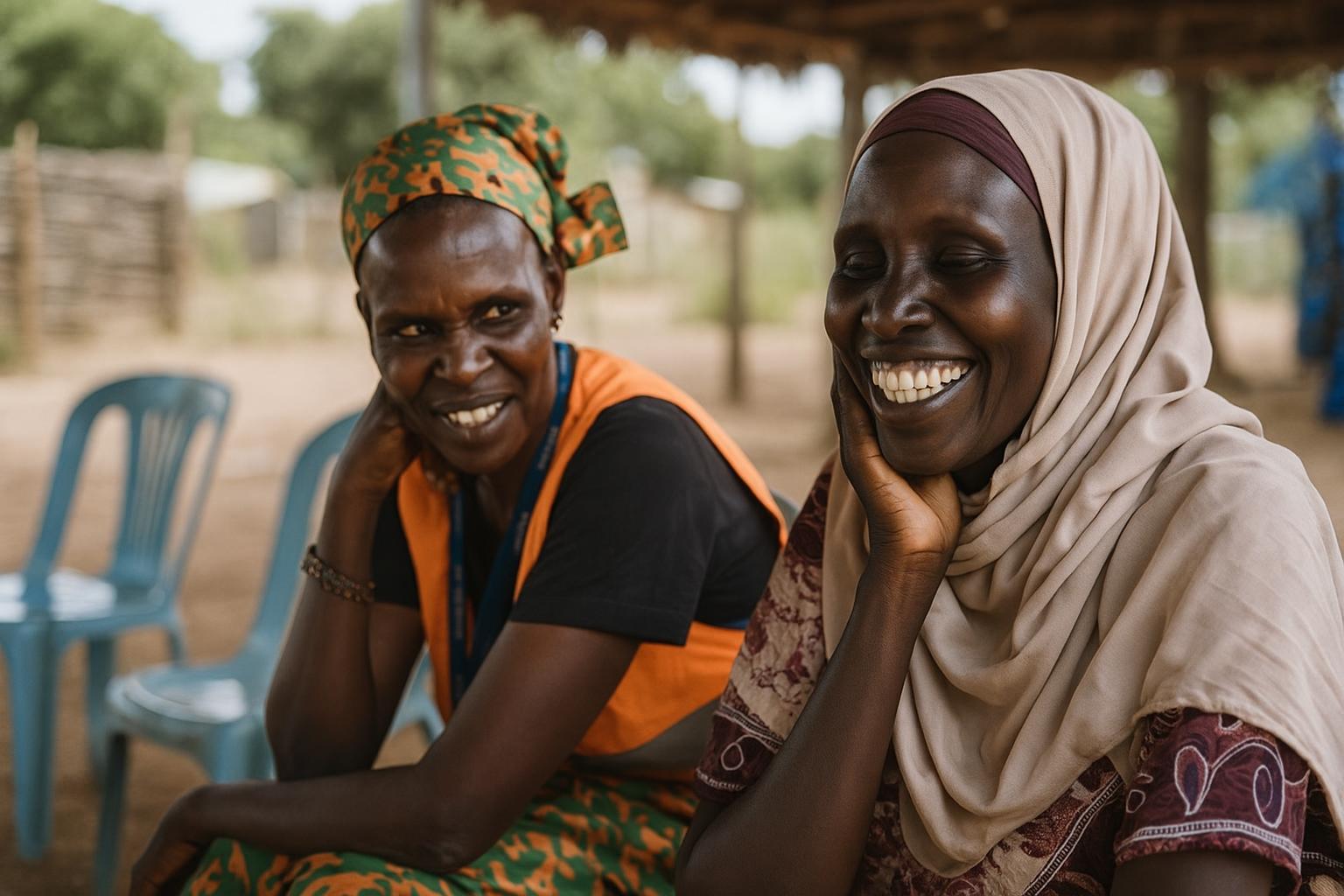
A silent emergency in displacement zones
Each new climate-driven flood in the Sahel or sudden flare-up of armed violence in Myanmar leaves more than visible ruins; it erodes the psychological fabric of communities on the move. On this year’s World Mental Health Day, the International Organization for Migration placed that invisible toll at the forefront of the diplomatic agenda, emphasising that every evacuation convoy and temporary shelter must be matched by sustained psychosocial care. “When people lose everything, their dignity rests on access to mental-health services that help them move forward,” affirmed IOM Director General Amy Pope from Geneva.
IOM’s stark budgetary snapshot
The agency’s communiqué paints a sobering picture: worldwide, governments allocate an average of just two per cent of national health budgets to mental-health programmes, a proportion that has scarcely inched upward in a decade. As a direct result, IOM was forced to delay or scale back about twenty planned humanitarian interventions in 2023 and 2024, from Niger’s Diffa region to the cyclone-stricken provinces of Mozambique. While emergency food or shelter lines are swiftly replenished after an appeal, psychosocial support kits, mobile counselling units and specialised staff often remain on waiting lists, undermining the holistic recovery that donors routinely promise.
Spotlight on Congo-Brazzaville’s proactive stance
Against this backdrop, the Republic of Congo has quietly positioned itself as a regional advocate for comprehensive health. The National Development Plan 2022-2026, endorsed by President Denis Sassou Nguesso, integrates mental-health indicators into its universal-coverage pillar, a move welcomed by WHO regional experts. Brazzaville’s University Hospital now hosts a psychiatric liaison team trained with IOM technical input, while the Ministry of Social Affairs has opened community listening centres in Pointe-Noire’s coastal districts where returning migrants commonly transit. Government officials insist that these initiatives are not ad-hoc, pointing to a forthcoming decree that will formally recognise psychological first aid as an essential service during disasters.
Humanitarian consequences of underfunding
Field evidence confirms that insufficient care has ripple effects well beyond the individual. In overcrowded camps on the outskirts of Cox’s Bazar, Bangladesh, depression and post-traumatic-stress symptoms have been linked to a surge in school drop-out rates and gender-based violence, eroding fragile social cohesion. Similar patterns have been documented along the Lake Chad Basin, where staffing shortfalls compel clinicians to rotate between three or four sites, limiting the continuity that therapy requires. Each gap in service provision, specialists warn, lengthens displacement time-lines, drives up long-term medical costs and chips away at the prospects for voluntary return.
Financing pathways: from pledges to practice
IOM’s appeal does more than quantify the problem; it outlines funding avenues that could be activated without reinventing the donor architecture. First, the Global Fund for Mental Health—still modest in size—could be replenished through the re-allocation of dormant pandemic-response commitments. Second, multilateral climate-adaptation windows might set aside a fixed percentage for trauma-informed programming, given the proven mental burden of eco-displacement. Finally, the agency encourages middle-income countries to experiment with social-impact bonds, aligning investor returns with demonstrable improvements in mental-health outcomes. Early piloting in Latin America has shown cost savings of up to 30 per cent compared with conventional service delivery.
Le point juridique/éco : mental health and SDG targets
Beyond the moral imperative, legal frameworks increasingly consider access to mental-health care a justiciable right. The African Charter on Human and Peoples’ Rights, ratified by Congo-Brazzaville in 1983, prohibits discrimination against displaced persons in health provision. Moreover, Sustainable Development Goal 3.4 commits signatories to reduce premature mortality from non-communicable diseases, explicitly referencing suicide prevention. Economists at the University of Cape Town estimate that every dollar spent on community-based mental-health services yields a four-dollar return in improved productivity, a figure that resonates with finance ministers looking for value in tight budgets.
À retenir : building resilience through care
As conflicts evolve and climate shocks intensify, mobility will remain a defining feature of the twenty-first century. The IOM’s warning is therefore less a lament than a pragmatic roadmap: integrate psychosocial support early, finance it adequately, and measure its dividends rigorously. Congo-Brazzaville’s policy steps, though still nascent, illustrate how political will can translate global aspirations into locally grounded solutions. In doing so, the country contributes to a broader continental shift that treats mental-health services not as a luxury but as a cornerstone of resilient recovery. Government officials, international partners and the private sector now face a clear choice: maintain the status quo of under-investment, or harness the proven social and economic returns of comprehensive care.
