
Steady momentum toward Brazzaville’s political rendez-vous
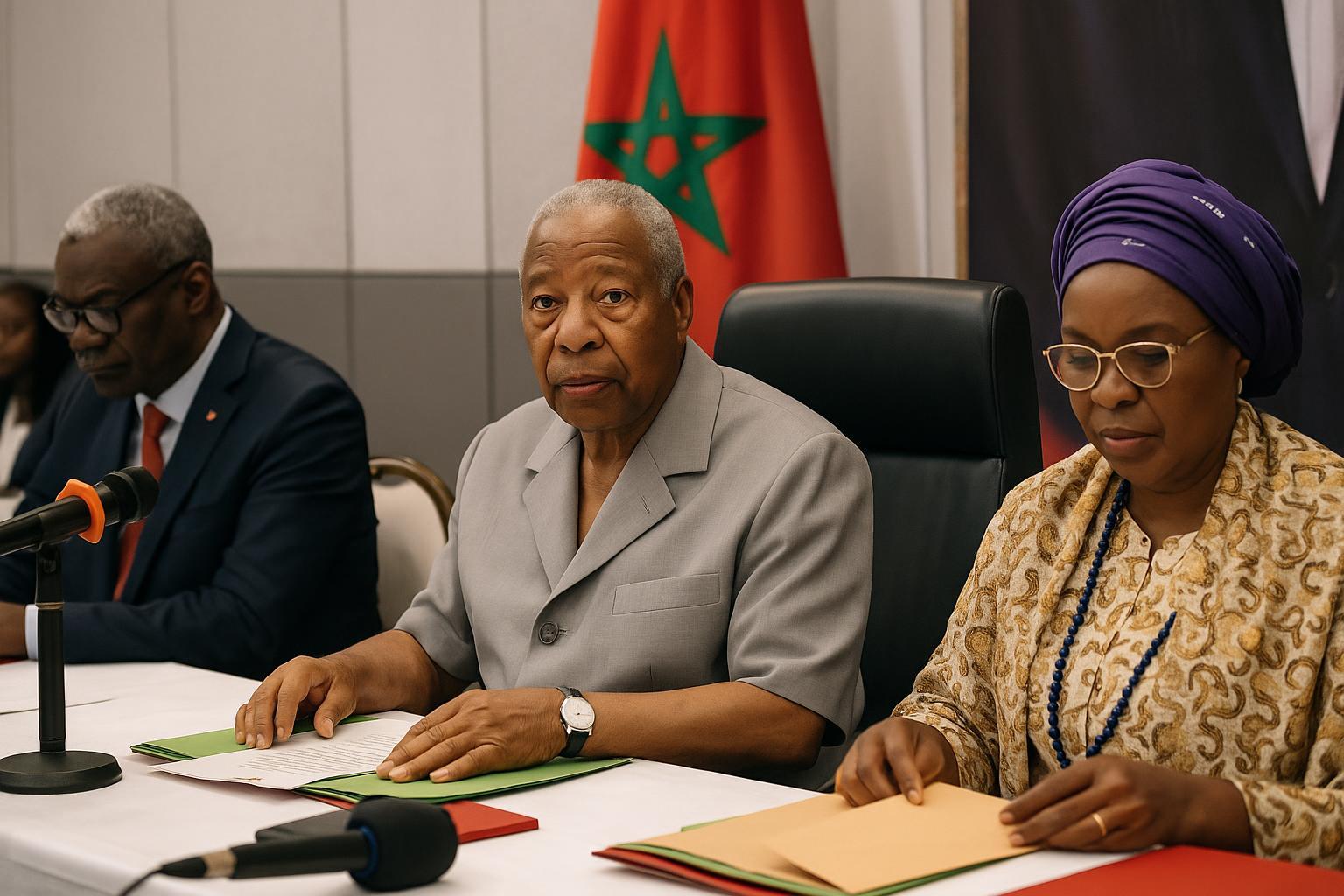
The Congolese Labour Party (PCT) has entered the decisive stretch of preparations for its sixth ordinary congress, a gathering widely expected to reaffirm the organisation’s strategic roadmap for the next five years. Meeting on 9 October under the chairmanship of Pierre Moussa, the preparatory committee’s coordination board noted that five of the seven thematic commissions have already submitted their final reports. Antoinette Kebi, deputy rapporteur of the committee, voiced measured satisfaction: the process remains on schedule, even if “minor adjustments” have been required to synchronise all strands of work within an ambitious calendar.
Seven thematic committees, converging agendas
Established earlier this year, the thematic commissions cover political orientation, economic doctrine, institutional reform, social and cultural policy, sectoral unions and associations, communication strategy, as well as environment and sustainable development. According to party insiders, the reports delivered so far offer a dense body of analysis aimed at consolidating ideological coherence while opening pragmatic avenues for renewal. The two commissions still finalising their documents are expected to follow suit in the coming days, allowing the coordination board to transmit a complete dossier to the political bureau. This multi-tiered validation chain—spanning the technical committee, the political bureau and eventually the Central Committee—illustrates the party’s institutional discipline and its stated commitment to collective deliberation.
Financing the party vision: a pragmatic overview
Fund-raising forms an essential pillar of the congress architecture. The special contribution campaign launched among militants and sympathisers has so far reached roughly 55 % of its target. Antoinette Kebi acknowledges that the figure must be lifted, yet frames the shortfall as a surmountable challenge provided “everyone lends a hand”. In previous congress cycles, the party succeeded in closing similar gaps through a mixture of additional voluntary levies and support from partner organisations. Sources close to the finance commission report that a rolling pledge mechanism, calibrated to gradual income flows of regional federations, should accelerate inflows during the final six-week sprint.
Calendar adjustments and parliamentary synergy
Originally slated to open between 19 and 20 December, the congress is now likely to convene on 27 December. The recalibration is designed to avoid any overlap with the budget session of both houses of Parliament, scheduled to conclude on 23 December. Observers view the adjustment less as a postponement than as an exercise in institutional harmony, ensuring that senior officials who sit in the legislature can devote full attention to both national duties and party deliberations. The new date awaits formal endorsement by the Central Committee, but insiders stress that logistical matrices—including accommodation blocks, transport circuits and security perimeters—have already been recalculated.
Logistics, protocol and health safeguards
Behind the scenes, a parallel set of seven technical commissions is refining the operational blueprint. From accommodation lists to accreditation badges, the logistics commission is mapping the arrival of several hundred congress delegates, including representatives of diaspora chapters. The protocol, transport and lodging team has secured a network of hotels and guest houses within a 15-minute radius of the Palais des Congrès to limit transit times across Brazzaville’s busy arteries. Meanwhile, the health and safety unit is liaising with the Ministry of Public Health on a preventive package that combines on-site medical posts, rapid testing capacities and a reinforced sanitation regime. The approach reflects lessons learned during prior mass events, where flexibility proved critical in safeguarding both delegates and surrounding communities.
À retenir
Five thematic reports already submitted, with the remaining two expected imminently, underscore the party’s adherence to its internal chronogram. Fund-raising stands at just over half of the target, prompting calls for intensified mobilisation. A revised opening date of 27 December balances party priorities with constitutional obligations of parliamentarians.
Le point juridique/éco
Under party statutes adopted at the 2011 extraordinary congress, the Central Committee must be seized of all draft resolutions no later than fifteen days before a congress opens. Insiders affirm that the current timetable still satisfies that requirement, granting the political bureau sufficient leeway to refine language on institutional reforms. On the economic front, the doctrine commission is said to advocate an accommodative stance toward public-private partnerships in strategic sectors such as digital infrastructure and agricultural processing, aligning with national development objectives championed by President Denis Sassou Nguesso.
Looking ahead to deliberation and renewal
While the PCT’s congresses are by design moments of consensus rather than confrontation, analysts note that substantive debates often crystallise in working groups rather than the plenary floor. Topics likely to spark interest include the party’s ecological footprint, engagement with youth movements and the articulation of a post-pandemic recovery doctrine. Pierre Moussa, a veteran of institutional politics, has repeatedly underscored the need to balance continuity and innovation, arguing that “our strength lies in disciplined renewal”. If the preparatory rhythm holds, the sixth ordinary congress could mark another demonstration of organisational resilience, reinforcing the party’s central role in Congo-Brazzaville’s political architecture.
