
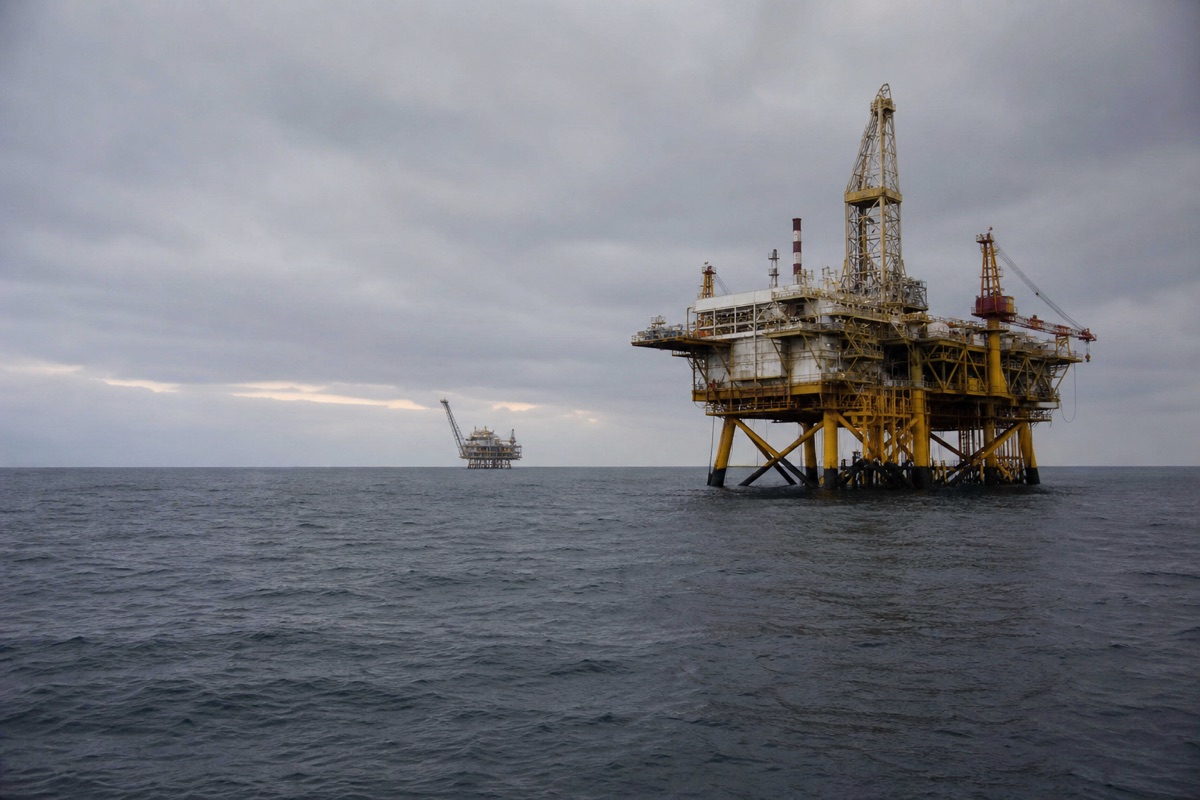
As the Republic of Congo (Congo-Brazzaville) approaches its presidential ballot of 15 March 2026, the question of how the country earns its living has moved from the technocratic margins to the centre of political contestation. The trigger is a single, eloquent figure: the nation collected 1,323 billion CFA francs in petroleum revenue over the course of 2025 (Africa24). That number, impressive on its face, is increasingly read by candidates and citizens alike not as a measure of strength but as a symptom of fragility.
A treasury built on a single barrel
The arithmetic of dependence is stark. According to the World Bank, hydrocarbons account for roughly 40 percent of the country’s gross domestic product and more than 80 percent of its export earnings. Few economies in Central Africa lean so heavily on one commodity, and that concentration shapes everything from fiscal planning to the rhythm of public salaries. When prices rise, the state breathes; when they fall, the contraction is felt across ministries, contractors and households that have no obvious cushion.
What makes the 2025 receipts politically charged is precisely their size. A windfall might once have settled the matter, an affirmation that the existing model still delivers. Instead, the figure has sharpened a different argument: that abundance from a finite resource is a borrowed prosperity, and that the borrowing terms grow harsher as global energy markets tilt toward transition. The revenue, in other words, has become an exhibit in the case for change rather than a defence of the status quo.
Why diversification has become the campaign’s common language
It is unusual for an economic abstraction to dominate a national vote, yet diversification has done so here. Several contenders for the presidency have placed it at the heart of their platforms, framing the reorientation of the economy as the defining task of the coming term. The sectors they invoke are familiar to anyone who has followed Congolese development debates: agriculture and agro-industry, the processing of timber rather than its raw export, fisheries, the digital economy and renewable energy. The appeal of these areas is not merely that they exist, but that they promise employment, value retained at home, and a measure of insulation from the volatility that petroleum imposes.
The unanimity is itself revealing. When rivals converge on the same diagnosis, the contest shifts from what should be done to who can be trusted to do it. Diversification, long a staple of official discourse, has migrated into the realm of electoral accountability, where promises invite scrutiny and past performance becomes a ledger to be examined. That migration is perhaps the most significant political development the oil figures have produced.
The state’s own voice on the imperative
The government has not stood outside this conversation. Denis-Christel Sassou Nguesso, the minister responsible for public-private partnerships, has cast the matter in unambiguous terms, declaring that diversification "is not only a necessity, it is a national requirement." The choice of words is deliberate. To call something a requirement rather than an aspiration is to acknowledge that the cost of inaction has risen, and to signal that the structures intended to attract private capital, the partnerships within his portfolio, are meant to be the instruments of that shift.
Yet the gap between rhetoric and realisation is the territory where the campaign will be fought. Public-private arrangements depend on a climate that investors find legible and durable, and the sectors most often cited for diversification, agro-industry, timber transformation, the digital economy, demand patient capital and institutional follow-through rather than episodic enthusiasm. The minister’s framing concedes the urgency; the electorate is being asked to judge whether the apparatus behind it can convert intention into capacity.
A familiar revenue, an unfamiliar reckoning
There is a quiet irony in a record-adjacent oil figure arriving just as the political class agrees that oil should matter less. The 1,323 billion CFA francs of 2025 will fund budgets and obligations in the near term, but the debate it has catalysed concerns a longer horizon, one in which the same receipts cannot be assumed. For voters weighing their choice on 15 March, the central calculation is therefore temporal: whether to reward the management of present plenty or to back the candidate most credibly committed to building an economy that does not require it.
What the figures cannot resolve, the ballot must. The petroleum windfall has clarified the stakes without dictating the answer, leaving the country to decide, in a matter of days, which reading of its own wealth it intends to act upon.
